
Sustainability: New strategy to combat high propofol waste in the operating room
With an optimized dosing technique, the high propofol rejection in the operating room can be significantly reduced. This has been shown by scientists from the Department of Anaesthesiology and Intensive Care Medicine at the University Hospital Bonn (UKB) in a study. The results offer a viable way to reduce medication waste and costs in anesthesia.
Propofol is the most commonly used intravenous hypnotic. It enables a gentle induction of anesthesia and wake-up phase and, unlike inhalation narcotics, does not cause direct greenhouse gas emissions. However, according to the Bonn experts, between 23 and 50 percent of the propofol drawn up is discarded unused – the largest proportion of drug waste in the operating room.
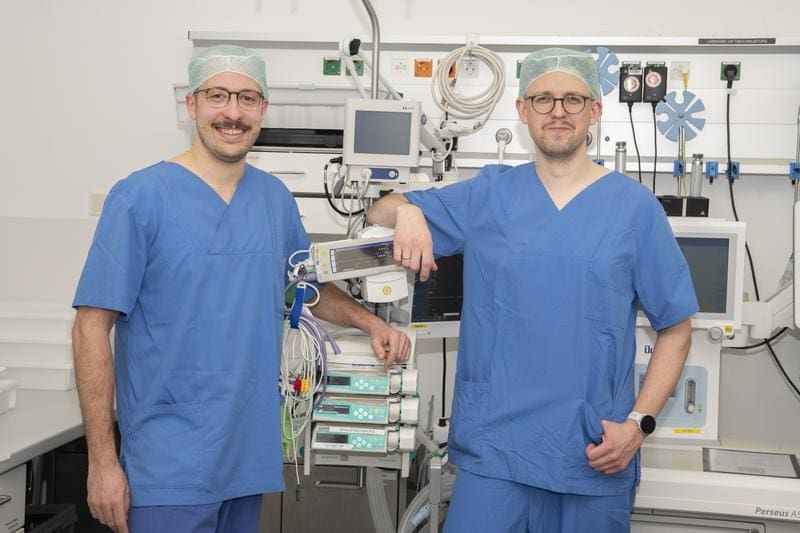
Dr. Florian Windler and Dr. Pascal Siegert from the UKB have investigated how this discard can be reduced. Their study, which has been published in the “Journal of Clinical Anesthesia”, shows that the use of a single syringe pump for anesthesia induction and maintenance can reduce the loss of propofol by 30 to 50 percent.
The researchers see even greater potential in Target Controlled Infusion (TCI). In this procedure, a pharmacokinetic model calculates the required amount of propofol based on individual patient data such as weight, age and gender. Simulations by the Bonn scientists showed that TCI enables a precise prediction of the propofol requirement and thus significantly reduces both discard and syringe changes.
According to projections, a hospital with 15 intravenous anesthesia per day could save up to 2,340 propofol ampoules and around 16,000 euros annually through this method. To implement this, the researchers provide a calculation table and the free app “Propofol-Dreams”. A prospective clinical study for practical application in the operating room is currently underway.
The work is part of the efforts of the “Green Team” of the Bonn Anaesthesia Department to implement sustainability principles (Reduce, Reuse, Recycle, Rethink, Research) in everyday hospital life. Patient safety remains the top priority, the scientists emphasize.
Editor: X-Press Journalistenbüro GbR
Gender Notice. The personal designations used in this text always refer equally to female, male and diverse persons. Double/triple naming and gendered designations are used for better readability ected.
Most read
 Hantavirus: detection, symptoms, therapy What is hantavirus? Hantaviruses are a group of viruses that occur worldwide and are mainly transmit...
- Impending fuel shortage: “If the laboratory fails, medical care will come to a standstill in large parts” DGKL CEO Jan Wolter explains the dramatic consequences of a potential fuel shortage for laboratory m...
- Hantavirus: Facts instead of panic Reports of three deaths in connection with a hantavirus outbreak on the cruise ship "MV Hondius" in...