
MHH develops bioreactors for the production of millions of human macrophages
Researchers at the Hannover Medical School (MHH) have developed a new method that can be used to produce human immune cells such as macrophages efficiently and in large quantities in medium-sized bioreactors. The cells, which are obtained from induced pluripotent stem cells (iPS cells), are expected to significantly facilitate research into diseases and new therapeutic approaches.
Macrophages, also known as phagocytes, are central components of the immune system. They fight pathogens, repair damaged tissue and are already used therapeutically for liver diseases. Other possible applications are being researched for infectious diseases, chronic inflammation, fibrosis, cancer and neurodegenerative diseases such as Alzheimer’s. They also serve as a test system for the safety and efficacy of drugs.
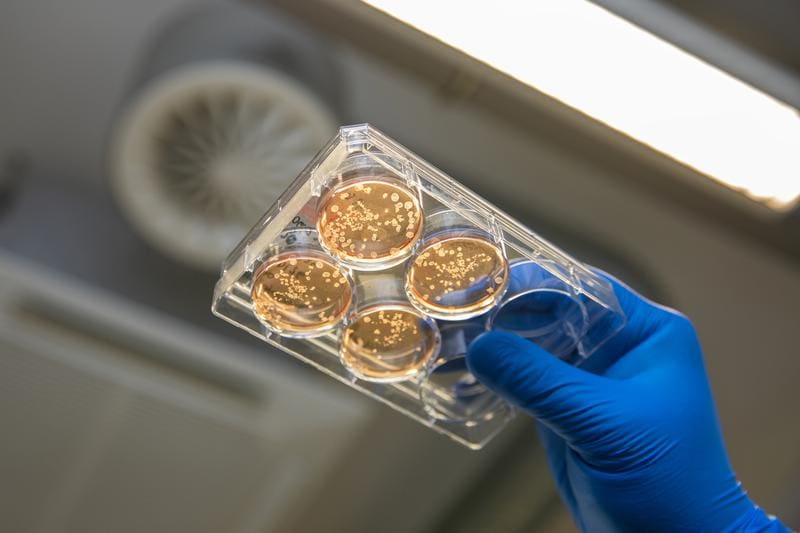
Until now, there has been a lack of a practicable method for medium-scale production that is suitable for both preclinical research and future therapies. The team led by Prof. Dr. Nico Lachmann from the Department of Pediatric Pneumology, Allergology and Neonatology at the MHH has now closed this gap. In a special bioreactor flow system, iPS cells differentiate within 14 days into bone marrow-like organoids, which then continuously release macrophages.
Up to 40 million functional immune cells can be harvested per bioreactor per week over a period of ten weeks. Four bioreactors can be combined in one device. The method is cost-effective, easy to use and scalable.
The results have now been published in the journal Nature Protocols . The first author is Dr. Fawaz Saleh. The work is part of the RESIST Cluster of Excellence and the Research Center for Translational Regenerative Medicine at the MHH. Prof. Lachmann has been awarded an ERC Starting Grant from the European Union for his research, among other awards.
Editor: X-Press Journalistenbüro GbR
Gender Notice. The personal designations used in this text always refer equally to female, male and diverse persons. Double/triple naming and gendered designations are used for better readability. ected.
Most read
 Wal Timmy: Environment Minister Backhaus ignored rescue technology that has been in place since 1983 The stranded humpback whale "Timmy" suffered severely for days in Mecklenburg-Western Pomerania beca...
- Wal Timmy: Germany’s problem with euthanasia EDITORIAL. Letting Timmy suffer is more due to the German lack of experience and the bureaucratic hu...
- Impending fuel shortage: “If the laboratory fails, medical care will come to a standstill in large parts” DGKL CEO Jan Wolter explains the dramatic consequences of a potential fuel shortage for laboratory m...