
GATA1 mutation fuels leukemia development in children with Down syndrome
Children with Down syndrome have a greatly increased risk of myeloid leukemia. An international research team has now for the first time traced the molecular steps that turn a temporary precursor into real cancer. The scientists identified the mutation in the GATA1 protein as a central trigger and potential target for new therapies.
Children with Down syndrome are 150 times more likely to develop myeloid leukemia than other children. In 15 to 30 percent of newborns, transient myeloproliferative syndrome (TAM) initially occurs, a temporary disorder of blood formation that in many cases resolves spontaneously. TAM and later myeloid leukemia (ML-DS) can hardly be clinically distinguished in the acute phase. In some of those affected, however, additional mutations lead to the full development of leukemia in the following years.
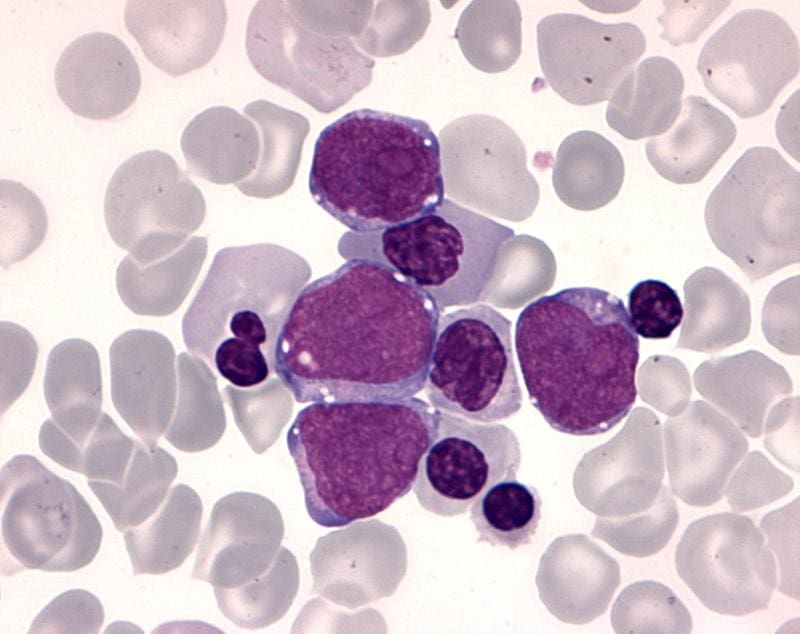
The team led by Prof. Jan-Henning Klusmann from Goethe University Frankfurt, Prof. Jack Bartram from Great Ormond Street Hospital London and Prof. Sam Behjati from the Wellcome Sanger Institute analysed tumour samples from patients in different stages of the disease. Using single-cell mRNA sequencing and genome analyses, the researchers were able to decipher the active genetic programs in the individual cells. This showed that the effects of the GATA1 mutation are present in the same way in all TAM and ML-DS cells and have a significant impact on the disease process regardless of further mutations.
The results indicate that GATA1 could be a promising therapeutic target for the treatment of myeloid leukemia in children with Down syndrome. In addition, gene activity patterns could be identified that distinguish between a spontaneously regressing TAM and a recurrent form. In the future, these patterns could serve as biomarkers to predict the individual risk of developing ML-DS at an early stage.
Original Paper:
Single cell transcriptional evolution of myeloid leukemia of Down syndrome | Nature Communications
Editor: X-Press Journalistenbüro GbR
Gender Notice. The personal designations used in this text always refer equally to female, male and diverse persons. Double/triple naming and gendered designations are used for better readability. ected.
Most read
 Wal Timmy: Environment Minister Backhaus ignored rescue technology that has been in place since 1983 The stranded humpback whale "Timmy" suffered severely for days in Mecklenburg-Western Pomerania beca...
- Wal Timmy: Germany’s problem with euthanasia EDITORIAL. Letting Timmy suffer is more due to the German lack of experience and the bureaucratic hu...
- Impending fuel shortage: “If the laboratory fails, medical care will come to a standstill in large parts” DGKL CEO Jan Wolter explains the dramatic consequences of a potential fuel shortage for laboratory m...