CHEM-SCAN to make chemoresistance in tumors visible
A new research project at Bielefeld University aims to better understand why some tumour cells do not respond to chemotherapy or respond only insufficiently. The EIC-funded CHEM-SCAN project is developing a high-resolution imaging technology that aims to visualize the reactions of individual tumour cells to drugs in near real time.
The researchers combine fluorescent probes with fluorescence lifetime microscopy (FLIM). This allows them to examine three-dimensional cell cultures (spheroids) from patients’ tumor tissue. These models depict the structure and behavior of real tumors much more realistically than conventional cell cultures.
The aim is to record differences between primary tumor and metastases as well as between different cell types within a tumor. In the long term, the technology could help to tailor therapies more specifically to individual patients and avoid stressful but ineffective treatments.
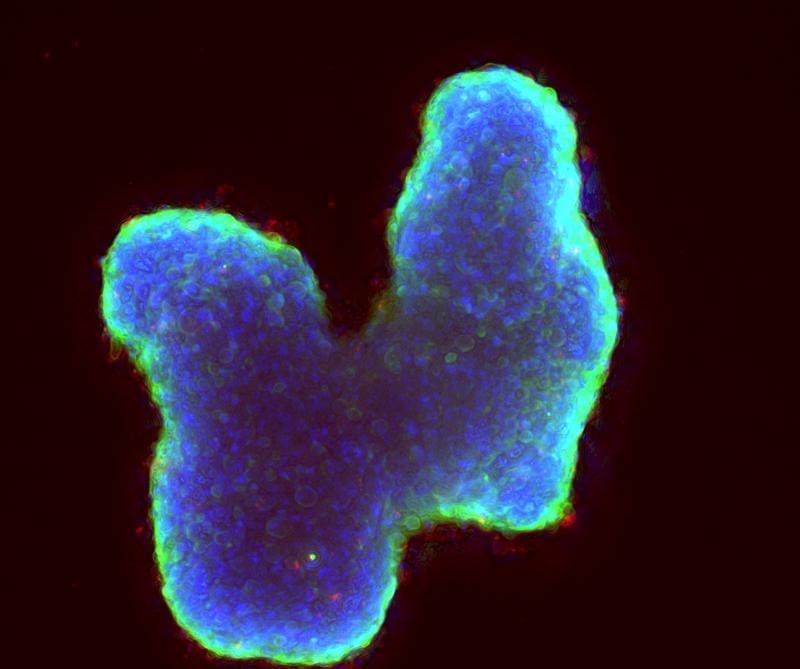
Professor Dr. Thomas Huser, head of the Biomolecular Photonics group at Bielefeld University and coordinator of the project, explained that CHEM-SCAN is developing a technology that, for the first time, can track the response of tumor cells to therapies in high resolution and near real time. This opens up new possibilities for understanding resistance mechanisms and treating them in a more targeted manner.
The project is funded with around three million euros and will run for four years. In addition to the University of Bielefeld and the Medical Faculty OWL, the University of Vienna, the KU Leuven and the industrial partners PicoQuant GmbH and The Twinkle Factory SA are involved.
The study will be highlighted in the context of the European Week Against Cancer (25 to 31 May). In the long term, the results could contribute to more precise and personalized cancer therapy.
Further information:
Editor: X-Press Journalistenbüro GbR
Gender Notice. The personal designations used in this text always refer equally to female, male and diverse persons. Double/triple naming and gendered designations are used for better readability ected.
Most read
 Hantavirus: detection, symptoms, therapy What is hantavirus? Hantaviruses are a group of viruses that occur worldwide and are mainly transmit...
- Hantavirus: Facts instead of panic Reports of three deaths in connection with a hantavirus outbreak on the cruise ship "MV Hondius" in...
- Hantavirus: Experts at the University Medical Center Essen see low risk for the general population After several hantavirus infections and deaths occurred on the cruise ship "Hondius", a contact pers...