World Haemophilia Day 2026: Diagnosis as the first step towards care
On April 17, 2026, the global community will celebrate World Hemophilia Day under the motto “Diagnosis: First step to care”. The World Federation of Hemophilia (WFH) deliberately focuses on diagnosis. Early and accurate detection of congenital bleeding disorders is the indispensable basis for any effective treatment and prevention of complications. Without a diagnosis, modern therapies – from factor substitution to non-factor-based agents to gene therapy – remain unattainable.
Hemophilia A and B are caused by mutations in the F8 and F9 genes, respectively, and lead to a deficiency of clotting factor VIII or IX. If left untreated, progressive arthropathies, chronic pain, disability and a shortened life expectancy result. The WFH estimates that more than three-quarters of people with hemophilia worldwide remain undiagnosed. In resource-rich regions such as Europe, the diagnosis rate is around 85%, while in Africa it is only around 8%. The gap is even greater in von Willebrand syndrome, other rare factor deficiencies, and in women and girls with bleeding disorders, who are often underdiagnosed or misdiagnosed.
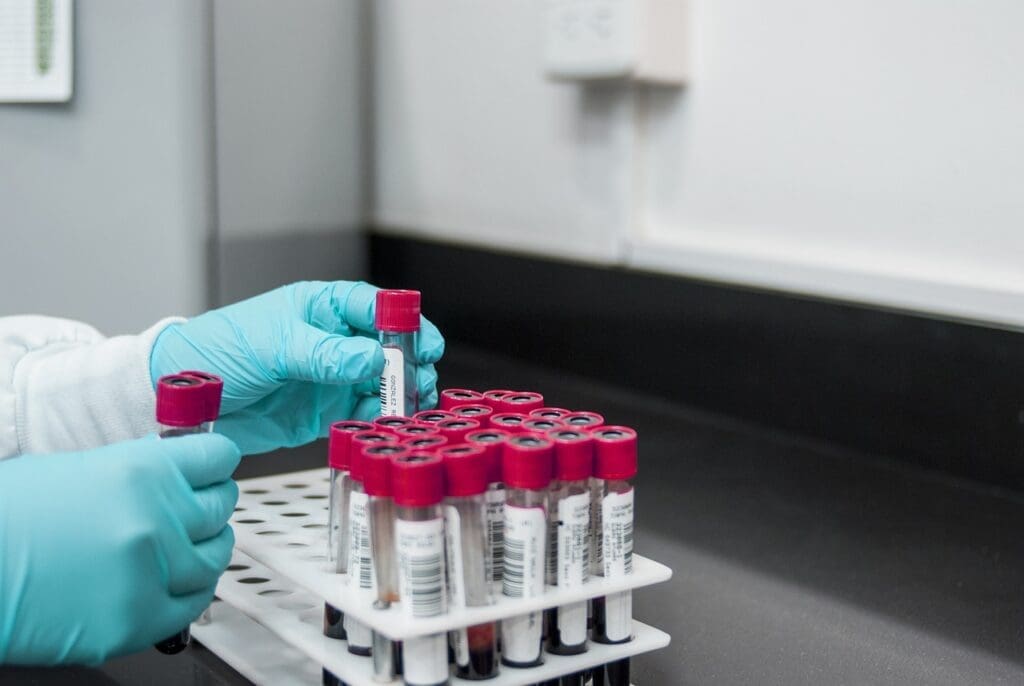
Diagnostics usually begin with a careful anamnesis and the use of bleeding assessment tools (BATs). Laboratory chemistry confirms by measuring factor activity (single-step or chromogenic assays). In the case of unclear findings or to differentiate subtypes as well as if inhibitors are suspected, supplementary tests are used. Genetic analyses are becoming increasingly important: they enable precise classification, identification of carriers and prenatal diagnosis. A systematic review of two decades of prenatal diagnosis in hemophilia A and B (published in 2026) documents the transition from linkage analysis to direct sequencing, next-generation sequencing, and non-invasive cell-free DNA methods. In the analyzed studies with 969 pregnancies, molecular diagnostics achieved high accuracy, but continued to show significant regional disparities in availability.
Another focus of the 2025/2026 research is on improving the fairness of health care. A global survey by WFH among its national member organisations on women and girls with bleeding disorders (published in Haemophilia in 2026) underlines that while diagnostic tools are increasingly available in treatment centres, they are much less widely available in low-income countries. Only a subset of centers routinely use BATs, and genetic testing is often limited to a few specialized facilities. The study calls for targeted measures to train primary care providers, reduce stigma and integrate diagnostics into existing health systems.
In addition, reviews such as “Therapeutic advances in hemophilia” (Frontiers in Medicine, 2025) shed light on the role of improved diagnostics as a prerequisite for access to innovative therapies. Without early identification, patients cannot benefit from prophylaxis regimens or rebalancing agents or gene therapies. The WFH Guidelines on AAV Gene Therapy (2025) therefore explicitly emphasize the need for precise diagnostic and genetic preliminary clarification before such treatment.
Progress in recent years shows that the technical possibilities for diagnosis have improved considerably – from more sensitive laboratory tests to molecular methods and standardised screening instruments. Nevertheless, the global reality remains characterized by massive inequalities. In many regions, there is a lack of laboratory capacities, trained staff and financial resources. World Haemophilia Day 2026 therefore calls for systematic diagnostic initiatives to be strengthened: through the establishment of reference centres, quality assurance programmes for laboratories, training and international partnerships.
WFH pursues the goal of “Treatment for All”. This year’s thematic focus makes it clear that this goal can only be achieved if the first step is taken consistently: diagnosis. The scientific work of the past year shows that more precise and accessible diagnostics not only save lives, but also create the conditions for individualized, modern care. It is now up to the international community to translate these findings into concrete programs to close the diagnostic gap – worldwide and without exception.
Link list
- World Federation of Hemophilia – World Hemophilia Day 2026: https://wfh.org/world-hemophilia-day/
- WFH article on “Diagnosis: First step to care”: https://wfh.org/article/world-hemophilia-day-2026-theme-revealed/
- Review paper “Two decades of prenatal diagnosis in hemophilia A and B” (2026): https://pmc.ncbi.nlm.nih.gov/articles/PMC12937542/
- WFH Survey on Women and Girls with Bleeding Disorders (Haemophilia, 2026): https://onlinelibrary.wiley.com/doi/10.1111/hae.70213
- Review paper “Therapeutic advances in hemophilia” (Frontiers in Medicine, 2025): https://www.frontiersin.org/journals/medicine/articles/10.3389/fmed.2025.1618464/full
- WFH Guidelines AAV Gene Therapy 2025: https://onlinelibrary.wiley.com/doi/10.1111/hae.70113
- WFH Identification and Diagnosis page: https://wfh.org/identification-and-diagnosis/
Read Also:
First patient in Germany to receive gene therapy for hemophilia B – MedLabPortal
First gene therapy for hemophilia B used in Germany – MedLabPortal
MHH: Successful CAR-T cell therapy for acquired hemophilia A – MedLabPortal
Editor: X-Press Journalistenbüro GbR
Gender Notice. The personal designations used in this text always refer equally to female, male and diverse persons. Double/triple naming and gendered designations are used for better readability. ected.
Most read
 German Medical Association calls for ban on medical diagnostics in drugstores The 130th German Medical Congress 2026 calls on legislators to prevent medical diagnostics in drugst...
- Expert Tip for Preanalytics of Glucose Determination The pre-analysis of glucose determination is a science in itself, even for experienced doctors. MedL...
- Hantavirus: Experts at the University Medical Center Essen see low risk for the general population After several hantavirus infections and deaths occurred on the cruise ship "Hondius", a contact pers...