
New CAR-T cells with stem memory phenotype show promising effect in blood cancers
Researchers at the Leibniz Institute of Immunotherapy (LIT) in Regensburg and the National Cancer Institute (NCI) in the USA have shown in a first clinical study that CAR T cells with memory T cells (TSCM) are safe and effective. Even at very low doses, the cells led to complete tumor regression – and without the usual lymphodepletic chemotherapy before infusion.
The study, published in the journal Cell , was led by Prof. Luca Gattinoni from LIT and Dr. James Kochenderfer from NCI. She studied patients with relapsed or refractory CD19-positive B-cell diseases after allogeneic stem cell transplantation.
The CAR T cells with TSCM phenotype multiplied more strongly and survived longer in the patient’s body than conventional CAR T cells. At the same time, significantly less severe side effects such as cytokine release syndrome occurred. The treatment was well tolerated and in several cases led to permanent complete remissions.
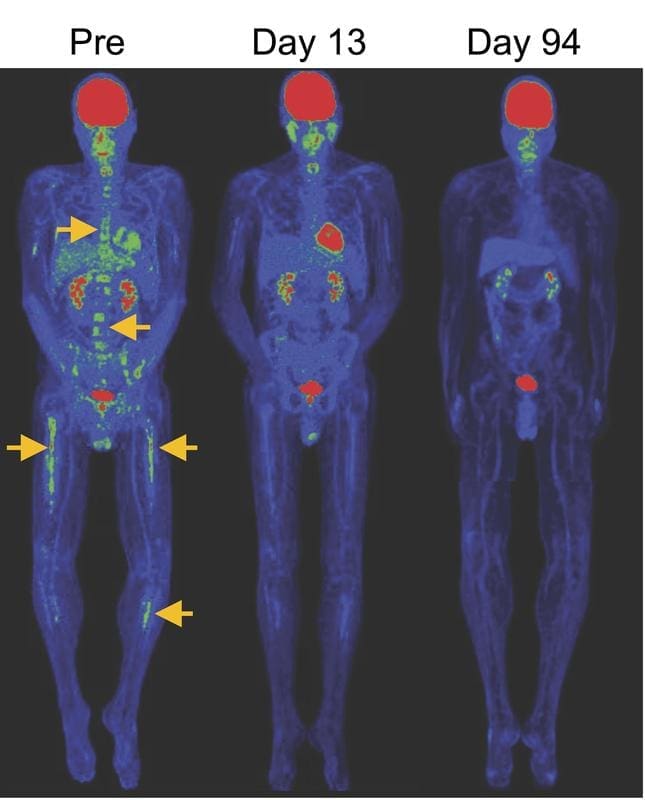
The scientists had previously developed a platform technology for the production of standardised CAR-T cells enriched with TSCM cells. These cells retain their stem cell-like properties and form a self-renewing reservoir in the body that remains effective for a longer period of time.
The results are considered an important step towards next-generation CAR-T cell therapies. The researchers emphasize that the TSCM-based cells show better persistence and a more reliable effect than previous products. Future studies will test the approach in larger patient groups and for other indications.
The work was carried out by several LIT working groups and international cooperation partners. It provides the first clinical evidence that the targeted enrichment of memory stem cells can improve the efficacy and tolerability of CAR-T cell therapies.
Original Paper:
Read Also:
Munich researchers decipher resistance of tumors to CAR-T cells – MedLabPortal
Editor: X-Press Journalistenbüro GbR
Gender Notice. The personal designations used in this text always refer equally to female, male and diverse persons. Double/triple naming and gendered designations are used for better readability ected.
Most read
 Wal Timmy: Environment Minister Backhaus ignored rescue technology that has been in place since 1983 The stranded humpback whale "Timmy" suffered severely for days in Mecklenburg-Western Pomerania beca...
- Wal Timmy: Germany’s problem with euthanasia EDITORIAL. Letting Timmy suffer is more due to the German lack of experience and the bureaucratic hu...
- Impending fuel shortage: “If the laboratory fails, medical care will come to a standstill in large parts” DGKL CEO Jan Wolter explains the dramatic consequences of a potential fuel shortage for laboratory m...