Interprofessional training station started as a pilot project in neurology
The University Hospital Carl Gustav Carus Dresden is testing an interprofessional training station (IPSTA) in the Department of Neurology for the first time. Medical students and nursing trainees independently take over the care of patients, including diagnostics and therapy management. The pilot project at the stroke unit is intended to promote interprofessional learning and improve future cooperation in patient care.
Two medical students in their practical year and two nursing trainees in their third year of training each looked after two patient rooms in the two-week pilot phase. They were supported by medical and nursing learning support. The participants learned to work together with, from and about each other and to take responsibility. Initial feedback shows that the format reduces fears and strengthens self-confidence.
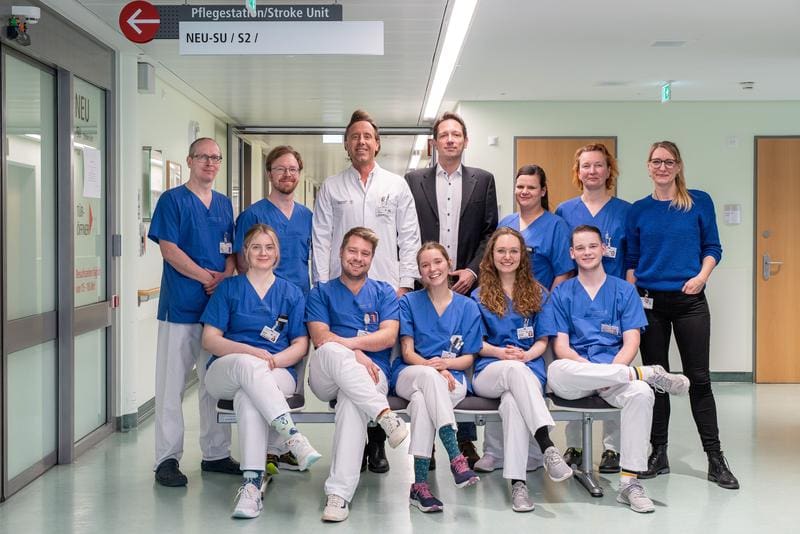
Medical Director Prof. Uwe Platzbecker emphasized that the University Hospital meets the desire of young people for early practical experience with such modern training formats. The close cooperation in the stroke unit enables short coordination channels and a better mutual understanding between the medical and nursing services. The Institute for Didactics and Teaching Research in Medicine at the TU Dresden provided scientific support.
The concept of the interprofessional training station originated in Scandinavia and is increasingly being tested in Germany. The participants documented their experiences in daily reflection rounds. The response was consistently positive. The stroke unit is to be used regularly as a training station in the future. A consolidation and expansion to other areas of the clinic is planned.
The project underlines the University Hospital’s claim to establish modern and practice-oriented training formats and thus strengthen the quality of patient care in the long term.
Editor: X-Press Journalistenbüro GbR
Gender Notice. The personal designations used in this text always refer equally to female, male and diverse persons. Double/triple naming and gendered designations are used for better readability. ected.
Most read
 German Medical Association calls for ban on medical diagnostics in drugstores The 130th German Medical Congress 2026 calls on legislators to prevent medical diagnostics in drugst...
- Expert Tip for Preanalytics of Glucose Determination The pre-analysis of glucose determination is a science in itself, even for experienced doctors. MedL...
- Hantavirus: Experts at the University Medical Center Essen see low risk for the general population After several hantavirus infections and deaths occurred on the cruise ship "Hondius", a contact pers...