
Grimace: ETH Zurich develops AI system for automatic pain detection in laboratory mice
Researchers at ETH Zurich have developed a new automatic system called Grimace that records the pain and well-being of laboratory mice in an objective and standardised manner. It uses machine vision and learning to analyse the facial expressions and posture of the animals in real time and is intended to significantly improve animal welfare in research.
The system consists of a special, darkened observation box with infrared cameras. The mice are filmed unobserved, without additional stress from human observers. An algorithm evaluates subtle pain characteristics such as squinted eyes, changed ear position or whiskers and provides a reliable assessment.
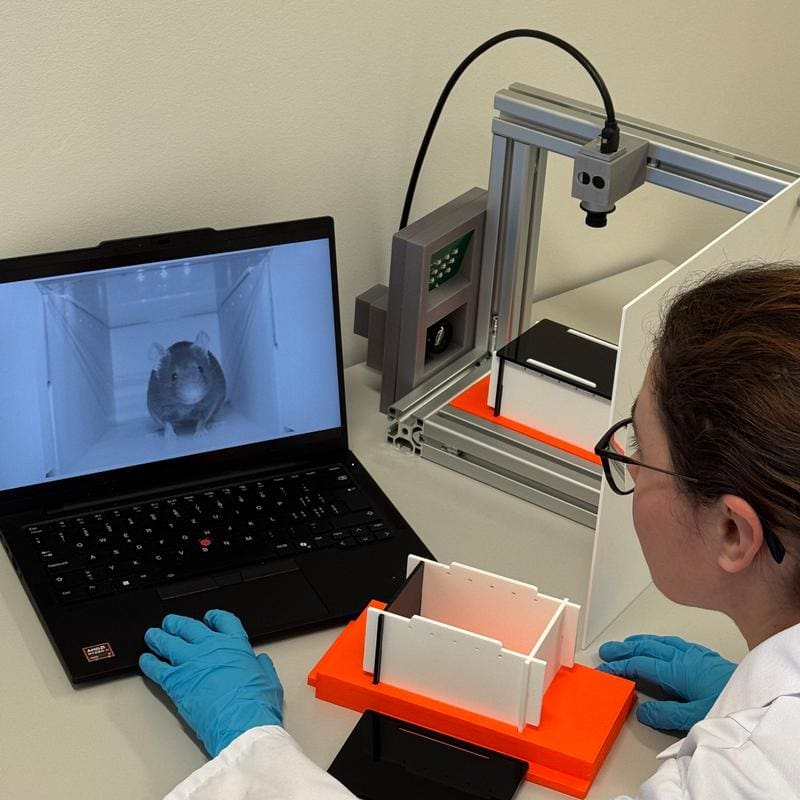
Previous manual methods such as the Mouse Grimace Scale are time-consuming, subjective and often inaccurate. The ETH study shows that Grimace is in line with the assessments of trained experts, but makes them much more consistent and reproducible. In addition, the system also records behavioural characteristics such as posture and movement.
The entire system, including software, is made available free of charge as an open-source kit so that researchers can collect uniform and comparable data worldwide. Oliver Sturman, head of the ETH 3R Hub, emphasises that Grimace is an important contribution to the 3R principles (Replace, Reduce, Refine) and can reduce unnecessary suffering for animals.
The results were recently published in the journal Lab Animal . The system is already being used at the ETH Phenomics Center and is attracting great international interest.
Read Also:
Pioneer of animal-free diagnostics: Prof. Maike Frye receives Gábor Szász Prize – MedLabPortal
Original Paper:
Sturman, O., Schmutz, M., Lorimer, T. et al. GrimACE: automated, multimodal cage-side assessment of pain and well-being in mice. Lab Animal (2026). https://doi.org/10.1038/s41684-026-01695-9
Editor: X-Press Journalistenbüro GbR
Gender Notice. The personal designations used in this text always refer equally to female, male and diverse persons. Double/triple naming and gendered designations are used for better readability. ected.
Most read
 Wal Timmy: Environment Minister Backhaus ignored rescue technology that has been in place since 1983 The stranded humpback whale "Timmy" suffered severely for days in Mecklenburg-Western Pomerania beca...
- Wal Timmy: Germany’s problem with euthanasia EDITORIAL. Letting Timmy suffer is more due to the German lack of experience and the bureaucratic hu...
- Impending fuel shortage: “If the laboratory fails, medical care will come to a standstill in large parts” DGKL CEO Jan Wolter explains the dramatic consequences of a potential fuel shortage for laboratory m...