
DSMZ Provides First Animal-Component-Free Cancer Cell Lines for Research
The Leibniz Institute DSMZ – German Collection of Microorganisms and Cell Cultures GmbH has successfully adapted four widely used human cancer cell lines (HELA, HL-60, K-562 and JIMT-1) to animal-component-free media. The world’s most diverse cell bank collection now offers an ethically and scientifically advantageous alternative to the commonly used fetal calf serum (FCS).
FCS has been used to cultivate cancer cells for decades, but it is associated with considerable animal suffering and leads to problems with the reproducibility of experiments due to fluctuating composition. The research group of Dr. Sonja Eberth at the DSMZ has adapted the cell lines to human platelet lysate as well as completely chemically defined media. Comprehensive macroscopic and molecular examinations confirmed that the characteristics characteristic of the respective cancer were completely preserved.
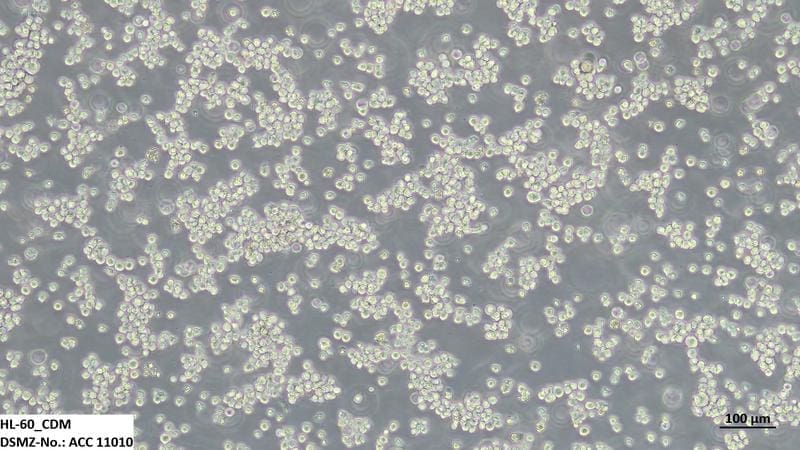
The first cell line in this series, the leukemia cell line HL-60, is now available as an animal-component-free culture via the DSMZ catalog. Further adapted lines are to follow. Researchers can thus draw on established, well-characterized models without having to make time-consuming and cost-intensive adjustments themselves.
The study has been published in the journal Alternatives to Animal Experimentation (ALTEX). By offering animal-component-free cell lines, the DSMZ aims to advance the transition to an ethically justifiable and more reproducible cell culture in biomedical research.
Original paper:
Editor: X-Press Journalistenbüro GbR
Gender Notice. The personal designations used in this text always refer equally to female, male and diverse persons. Double/triple naming and gendered designations are used for better readability ected.
Most read
 Wal Timmy: Environment Minister Backhaus ignored rescue technology that has been in place since 1983 The stranded humpback whale "Timmy" suffered severely for days in Mecklenburg-Western Pomerania beca...
- Wal Timmy: Germany’s problem with euthanasia EDITORIAL. Letting Timmy suffer is more due to the German lack of experience and the bureaucratic hu...
- Impending fuel shortage: “If the laboratory fails, medical care will come to a standstill in large parts” DGKL CEO Jan Wolter explains the dramatic consequences of a potential fuel shortage for laboratory m...