Acute stress hinders the linking of memories in the brain
Acute stress impairs the brain’s ability to link new information to existing memories. This is the result of a study by the University of Hamburg led by Prof. Dr. Lars Schwabe.
In the study, which was published in the journal Science Advances , participants first learned pairs of images (A+B). The next day, new pairs with overlaps (B+C) followed. They then tested whether they could establish the indirect connection A+C – a so-called inference.
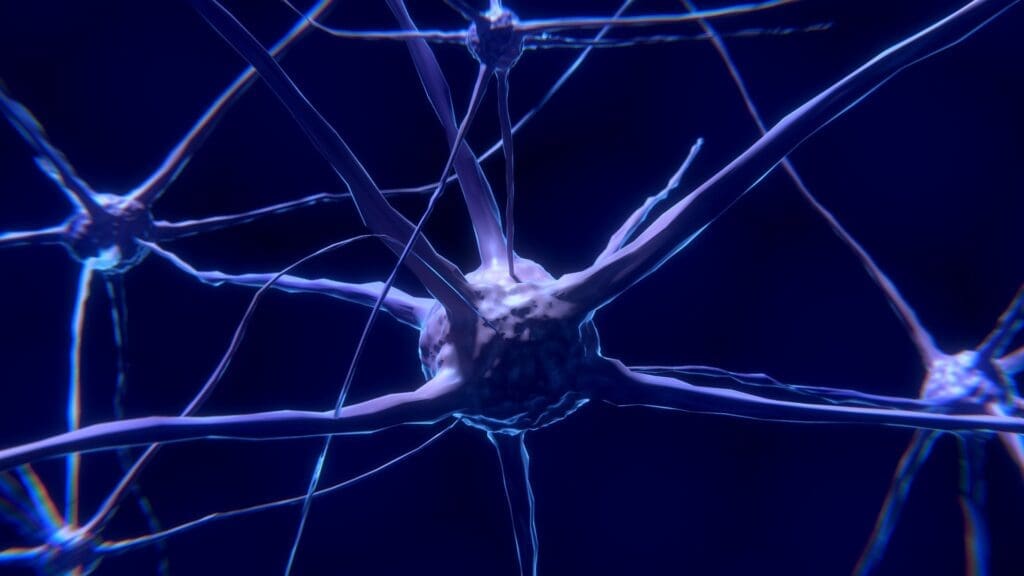
One group was burdened by a stress task at the beginning of the second day, while the control group was given a neutral task. The stressed participants remembered the new pairs of images just as well as the control group, but were much less likely to be able to link to the old information.
Using functional magnetic resonance imaging (fMRI), the researchers showed that in stressed individuals, the brain regions responsible for processing the original information (A) were less activated when the new pairs (B+C) were presented. The hippocampus, a central region for memory processes, was particularly affected.
Schwabe explained that stress disrupts an important mechanism of memory integration. The results are relevant for psychiatric disorders, the legal field and the educational context, where the linking of information is crucial for learning.
The international study was conducted together with researchers from the University of Texas and Radboud University Nijmegen.
Original paper:
Editor: X-Press Journalistenbüro GbR
Gender Notice. The personal designations used in this text always refer equally to female, male and diverse persons. Double/triple naming and gendered designations are used for better readability ected.
Most read
 Hantavirus: detection, symptoms, therapy What is hantavirus? Hantaviruses are a group of viruses that occur worldwide and are mainly transmit...
- Hantavirus: Facts instead of panic Reports of three deaths in connection with a hantavirus outbreak on the cruise ship "MV Hondius" in...
- German Medical Association calls for ban on medical diagnostics in drugstores The 130th German Medical Congress 2026 calls on legislators to prevent medical diagnostics in drugst...