
Guest Post: Lab Meets AI – Lessons Learned
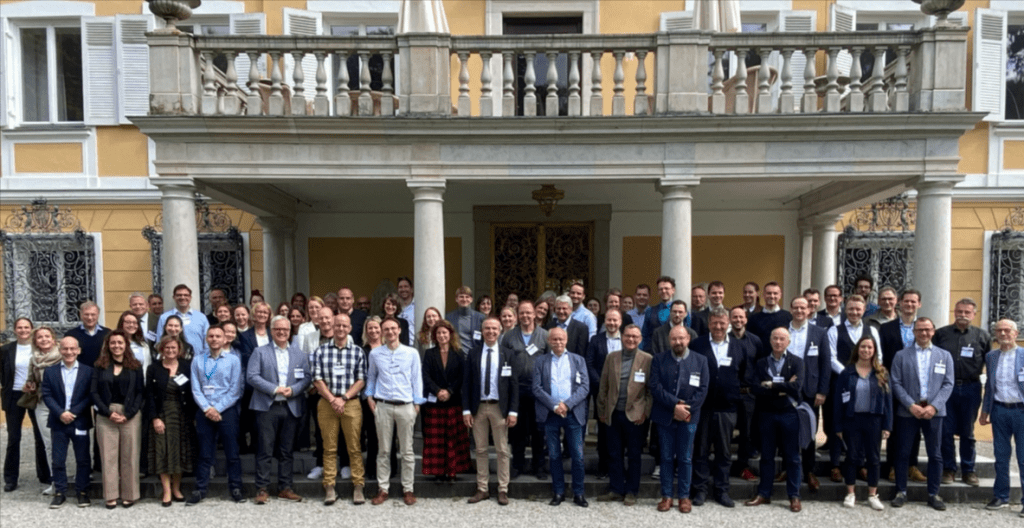
At this year’s 20th Annual Conference on Molecular Diagnostics , the focus was on the question of how artificial intelligence (AI) is already contributing to the transformation of laboratory diagnostics today and what developments can be expected in the future. The conference, which focused on the transition from scientific research to routine diagnostics, was organized by the Molecular Diagnostics Competence Field with its five sections – Genomics, Bioinformatics, NMR Spectroscopy, Proteomics & Metabolomics and Clinical Mass Spectrometry – together with the Biobanking Section.
The topic was examined from different perspectives in a total of 17 lectures by proven experts from science, laboratory medicine and industry. The majority of the applications presented were based on classical “machine learning”, which already supports labor-intensive routine evaluations in the laboratory – for example, in the classification of image and data sets, the integration of molecular data or the analysis of complex spectra.
In contrast, there are only a few examples so far that “deep learning” methods, which are based on multi-layered neural networks, have already found their way into routine diagnostics. However, there is considerable potential here in particular, especially in the classification of laboratory findings in the clinical context and in the analysis of complex or multimodal image and data sets. Especially in the neighboring discipline of pathology, the use of “foundation models”, a certain type of large models that are pre-trained with deep learning methods using very large amounts of data, indicates considerable added value, as Professor Dr. Frederick Klauschen from LMU Munich impressively demonstrated in his keynote lecture.
As a central aspect of the use of increasingly complex AI models in laboratory diagnostics and medicine, the need for the results to remain comprehensible and plausible emerged at the conference. Here, so-called “explainable AI” will play a key role in the future. Explainable AI describes systems that can explain their decisions in a way that is understandable to humans, so that doctors and scientists can understand the basis on which an AI has arrived at a certain conclusion. After all, at least from today’s perspective, a human will always continue to bear the final legal responsibility for a laboratory finding.
Author:
Spokesperson of the Competence Field Molecular Diagnostics of the DGKL
Director of the Institute of Laboratory Medicine, LMU Hospital, LMU Munich
Editor: X-Press Journalistenbüro GbR
Gender Notice. The personal designations used in this text always refer equally to female, male and diverse persons. Double/triple naming and gendered designations are used for better readability ected.
Most read
 Hantavirus: detection, symptoms, therapy What is hantavirus? Hantaviruses are a group of viruses that occur worldwide and are mainly transmit...
- Hantavirus: Facts instead of panic Reports of three deaths in connection with a hantavirus outbreak on the cruise ship "MV Hondius" in...
- German Medical Association calls for ban on medical diagnostics in drugstores The 130th German Medical Congress 2026 calls on legislators to prevent medical diagnostics in drugst...