
Declining immune surveillance is the cause of destabilization of the gut microbiome in old age
The intestinal microbiome does not lose its balance in old age primarily due to changes in the microorganisms themselves, but due to a decreasing control function of the immune system. Researchers at the Leibniz Institute on Aging – Fritz Lipmann Institute (FLI) in Jena have come to this new hypothesis.
The study, which was published in the journal PLoS Biology as an “Unsolved Mystery”, combines findings from immunology and ecosystem ecology. According to this, the immune system actively monitors the microbiome and limits the spread of individual dominant microorganisms. With age, this precise control function decreases, allowing certain bacteria to gain the upper hand. This leads to a decrease in microbial diversity and to chronic, low-grade inflammation, known as inflammaging.
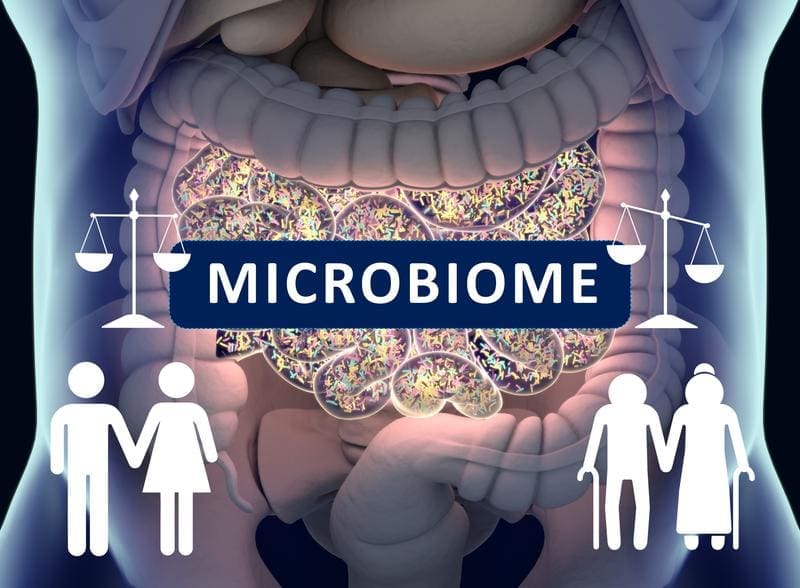
Prof. Dr. Dario Riccardo Valenzano, head of the Evolutionary Biology/Microbiome-Host Interactions research group at FLI, explained that the immune system does not primarily distinguish between “good” and “bad” microbes, but continuously monitors which organisms begin to dominate the community. This creates a dynamic equilibrium that ensures the long-term stability of the microbiome.
The researchers have developed a simple computer model that illustrates this mechanism. If the rule that specifically restricts fast-growing microorganisms is lifted, the microbial community quickly loses diversity and stability.
The hypothesis also has consequences for therapeutic approaches. A mere change in the microbiome composition, for example through probiotics, may not be sufficient if immune surveillance is already weakened. Instead, strategies must be developed that simultaneously strengthen the control function of the aging immune system.
The authors propose to test the hypothesis in short-lived model organisms such as the African Turquoise Groundfish. In addition, longitudinal studies in humans are necessary to investigate the temporal sequence of immune changes and microbiome instability.
If the hypothesis is confirmed, this could fundamentally change the understanding of age-related changes in the microbiome. The stability of the microbiome would then not only be a property of the microbes, but the result of a lifelong interaction between host and microbiome – an interaction that loses precision with increasing age. This opens up new perspectives for strategies that could promote healthy ageing and counteract age-related diseases.
Original paper:
Editor: X-Press Journalistenbüro GbR
Gender Notice. The personal designations used in this text always refer equally to female, male and diverse persons. Double/triple naming and gendered designations are used for better readability ected.
Most read
 Hantavirus: detection, symptoms, therapy What is hantavirus? Hantaviruses are a group of viruses that occur worldwide and are mainly transmit...
- Hantavirus: Facts instead of panic Reports of three deaths in connection with a hantavirus outbreak on the cruise ship "MV Hondius" in...
- Hantavirus: Experts at the University Medical Center Essen see low risk for the general population After several hantavirus infections and deaths occurred on the cruise ship "Hondius", a contact pers...