University Hospital Dresden participates in the nationwide model project genome sequencing
The University Hospital Carl Gustav Carus Dresden is participating in the nationwide model project Genome Sequencing. The analysis of the entire genome is intended to identify genetic changes in patients with a previously unknown cause of the disease – especially in rare diseases and oncological cases – and to enable targeted treatment and care recommendations.
The model project according to § 64e SGB V has been running since 2024 and is to be continued until the end of 2029. As part of knowledge-generating care, the genome is sequenced to detect disease-causing variants. For the University Hospital Dresden, the possibility arose in the first period of validity (2024/2025) to include up to 450 patients. In a number of them, the cause of the disease could be clarified and in some cases new therapeutic perspectives could be opened, for example in neonatal hyperparathyroidism, syndromic congenital sodium diarrhea or Duchenne muscular dystrophy.
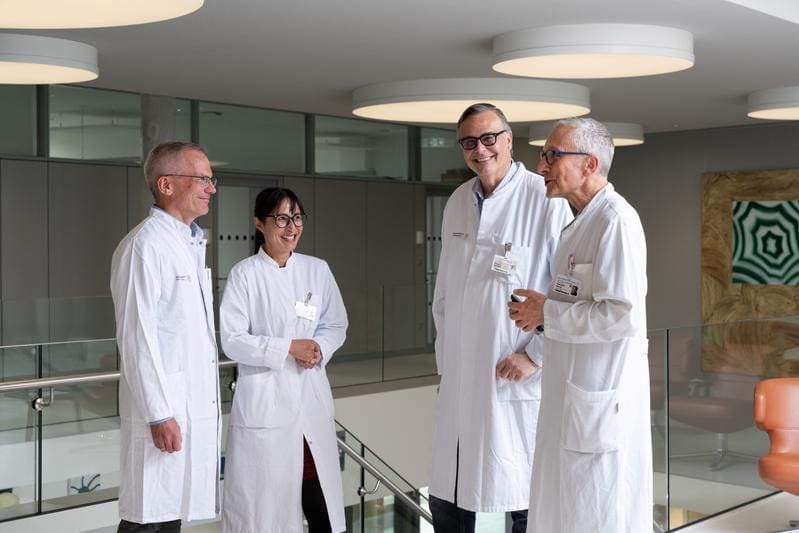
Prof. Dr. Uwe Platzbecker, Medical Director at the University Hospital Dresden, explained that the Institute of Clinical Genetics offers high-quality human genetic diagnostics using state-of-the-art technologies. Prof. Diana Le Duc, Director of the Institute, emphasized that genetic analyses are now a central key to diagnosing rare diseases, developmental delays and hereditary tumor diseases. They could shorten diagnostic odysseys and form the basis for targeted care, sound advice and forward-looking family planning.
The Institute of Clinical Genetics works closely with the Department of Translational Medical Oncology, the Institute of Pathology and the Center for Rare Diseases. In the future, long-read sequencing and transcriptome analyses will also be used to assess complex genetic changes even more precisely and to further increase the clearance rate.
The genome sequencing model project is intended to expand the diagnostic possibilities in medicine and to incorporate findings from research directly into clinical care. An evaluation accompanying the project will assess the patient-relevant benefits and prepare for a possible transfer to standard care.
Information for patients:
Rare diseases in the model project genome sequencing according to § 64 e SGB V — German
Editor: X-Press Journalistenbüro GbR
Gender Notice. The personal designations used in this text always refer equally to female, male and diverse persons. Double/triple naming and gendered designations are used for better readability ected.
Most read
 Hantavirus: detection, symptoms, therapy What is hantavirus? Hantaviruses are a group of viruses that occur worldwide and are mainly transmit...
- Impending fuel shortage: “If the laboratory fails, medical care will come to a standstill in large parts” DGKL CEO Jan Wolter explains the dramatic consequences of a potential fuel shortage for laboratory m...
- Hantavirus: Facts instead of panic Reports of three deaths in connection with a hantavirus outbreak on the cruise ship "MV Hondius" in...