
MHH researchers discover 3.8-billion-year-old quantum mechanism in the immune system
Our immune system is controlled by an extremely ancient quantum mechanism that probably originated more than 3.5 billion years ago. A research team at the Hannover Medical School (MHH) has now deciphered this mechanism and thus identified a fundamental building block of the innate immune defense.
The study focuses on oligoadenylate synthases (OAS), proteins that are found in all human cells and function like molecular smoke detectors. They detect viral infections or tissue damage and trigger the immune response. The researchers led by Prof. Dr. Roman Fedorov from the Institute of Biophysical Chemistry at MHH were able to show that the activation of these proteins is controlled by a metal center with magnesium, in which quantum mechanical processes take place.
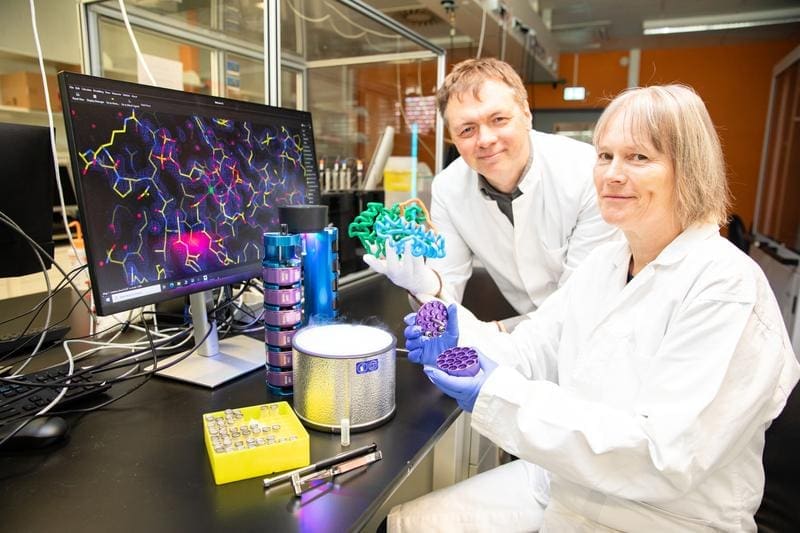
These processes enable highly precise and efficient signal transmission, which initiates defense against viruses, cancer cells or damaged tissue. The scientists assume that this metal center was already one of the earliest life forms on Earth and has been preserved in the course of evolution.
In the long term, the results could lead to the development of new drugs that specifically activate OAS – for example in viral infections or cancer – or inhibit it in order to treat autoimmune diseases. The study was published in the journal ACS Omega .
The researchers emphasize that quantum phenomena play an essential role in biology and make proteins function like highly optimized quantum machines. The discovery opens up new perspectives for understanding the evolution of the immune system and its targeted therapeutic influence.
Original Paper:
Editor: X-Press Journalistenbüro GbR
Gender Notice. The personal designations used in this text always refer equally to female, male and diverse persons. Double/triple naming and gendered designations are used for better readability ected.
Most read
 Wal Timmy: Environment Minister Backhaus ignored rescue technology that has been in place since 1983 The stranded humpback whale "Timmy" suffered severely for days in Mecklenburg-Western Pomerania beca...
- Wal Timmy: Germany’s problem with euthanasia EDITORIAL. Letting Timmy suffer is more due to the German lack of experience and the bureaucratic hu...
- Impending fuel shortage: “If the laboratory fails, medical care will come to a standstill in large parts” DGKL CEO Jan Wolter explains the dramatic consequences of a potential fuel shortage for laboratory m...