Therapies for multiple myeloma leave measurable genetic traces in the tumor cells
In a multicenter study, researchers at the University Hospital Würzburg have shown that resistance mechanisms in hepta-refractory multiple myeloma can be deciphered by whole-genome sequencing (WGS). This enables a targeted decision to be made as to whether renewed immunotherapy against BCMA or GPRC5D can still be effective.
Hepta-refractory multiple myeloma is present when the disease is resistant to two proteasome inhibitors, two immunomodulators, CD38 antibodies, and BCMA and GPRC5D-targeted immunotherapies (including CAR-T cells and bispecific antibodies). In a cohort of 37 heavily pretreated patients, median overall survival was 12.8 months, and progression-free survival under salvage therapies was 2.7 to 3.7 months.
Whole genome sequencing was performed on 17 patients. The analyses often showed biallele inactivation of tumor suppressor genes such as TP53, indicating a proliferative and apoptosis-resistant tumor biology. Genomic alterations associated with resistance to immunomodulators, BCMA, GPRC5D and CD38 therapies occurred in 71, 41, 35 and 12 percent of cases, respectively. Almost a third of the patients had a simultaneous loss of BCMA (TNFRSF17) and GPRC5D.
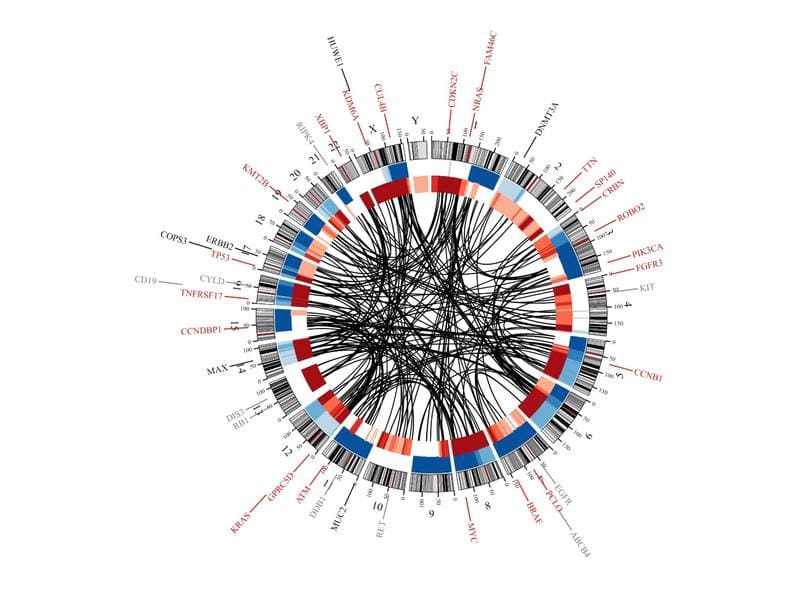
Sequential analyses revealed branching evolutionary pathways with multiple distinct variants in TNFRSF17 and GPRC5D within individual patients – a sign of persistent clones and ongoing mutation processes even after deep remissions. Immunohistochemistry confirmed antigen loss in BCMA due to biallelic genomic events, but also revealed other underlying mechanisms.
Crucial for clinical practice: If the target antigens BCMA or GPRC5D remain intact, renewed immunotherapy against this antigen can be successful. In the Würzburg cohort, all patients with received antigens responded to re-therapy and achieved a median of nine months of remission.
About half of the resistance cases are based on tumor intrinsic mechanisms. In the other half, the causes – possibly epigenetic, immune-mediated or in the tumor microenvironment – remain largely unexplained.
The study underlines the high genetic complexity and the progressive tumor evolution in multiple myeloma: Each survived therapy increases resistance by successively eliminating suppressor genes. Hepta-refractory patients are becoming increasingly common in everyday clinical practice and could soon be the new “normal” as long as the disease remains incurable. The results were published in the journal “Leukemia”.
Original Paper:
Editor: X-Press Journalistenbüro GbR
Gender Notice. The personal designations used in this text always refer equally to female, male and diverse persons. Double/triple naming and gendered designations are used for better readability. ected.
Most read
 Hantavirus: detection, symptoms, therapy What is hantavirus? Hantaviruses are a group of viruses that occur worldwide and are mainly transmit...
- Hantavirus: Facts instead of panic Reports of three deaths in connection with a hantavirus outbreak on the cruise ship "MV Hondius" in...
- German Medical Association calls for ban on medical diagnostics in drugstores The 130th German Medical Congress 2026 calls on legislators to prevent medical diagnostics in drugst...