UKL is the first clinic in Germany to perform two kidney transplants with mechanical perfusion
Leipzig University Hospital (UKL) was the first clinic in Germany to successfully perform two kidney transplants using mechanical perfusion. The interventions took place just one day after the revised guideline on kidney transplantation of the German Medical Association came into force on January 19, 2026.
In mechanical perfusion, removed organs are continuously rinsed with a special preservation solution during transport and, depending on the process, supplied with oxygen. Compared to conventional cold storage, the organs remain better supplied with nutrients. The procedure reduces ischemia damage due to lack of blood flow as well as reperfusion damage that can occur during recirculation after implantation. The aim is gentler organ preservation, better functional assessment before transplantation and improved transplant functions in the long term.
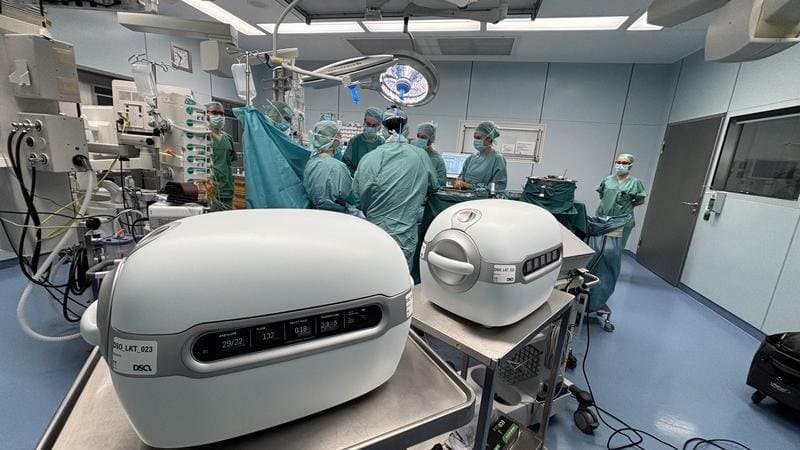
The two kidneys came from a brain-dead donor over 70 years old and were transplanted to a female and a male recipient. The transplants were carried out by two specialized teams led by Prof. Dr. med. Hans-Michael Tautenhahn and Prof. Dr. med. Daniel Seehofer. According to the UKL, both bodies are developing pleasingly well.
The donor met the expanded criteria of the new guideline, which includes kidneys of people over 60 years of age and 50 to 59-year-olds with risk factors such as high blood pressure, impaired kidney function or stroke as the cause of death. As a result, mechanical perfusion could already be used for this organ donation.
“Mechanical perfusion represents a significant scientific and clinical advance in organ preservation,” explained Prof. Tautenhahn, Deputy Head of Hepatobiliary Surgery and Visceral Transplantation. A Europe-wide study in the New England Journal of Medicine (DOI: 10.1056/NEJMc2406608), in which the Leipzig team was involved, proves the advantages. The procedure enables gentler transport, less graft damage and a direct functional assessment of the organ.
Kidneys are the most frequently transplanted organ in Germany and account for almost half of all organ transplants. At the same time, kidney patients make up the largest proportion on the waiting list. Due to the ongoing shortage of organs, increasing age and pre-existing conditions of donors, transplant centers must select organs particularly carefully and use them efficiently.
Mechanical perfusion has been used internationally for years for liver and heart and enables longer transport times as well as the consideration of marginal organs. It also opens up perspectives for the investigation and future therapeutic improvement of organs during perfusion – an approach that is being intensively researched at the UKL.
The German Organ Transplantation Foundation (DSO) provides the necessary equipment and materials to all suitable clinics. In addition to organ donation, the DSO also organises organ transport throughout Europe.
Prof. Tautenhahn thanked the organ donor and his family, the DSO, the transport teams, the donor hospital and the interdisciplinary team at the UKL. The successful deployment marks an important milestone and shows the potential of innovation, clear structures and teamwork in modern transplantation medicine.
Editor: X-Press Journalistenbüro GbR
Gender Notice. The personal designations used in this text always refer equally to female, male and diverse persons. Double/triple naming and gendered designations are used for better readability. ected.
Most read
 First female dean in 549 years: Professor Sara Y. Brucker heads the Faculty of Medicine in Tübingen For the first time in its almost 550-year history, the Faculty of Medicine at the University of Tübi...
- New S3 guideline: ASA as an option for thrombosis prophylaxis in hip and knee surgery The updated S3 guideline for the prophylaxis of venous thromboembolism (VTE) recommends acetylsalicy...
- New MRI methods for the early detection of Parkinson’s disease: Campus Lübeck is looking for study participants Researchers at the University Medical Center Schleswig-Holstein (UKSH) and the Universities of Lübec...