Test paradox in sexually transmitted infections revealed
Pre-exposure prophylaxis against HIV has been successful in reducing new infections, but is accompanied by an increase in other sexually transmitted infections. A model study explains this effect as a paradox: Increased case numbers result from increased testing, while the actual spread of the diseases decreases. This finding could improve strategies for the prevention and surveillance of infectious diseases, the Max Planck Institute for Dynamics and Self-Organization now announces.
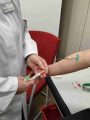
For years, pre-exposure prophylaxis (PrEP) has been considered a milestone in HIV prevention. Users of the therapy tend to engage in riskier sexual behavior and are therefore more susceptible to other sexually transmitted infections such as chlamydia or gonorrhea. To counter this risk, regular tests for such diseases are mandatory. Epidemiological data show a significant increase in recorded cases after the start of PrEP. A recent study provides an unexpected explanation: The apparent increase in infections could be due to more intensive testing activities, not an actual increase in prevalence.
The research team has developed an epidemiological model based on a classical approach. In this model, a person alternates between susceptible and infected state, distinguishing between symptomatic and asymptomatic infections. This differentiation enables a realistic simulation of test strategies. Regular screenings reveal more hidden infections, leading to higher reporting, even though the total number of infections is decreasing. The paradox intensifies as the frequency of testing increases, which underlines the value of such measures.
The analysis emphasizes the benefit of frequent tests, such as those provided for in German PrEP programs. Such screenings effectively reduce the spread of bacterial infections and compensate for behavioral changes through HIV protection. The increase in reported cases can thus be seen as an indicator of the success of the programs, as previously undetected infections are now identified and treated. This phenomenon shows that monitoring data must be interpreted carefully to avoid false conclusions.
The study underlines that PrEP programmes have a double effect: they protect against HIV and help fight other infections through integrated tests. When evaluating such initiatives, it must be taken into account that rising case numbers do not signal failure, but reflect the success of early detection. The findings are relevant for the development of future strategies for monitoring and containing sexually transmitted infections.
The model takes into account real-world scenarios in which asymptomatic cases play a major role. Many infections are symptom-free and remain undetected without tests. Mandatory screenings in PrEP programs make these cases visible, which inflates official statistics. At the same time, the actual prevalence decreases, as infected people are treated earlier and the further spread is interrupted. This paradox is especially prevalent in high-frequency tests, which are recommended in many countries.
Experts see the results as an indication of the effectiveness of public health measures. PrEP users benefit not only from HIV protection, but also from improved STI surveillance. However, the study urges caution when interpreting data: an increase in reports could mask progress. For decision-makers in politics and healthcare, the findings provide a basis for adapting programs and deploying resources in a more targeted manner.
The research is based on mathematical simulations that reflect real-world epidemiology. It shows that testing strategies play a crucial role in the control of infectious diseases. In Germany and other countries, similar models could help to better assess the effects of prevention programs. The study highlights the need to optimize test frequency and data analysis to identify and exploit paradoxical effects.
In the long term, the results could lead to improved guidelines. Frequent screenings not only reduce the prevalence of STIs, but also strengthen the health care system as a whole. The paradox illustrates that apparent setbacks can be progress. Researchers advocate a differentiated view of statistics in order to make evidence-based decisions. This applies not only to STIs, but potentially to other infectious diseases with asymptomatic courses.
The study was conducted in an international context and takes into account experiences from various PrEP programs. She emphasizes the dual benefits: HIV prevention and STI control. In times of rising infection rates due to changed behavior, such models offer valuable insights. The findings could be incorporated into guidelines and advance public health.
Original Paper:
Editor: X-Press Journalistenbüro GbR
Gender Notice. The personal designations used in this text always refer equally to female, male and diverse persons. Double/triple naming and gendered designations are used for better readability. ected.
Most read
 Miraculous fitness probiotic: Roseburia inulinivorans massively improves muscle strength Researchers from the University of Granada, the University of Almería and the Leiden University Medi...
- The personal health check of the UMG laboratory: The detectives of blood The Personal Health Check of the UMG Laboratory (Interdisciplinary Laboratory of the University Medi...
- ASKED: “The new GOÄ is a far greater danger than some people realize” The new fee schedule for doctors (GOÄ) provides for significant cuts for laboratory medicine. DGKL b...