
Synthetic DNA base pair developed on the basis of halogen bonds
For the first time, a research team led by the University of Cologne has created an artificial DNA base pair that is not based on hydrogen bonds, but on halogen bonds as a stabilizing force. The synthetic bases contain a halogen atom, preferably iodine, and form precisely directed interactions that allow for stable pairings.
The study, titled “Investigating Halogen Bonds as Pairing Force in an Artificial DNA Base Pair,” was published in the Journal of the American Chemical Society. It shows that alternative chemical binding principles can support the structure of DNA.
The team led by Professor Dr. Stephanie Kath-Schorr from the Institute of Organic Chemistry first designed the new building blocks with the help of computer simulations to ensure an optimal spatial arrangement. The molecules were then synthesized and tested in the laboratory for their mating ability. The experiments confirmed that the artificial bases find each other reliably and stably.
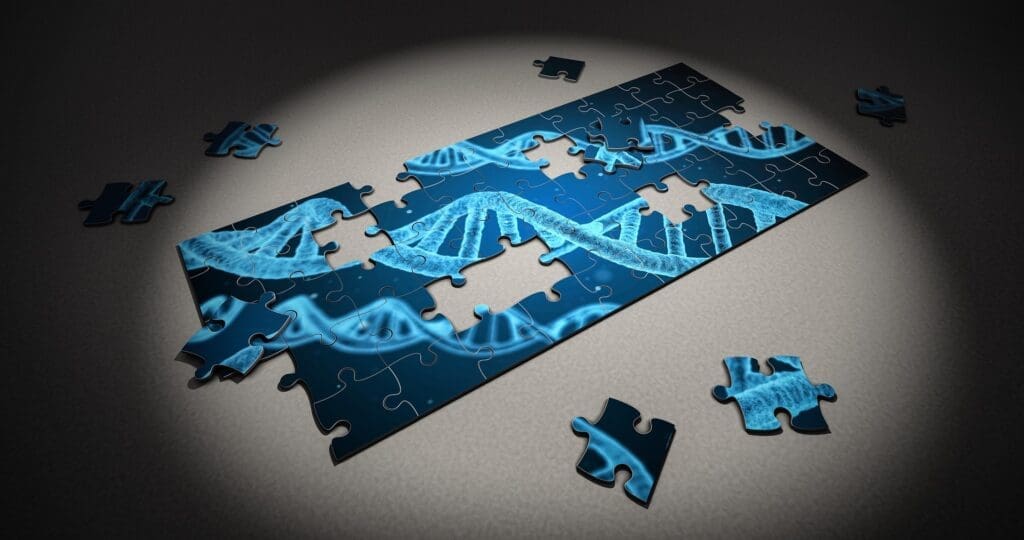
A key success is that a natural DNA polymerase – the enzyme that builds new DNA strands in cells – recognizes the synthetic building blocks and incorporates them into a growing DNA chain. This makes the base pair not only chemically stable, but also biologically compatible.
The results expand the understanding of the molecular flexibility of DNA. While earlier artificial base pairs mostly mimicked the principle of hydrogen bonds, the new work demonstrates that the genetic molecule can respond to fundamentally different binding mechanisms.
In the long term, such extended base pairs could be used in synthetic biology, for example in the development of new diagnostic procedures or therapeutic approaches. The study highlights the possibility of expanding the genetic alphabet beyond the natural four bases.
The work was carried out at the Institute of Organic Chemistry at the University of Cologne.
Original Paper:
Editor: X-Press Journalistenbüro GbR
Gender Notice. The personal designations used in this text always refer equally to female, male and diverse persons. Double/triple naming and gendered designations are used for better readability. ected.
Most read
 Miraculous fitness probiotic: Roseburia inulinivorans massively improves muscle strength Researchers from the University of Granada, the University of Almería and the Leiden University Medi...
- DGKL board member Jan Wolter calls for comprehensive health tax instead of pure sugar tax Jan Wolter, chairman of the German Society for Clinical Chemistry and Laboratory Medicine (DGKL), ha...
- ASKED: “The new GOÄ is a far greater danger than some people realize” The new fee schedule for doctors (GOÄ) provides for significant cuts for laboratory medicine. DGKL b...