
Strong synapses are retained longer
Strong synaptic connections in the brain are more stable and last longer than weak ones. This is shown by a new study by the Center for Molecular Neurobiology Hamburg (ZMNH) and the Mannheim Center for Translational Neuroscience (MCTN) at Heidelberg University. The results provide a possible explanation for how the brain can maintain stable memories in the long term despite constant changes in its structures.
Memories are stored in networks of nerve cells that are connected to each other via synapses. These junctions are highly dynamic: they can change their strength, disappear and re-emerge. Nevertheless, memories often remain for a lifetime. How the brain resolves this contradiction between plasticity and stability has been largely unclear until now.
The research group led by Dr. Cynthia Rais (ZMNH) and Professor Dr. Simon Wiegert (MCTN) has now demonstrated for the first time in the living brain that the functional strength of a synapse directly predicts how long it will last. Strong synaptic connections are preferentially preserved, while weaker ones are broken down more quickly. At the same time, the high redundancy of many synapses ensures that the flow of information remains stable at the level of entire dendritic branches and individual nerve cells.
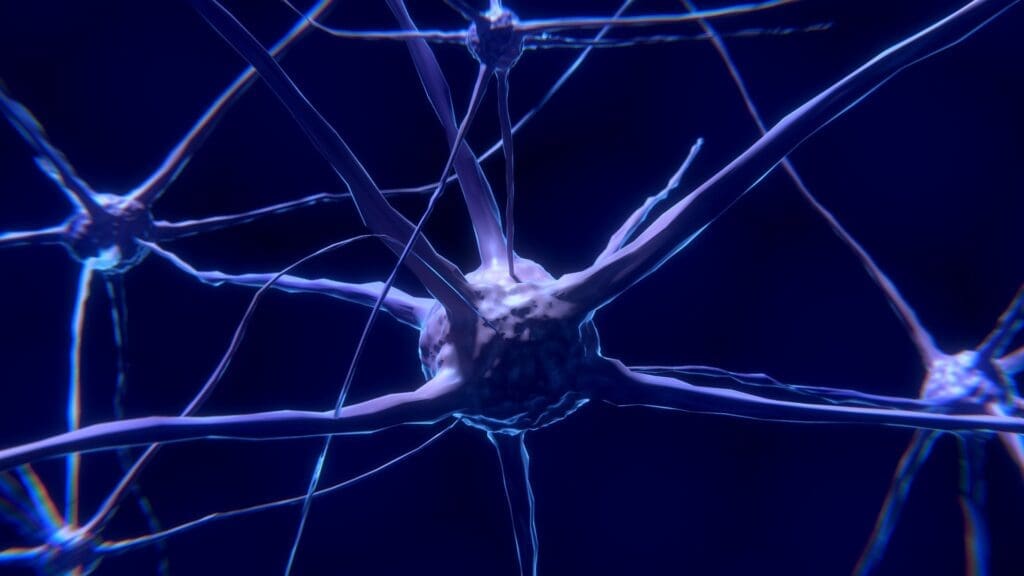
The scientists tracked individual dendritic spines in the hippocampus of awake mice over a period of two weeks using optogenetics and two-photon calcium imaging. They stimulated neurons in the CA3 region and observed the reactions in CA1 neurons down to the level of individual synapses. The mice were so accustomed to the experimental facility that they remained still during imaging – without anesthesia that would have altered synaptic activity.
The study also shows that larger synapses are not only more stable, but also functionally stronger. Despite high variability of individual compounds, signal transmission remained constant at a higher level. The researchers compare this principle of redundancy to an ant trail: individual elements are constantly changing, but the overall system remains stable.
The findings could help to better understand neurodegenerative diseases such as Alzheimer’s, in which early loss of synapses plays a central role. At the same time, they raise new questions about how learning processes and memory formation influence the stability of synapses.
Original Paper:
Functional synaptic connectivity shapes spine stability in the hippocampus | Nature Communications
Editor: X-Press Journalistenbüro GbR
Gender Notice. The personal designations used in this text always refer equally to female, male and diverse persons. Double/triple naming and gendered designations are used for better readability. ected.
Most read
 Miraculous fitness probiotic: Roseburia inulinivorans massively improves muscle strength Researchers from the University of Granada, the University of Almería and the Leiden University Medi...
- DGKL board member Jan Wolter calls for comprehensive health tax instead of pure sugar tax Jan Wolter, chairman of the German Society for Clinical Chemistry and Laboratory Medicine (DGKL), ha...
- ASKED: “The new GOÄ is a far greater danger than some people realize” The new fee schedule for doctors (GOÄ) provides for significant cuts for laboratory medicine. DGKL b...