Sildenafil shows promising effect in Leigh syndrome
An international team of researchers has identified sildenafil as a potential therapeutic agent for Leigh syndrome. The researchers from Heinrich Heine University Düsseldorf (HHU), the University Hospital Düsseldorf (UKD), Charité – Universitätsmedizin Berlin and the Fraunhofer Institute for Translational Medicine and Pharmacology (ITMP) Hamburg were able to demonstrate an improvement in energy metabolism and cell function in cell models, brain organoids and animal experiments. In six patients in individual treatment trials, the active ingredient showed positive effects and was well tolerated. The results were published in the journal “Cell” on March 10, 2026.
Leigh syndrome is a rare, congenital mitochondriopathy that usually occurs in childhood and leads to severe neurological damage. Typical symptoms are developmental disorders, epileptic seizures, muscle weakness and respiratory failure. So far, there is no approved drug therapy; most of those affected die within a few years of diagnosis.
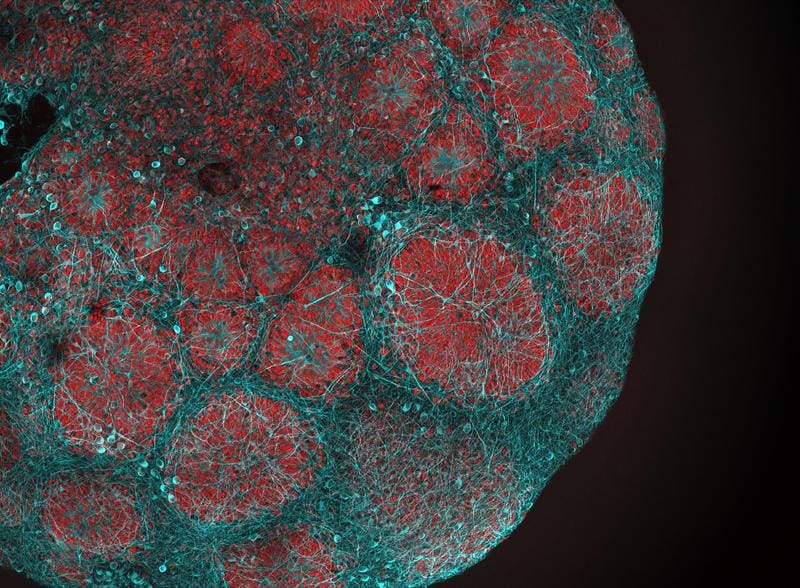
The researchers used skin cells from patients to generate induced pluripotent stem cells and use them to develop nerve cells and brain organoids. In an extensive screening with over 5,500 active substances – some of which have already been approved and with comprehensive safety data – sildenafil proved to be promising. The active ingredient, which is used to treat erectile dysfunction in adults and pulmonary hypertension in children, improved mitochondrial metabolism and cell function in the models.
The positive effects were confirmed in brain organoids and animal models. Sildenafil was then used in individual treatment trials for six patients – first at the Charité, later also in Düsseldorf, Munich and Bologna. All those affected showed rapid recovery from crisis situations, neurological improvement and an increase in muscle strength. Based on the results, sildenafil received orphan drug status from the European Medicines Agency (EMA).
The study was carried out as part of the CureMILS consortium funded by the European Commission and coordinated by Prof. Dr. Alessandro Prigione (HHU/UKD). In addition to the above-mentioned institutions, research groups from Germany, Austria, Finland, the Netherlands, Poland, Italy, Greece and the USA were involved.
The ongoing Horizon consortium SIMPATHIC, which includes Prigione and Prof. Dr. Markus Schülke (Charité), is currently planning a placebo-controlled clinical trial to test the efficacy and safety of sildenafil in a larger patient population. The aim is a possible approval by the EMA.
Leigh syndrome occurs with a frequency of about one case per 36,000 live births and is a rare disease. The small number of cases makes research considerably more difficult.
Original Paper:
Pluripotent stem-cell-based screening uncovers sildenafil as a mitochondrial disease therapy: Cell
Editor: X-Press Journalistenbüro GbR
Gender Notice. The personal designations used in this text always refer equally to female, male and diverse persons. Double/triple naming and gendered designations are used for better readability. ected.
Most read
 First female dean in 549 years: Professor Sara Y. Brucker heads the Faculty of Medicine in Tübingen For the first time in its almost 550-year history, the Faculty of Medicine at the University of Tübi...
- Interview: KKH CEO Dr. Wolfgang Matz on billing fraud, AI and the future of statutory health insurance In an interview with MedLabPortal , Dr. Wolfgang Matz, Chairman of the Board of Directors of KKH Kau...
- Lifesaver laboratory medicine: “As a rule, a result should be available after 60 minutes at the latest for emergencies.” 11.2 is the day of the emergency call - but for laboratory medicine it is only one of 365 days on wh...