
Podcast launched with DGKL CEO Jan Wolter: “We should not stop at a sugar tax”
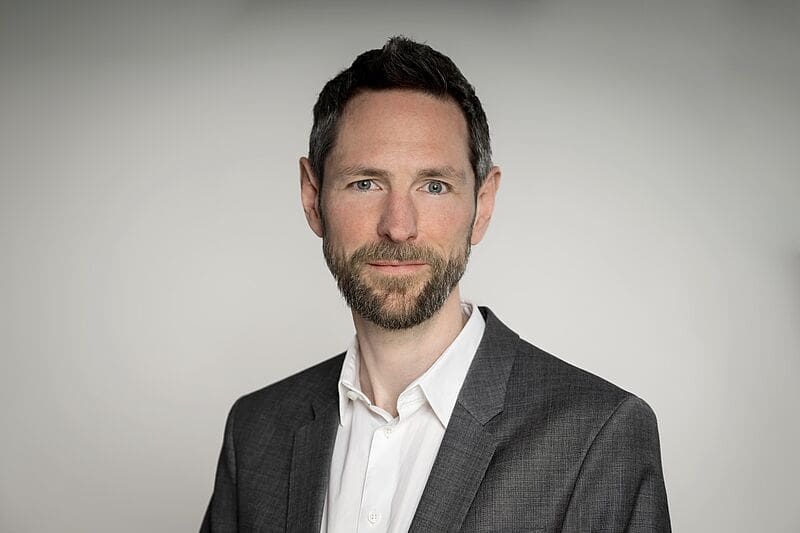
In the first episode of the US podcast Diagnose Deutschland , DGKL board member Jan Wolter sheds light on the fatal effects of the lack of a sugar tax on the health of millions of people – and calls for the introduction of a more far-reaching health tax on other risk ingredients in our food as well. MedLabPortal brings below an abridged version of the podcast as a NACHGEFRAGT interview. You can listen to the interview in full length at Diagnose Deutschland or with us at the end of the interview.
Mr. Wolter, the introduction of a sugar tax was demanded on almost all channels in the run-up to the CDU party conference in Oldenburg, including 40 civil society organizations. For the CDU, however, this was not an issue – there will be no sugar tax under Chancellor Merz. How do you assess this development?
Wolter: It is completely absurd. The CDU must ask itself what it wants to stand for and, above all, for whom it wants to make politics in the state.
One argument within the CDU was that the state does not have to patronize its citizens….
Wolter: With all due respect, but that’s a hollow phrase. Anyone who argues in this way must abolish the tobacco tax and legalize cannabis. The state “patronizes” its citizens everywhere. There is a seat belt requirement in the car, a smoking ban in public transport, there are noise protection laws, the list can be extended at will. The label “paternalism” is always taken out of the drawer when a regulation does not suit you. Here, they do not work with factual arguments, but throw around empty words.
This is a core problem that I see in the current debates – regardless of the topic: facts play less and less of a role. From the point of view of a scientific society , this is a very dangerous path that is being taken.
And what would you do now that the sugar tax initiative is effectively dead?
Wolter: We should not stop at a sugar tax. We also need to talk about alcohol, tobacco, ultra-processed foods, salt, etc. If you look into the snack boxes of kindergarten or primary school children, you will find more chocolate bars and chips than fresh fruit and vegetables. And in fact, it’s not only faster to put together such a “gift box” than a healthy alternative – it’s also much cheaper.
I can’t quite believe that. Are you not only calling for a sugar tax, but also similar counterparts on salt, fats, and other disease-causing foods or their ingredients?
Wolter: Yes! In Germany, it is incredibly cheap to eat poorly and far too expensive to eat healthily. This must change urgently! This is where politics is called upon.
A study by the competence cluster “nutriCARD” at the University of Jena comes to mind. According to the study, 1.55 million people die in Europe every year from malnutrition. Is your model also applicable to the entire EU?
Wolter: Why not? Europe is in competition with other major economies. How about the goal of becoming the healthiest economic area in the world?
But if you want to pass on the additional food-related costs in the health care system to the polluters, where is the limit? Sugar, salt, alcohol, tobacco… What else?
Wolter: We should not set a limit for ourselves until we have started a fact-based (!), broad discussion. And it’s not just about making products more expensive. Conversely, we can also make healthy food cheaper.
That’s also a socially relevant question. Until now, it has been accepted in many areas when profits were privatized, but the costs incurred were transferred to the general public. They challenge exactly the opposite – and thus challenge the system. Why should someone from the industry follow your demands?
Wolter: This is another core problem! The price at the supermarket checkout does not reflect the entire costs in the system. Not the environmental pollution such as greenhouse gas emissions from animal husbandry or the pollution of the soil and groundwater through overfertilization or pesticides. Nor are the consequential costs of antibiotic resistance due to the absurd administration of antibiotics in factory farming. And certainly not the health costs of consuming unhealthy food, alcohol, tobacco, vapes or other toxins. In fact, we are subsidizing damage to humans, animals and the environment.
And what does the acceptance among the population look like?
Wolter: It certainly depends on the packaging here. If you ask: “Would you like to have to pay more for chips, soda and chocolate bars in the future?”, the answer is usually “No!”. But if the statement is that health care costs are exploding – also because many people eat the wrong food and unhealthy food is therefore becoming more expensive and healthy food cheaper, then the agreement is likely to be different.
But I would like to have a few hard facts. What costs and sums are we actually talking about?
Wolter: There are plenty of hard facts. There is a wide range of studies that show that malnutrition in Germany is incredibly expensive. In Europe, around one third of deaths from cardiovascular diseases are related to malnutrition. A study that is less than a year old comes to almost 50 billion euros in environmental and health costs due to malnutrition. This does not even include tobacco and alcohol consumption.
50 billion by reducing sugar, fats and salt? With these figures, you chase Nina Warken out of office…
Wolter: Nina Warken has shown herself to be “very open” to a sugar tax. For a Federal Minister of Health, that’s damn little. I find that extremely weak.
If the health tax you postulated were to come, Lars Klingbeil would also be able to smile benevolently. Because the finance minister would have significant additional revenues. So your model is: You reduce health costs by introducing the tax AND at the same time earn more money for the state?
Wolter: The sugar tax is not about helping the finance minister to plug the numerous holes in the budget. The money raised should be used to make healthy food cheaper, promote healthy food in school canteens or finance awareness campaigns. The citizen must therefore get the money back.
To sum up: They are losing it with the sugar industry, powerful food corporations and all thosewho like to consume chips and cola in the evening in front of the TV. Why are you doing this to yourself?
Wolter: The sugar industry and food companies have enough lobbyists in the government. And those who now sit in front of the TV in the evening with chips and cola or in front of any other screen would probably benefit most from the reforms mentioned.
Editor: X-Press Journalistenbüro GbR
Gender Notice. The personal designations used in this text always refer equally to female, male and diverse persons. Double/triple naming and gendered designations are used for better readability. ected.
Most read
 First female dean in 549 years: Professor Sara Y. Brucker heads the Faculty of Medicine in Tübingen For the first time in its almost 550-year history, the Faculty of Medicine at the University of Tübi...
- New S3 guideline: ASA as an option for thrombosis prophylaxis in hip and knee surgery The updated S3 guideline for the prophylaxis of venous thromboembolism (VTE) recommends acetylsalicy...
- New MRI methods for the early detection of Parkinson’s disease: Campus Lübeck is looking for study participants Researchers at the University Medical Center Schleswig-Holstein (UKSH) and the Universities of Lübec...