
Physicians weaken leukemia cells through targeted false alarm response
Cancer cells in acute myeloid leukemia (AML) can be specifically weakened by inhibiting certain proteins. A research team at the Mainz University Medical Center has discovered that the blockade of the proteins p300 and CBP in the tumor cells triggers a strong defense reaction that resembles a flu immune response. As a result, the leukemia cells stop growing and eventually die. The results have been published in the journal “Blood”.
Acute myeloid leukemia is an aggressive blood cancer in which immature progenitor cells in the bone marrow multiply uncontrollably and displace healthy blood cells. This leads to a lack of functional blood cells and platelets.
The scientists led by Dr. Daniel Sasca from the III Medical Clinic and Polyclinic investigated the effect of inhibition of the two proteins p300 and CBP. These proteins act as central switching points for gene regulation in the cells. Contrary to earlier assumptions that their inhibition generally attenuates gene activity, the researchers activated defense programs in some of the cancer cells that are normally used in viral infections.
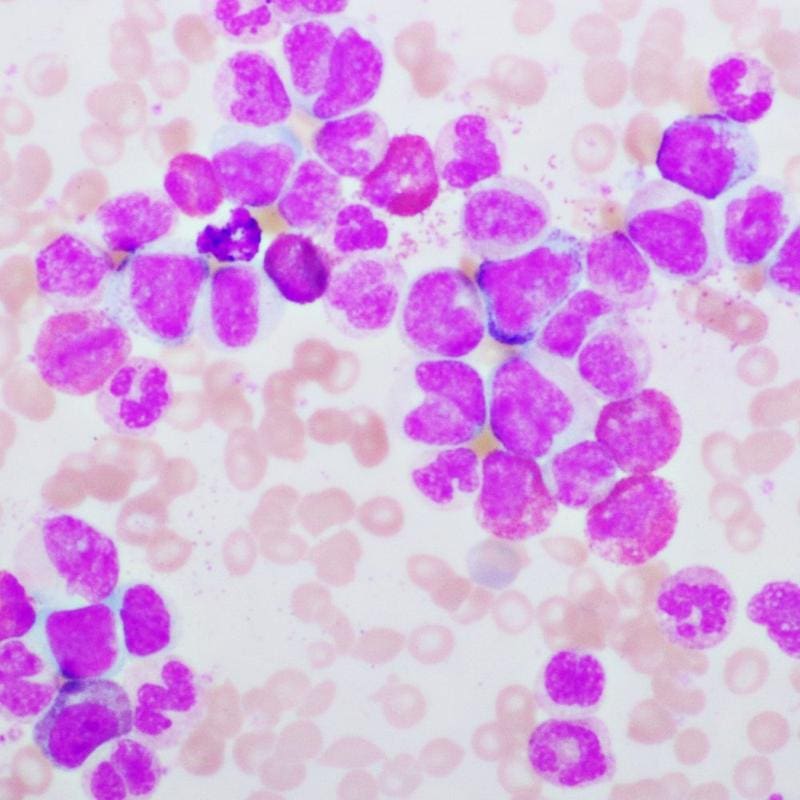
“The tumor cells get a severe flu from our therapy and die as a result,” explained study leader Sasca. The cancer cells reacted with growth arrest, changes and finally programmed cell death.
This effect could be significantly enhanced by combining it with the immune-stimulating messenger substance interferon-alpha. In cell cultures and animal models, the combination therapy showed a much stronger effect against the leukemia cells.
The researchers analysed the mechanism at several levels of gene regulation – from gene activity to protein changes to DNA-protein complexes – using modern methods such as single-cell studies and proteome analyses.
In the long term, the results could lead to new combination therapies that specifically use the “self-defense” of the cancer cells. The work is funded by the Emmy Noether Program of the German Research Foundation (DFG) and the Collaborative Research Center 1292.
Original Paper:
Editor: X-Press Journalistenbüro GbR
Gender Notice. The personal designations used in this text always refer equally to female, male and diverse persons. Double/triple naming and gendered designations are used for better readability. ected.
Most read
 DGKL board member Jan Wolter calls for comprehensive health tax instead of pure sugar tax Jan Wolter, chairman of the German Society for Clinical Chemistry and Laboratory Medicine (DGKL), ha...
- ASKED: “The new GOÄ is a far greater danger than some people realize” The new fee schedule for doctors (GOÄ) provides for significant cuts for laboratory medicine. DGKL b...
- Psychotherapists demonstrate in Frankfurt against fee cuts On April 11, 2026, the association unith e.V. will participate for the first time as a co-organizer...