
New S3 guideline: ASA as an option for thrombosis prophylaxis in hip and knee surgery
The updated S3 guideline for the prophylaxis of venous thromboembolism (VTE) recommends acetylsalicylic acid (ASA) for the first time for the prevention of blood clots after implantation of hip and knee prostheses. The guideline was published on January 21, 2026.
The recommendation applies to patients without individual high-risk factors for thrombosis, provided that a consistent fast-track or rapid recovery concept with mobilization is already implemented on the day of surgery. The German Society for Endoprosthetics (AE) welcomes the innovation and sees it as an effective, easy-to-use and cost-effective alternative to conventional methods.
Until now, thrombosis prophylaxis after such procedures has usually been carried out with heparin injections or direct oral anticoagulants (NOACs). The latter are more difficult to handle in the case of concomitant diseases or unplanned follow-up operations. As an oral tablet, ASA offers advantages in practical use and is significantly cheaper, without the guideline stating any loss of efficacy or safety – provided that the conditions mentioned are met.
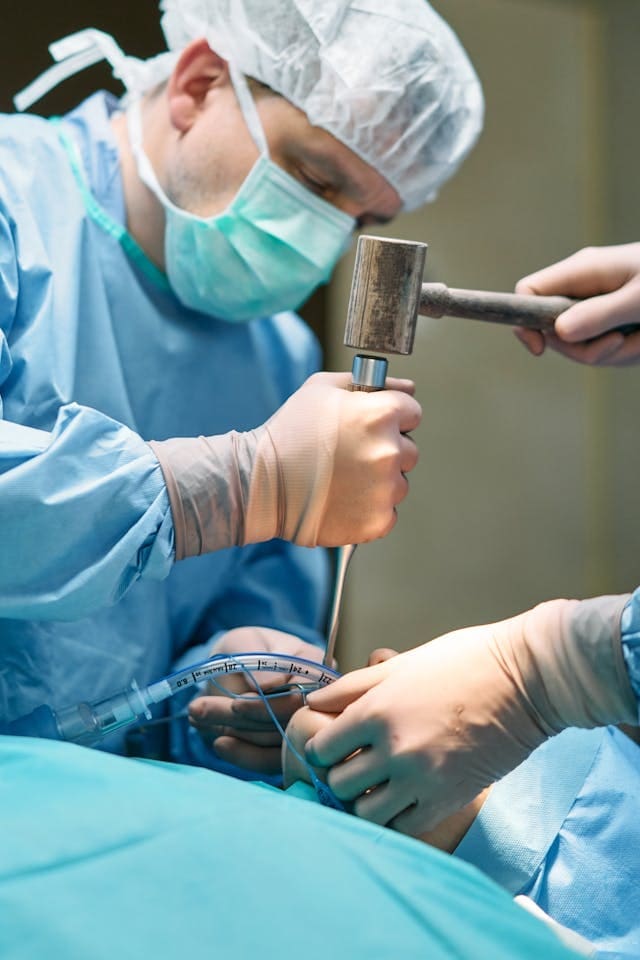
Professor Dr. med. Rüdiger von Eisenhart-Rothe, President of the AE and Director of the Clinic for Orthopaedics and Sports Orthopaedics at the Klinikum rechts der Isar in Munich, emphasises that pulmonary embolisms as a result of deep vein thrombosis are rare, but potentially life-threatening. ASA expands the spectrum with an option that has been established in other countries for decades.
However, the guideline makes it clear that ASA is not a one-size-fits-all solution. Patients with active cancers, known thrombosis or bleeding risks or other serious comorbidities continue to require more intensive, individually adapted prophylaxis, for example with heparin or NOACs.
Professor Dr. med. Georgi Wassilev, Secretary General of the AE and Director of the Clinic for Orthopaedics, Trauma Surgery and Rehabilitative Medicine at the University Medical Center Greifswald, emphasises the possibility of greater personal responsibility on the part of patients. The simple intake of tablets combined with early mobilization involves those affected more actively in the healing process. The prerequisite remains consistent cooperation, including getting up early on the day of surgery and regular physiotherapy.
Professor Dr. med. Christian Merle, Vice President of the AE and Chief Physician of the Endoprosthetics Center III at the Diakonie-Klinikum Stuttgart, classifies early mobilization as a central factor in thrombosis prophylaxis. Many older studies were based on outdated concepts with longer periods of bed rest. The nationwide implementation of the fast-track principle in Germany is therefore essential.
The S3 guideline was developed under the leadership of the German Society of Surgery (DGCH) and the German Society of Internal Medicine (DGIM) with the participation of numerous other professional societies. The orthopaedic and trauma surgery perspective was largely incorporated through the guideline commission of the German Society for Orthopaedics and Trauma Surgery (DGOU). Professor Dr. med. Andreas Halder, Medical Director of Sana Kliniken Sommerfeld, underlines the high evidence base from randomized trials, registry data and international recommendations.
The AE calls for a quality-assured introduction of ASA prophylaxis and sees a need for further research, for example on the optimal duration of therapy and the quantitative influence of early mobilization on the risk of thrombosis.
Original paper:
The guideline can be downloaded here
Editor: X-Press Journalistenbüro GbR
Gender Notice. The personal designations used in this text always refer equally to female, male and diverse persons. Double/triple naming and gendered designations are used for better readability. ected.
Most read
 Miraculous fitness probiotic: Roseburia inulinivorans massively improves muscle strength Researchers from the University of Granada, the University of Almería and the Leiden University Medi...
- DGKL board member Jan Wolter calls for comprehensive health tax instead of pure sugar tax Jan Wolter, chairman of the German Society for Clinical Chemistry and Laboratory Medicine (DGKL), ha...
- ASKED: “The new GOÄ is a far greater danger than some people realize” The new fee schedule for doctors (GOÄ) provides for significant cuts for laboratory medicine. DGKL b...