NCT/UCC Dresden launches two groundbreaking projects for the care of children with cancer
On the occasion of International Childhood Cancer Day on February 15, 2026, the Pediatric Oncology Center at the National Center for Tumor Diseases (NCT/UCC) Dresden is drawing attention to two new care projects. The aim is to give children and adolescents with cancer and their families access to the best possible university care, regardless of where they live.
Cancer in childhood and adolescence is rare, accounting for about 0.5 percent of all cancers, but is of great importance because of its long life expectancy and possible long-term consequences. In addition to medical stress, high frequency of visits to specialized centers, long journeys and organizational challenges place a considerable burden on many families.
The center, headed by Prof. Denis Schewe, is certified by the German Cancer Society and treats all diseases of pediatric hematology and oncology, including stem cell transplants and modern cell therapies. Every year, around 100 children and adolescents with a new cancer diagnosis are added; the catchment area includes eastern Saxony, parts of southern Brandenburg and the Vogtland.
Ped-Onko-SAX: Digital platform for the whole of Saxony
On January 1, 2026, Ped-Onko-SAX started building a digital care platform for children with cancer in Saxony. It is intended to enable telemedicine, home diagnostics, continuous medical and neuropsychological monitoring as well as low-threshold self-management. The aim is to provide care at university level regardless of where they live, while reducing travel times and burdens for families. One focus is on the active involvement of patients and families. Project partners are the Clinic for Child and Adolescent Psychiatry of the University Hospital Dresden, MedicalSyn GmbH and Sonnenstrahl e.V. Dresden. The funding is provided as part of the ERDF programme “Innovative Approaches in the Field of Health and Care Industry” 2021–2027.
KOMNET-SAX: Mobile network for supply close to home
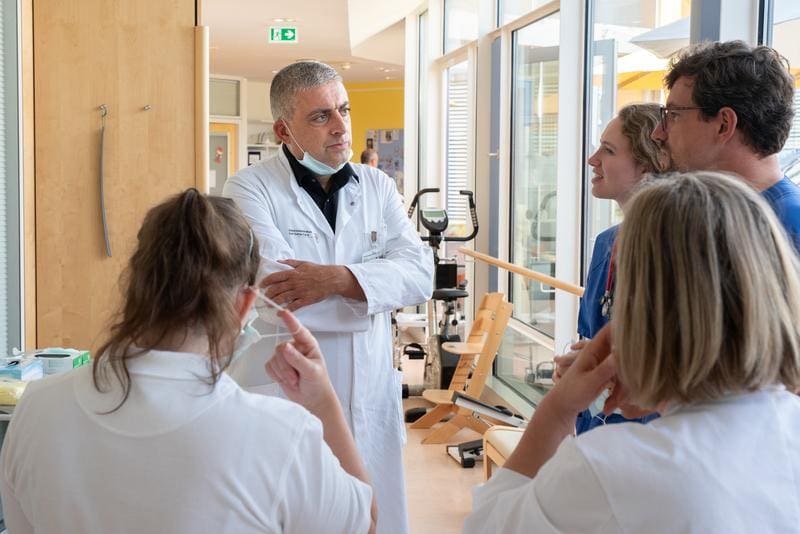
The concept phase of KOMNET-SAX – Children’s Oncological Mobile Network – has been running since December 2025, funded by the Innovation Fund of the Federal Joint Committee. The partners are the pediatric oncology departments in Chemnitz and Cottbus, the Protestant University of Applied Sciences Dresden, the University Medical Center Magdeburg, pro:med GmbH as well as the Techniker Krankenkasse, BARMER and IKK-classic. The core is home visits by specially qualified “Advanced Practice Nurses” (APNs), who are intended to partially replace outpatient or day hospital rounds. The aim is to reduce costs while improving the quality of life of the children. The full proposal is to be submitted in June 2026; the requested volume is around six million euros for four years.
Parallel to health services research, there is a focus on new therapies. Leukemia accounts for almost 30 percent of all childhood cancers. Today, around 90 percent can be cured, but the therapies often cause severe long-term consequences such as neuro-cognitive impairment, growth disorders or heart problems. Dresden’s research is therefore focusing on more targeted strategies in acute lymphoblastic leukemia (ALL): antibody-based therapies, targeted combinations and precision medicine approaches. Functional genomics (e.g. CRISPR screenings) are used to identify molecular targets and to investigate resistance and relapse mechanisms. The long-term goal is to halve the intensity of chemotherapy within the next ten years and to develop new options that can also be used for other childhood cancers.
Prof. Esther Troost (Dean of the Faculty of Medicine TU Dresden and Director of the Clinic for Radiotherapy and Radiation Oncology) and Prof. Uwe Platzbecker (Medical Director UKD and hematology expert) underline the importance of interdisciplinary research and the transfer of new, targeted approaches into clinical practice.
Editor: X-Press Journalistenbüro GbR
Gender Notice. The personal designations used in this text always refer equally to female, male and diverse persons. Double/triple naming and gendered designations are used for better readability. ected.
Most read
 Miraculous fitness probiotic: Roseburia inulinivorans massively improves muscle strength Researchers from the University of Granada, the University of Almería and the Leiden University Medi...
- The personal health check of the UMG laboratory: The detectives of blood The Personal Health Check of the UMG Laboratory (Interdisciplinary Laboratory of the University Medi...
- ASKED: “The new GOÄ is a far greater danger than some people realize” The new fee schedule for doctors (GOÄ) provides for significant cuts for laboratory medicine. DGKL b...