MHH receives extension for HannibaL model course of study
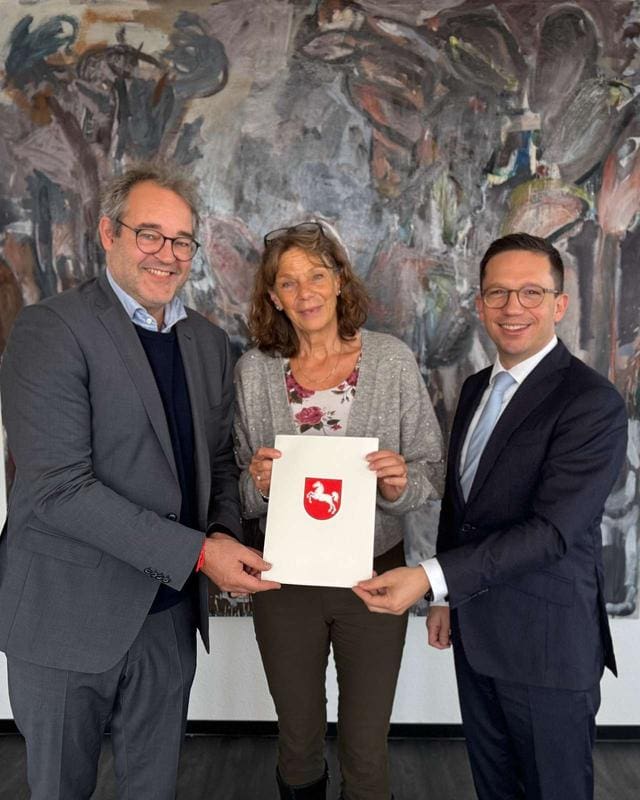
The Hannover Medical School (MHH) is allowed to continue its model course of study HannibaL (“Hanoverian Integrated, Career-Oriented and Adaptive Teaching”) for another six years. The Lower Saxony Ministry of Science and Culture has approved the third extension to support the reform of medical studies. The degree programme, which has been active since the winter semester 2005/2006, combines theory and practice from the very beginning and focuses on patients.
The extension was decided in cooperation with the Lower Saxony Ministry of Social Affairs, Labour, Health and Equality. It acknowledges the efforts of the MHH to make medical education practical and to develop it for the future. Currently, around 2,500 students are enrolled in human medicine studies at the MHH. The university management sees the extension as an opportunity to further optimize education and better prepare students for the requirements of the health care system.
A five-member commission of the Association of Medical Faculties (MFT) gave a positive assessment of the course at the beginning of the year. The evaluation praised the patient-centered orientation, early insights into patient care, clinical experience, social skills development, and strong research orientation. The good infrastructure, the reliable organization and the accessibility of contact persons were also emphasized.
Since its introduction by Professor Hermann Haller, the course has steadily gained in importance under the direction of Professor Ingo Just. Over the past 20 years, patient-oriented training has been constantly developed, especially through digitization during the Corona pandemic. A specially developed app, the UAPP, supports bedside teaching and enables flexible organization. In addition, the first cohort that received scientific support throughout the entire course of study completed this year.
New goals have been set for the fourth funding period, under the leadership of the new Dean of Studies, Professor Christian Mühlfeld. This includes the greater involvement of teaching hospitals in view of the decline in inpatient care, the expansion of virtual reality-based services and the promotion of student health through self-awareness and stress management. Another focus is on an in-depth track for general practice in order to meet the demand for family doctors in Lower Saxony.
The degree programme dispenses with the classic separation of pre-clinical and clinical. Instead, patient-oriented teaching begins in the first semester. The training is scientifically sound and aims to train students in molecular medicine to prepare them to explore new avenues of treatment. Classes take place in five seven-week quintiles, with small group work encouraged from the third year onwards to improve personal supervision.
Read more:
Hannover Medical School : Medical studies at the MHH: Practice from the very beginning
Editor: X-Press Journalistenbüro GbR
Gender Notice. The personal designations used in this text always refer equally to female, male and diverse persons. Double/triple naming and gendered designations are used for better readability. ected.
Most read
 Miraculous fitness probiotic: Roseburia inulinivorans massively improves muscle strength Researchers from the University of Granada, the University of Almería and the Leiden University Medi...
- The personal health check of the UMG laboratory: The detectives of blood The Personal Health Check of the UMG Laboratory (Interdisciplinary Laboratory of the University Medi...
- ASKED: “The new GOÄ is a far greater danger than some people realize” The new fee schedule for doctors (GOÄ) provides for significant cuts for laboratory medicine. DGKL b...