Many Norwegian mothers do not attend follow-up examinations after childbirth
A study by the Norwegian University of Science and Technology (NTNU) shows that one in four women in Norway does not take advantage of the free follow-up examination at the family doctor six weeks after giving birth. It is particularly worrying that women with chronic diseases, high-risk pregnancies or birth complications do not participate more often, even though they carry an increased health risk.
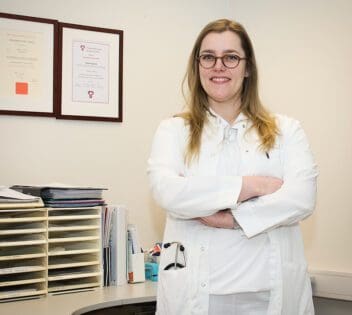
The study by Christine Agdestein, family doctor and doctoral candidate at NTNU, is based on a questionnaire survey of 351 women from the Nord-Trøndelag region who had given birth within one year. The results are representative of Norway. Participating women were mostly satisfied when they were able to talk about the birth experience, many relevant topics were discussed, and a gynecological examination was performed.
The most important topics cited by the women were the birth experience (61 percent), contraception (55 percent), breastfeeding (53 percent), birth-related pelvic injuries (52 percent) and mental health (40 percent). These topics were also addressed most often. Mental health is gaining traction as postpartum depression is on the rise in Norway.
Reasons for absenteeism are a lack of a family doctor, the assumption that an examination is unnecessary, dissatisfaction with previous visits or ignorance of the offer. Only 44 percent received information in the maternity ward, 52 percent from midwives. 32 percent did not know that the advice is free of charge – knowledge of this increases the willingness to participate. Many women want a gynecological examination, but it is not always offered; Family doctors should proactively suggest them.
The researchers recommend better information during pregnancy and in the maternity ward, including written materials. A follow-up project is developing a tool that family doctors and women use together to prioritize topics and adapt the advice individually.
Original Paper:
https://link.springer.com/article/10.1186/s12875-025-02992-x
Editor: X-Press Journalistenbüro GbR
Gender Notice. The personal designations used in this text always refer equally to female, male and diverse persons. Double/triple naming and gendered designations are used for better readability. ected.
Most read
 DGKL board member Jan Wolter calls for comprehensive health tax instead of pure sugar tax Jan Wolter, chairman of the German Society for Clinical Chemistry and Laboratory Medicine (DGKL), ha...
- ASKED: “The new GOÄ is a far greater danger than some people realize” The new fee schedule for doctors (GOÄ) provides for significant cuts for laboratory medicine. DGKL b...
- Psychotherapists demonstrate in Frankfurt against fee cuts On April 11, 2026, the association unith e.V. will participate for the first time as a co-organizer...