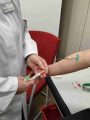
Lifesaver laboratory medicine: “As a rule, a result should be available after 60 minutes at the latest for emergencies.”
11.2 is the day of the emergency call – but for laboratory medicine it is only one of 365 days on which 24/7 standbys enable the fastest possible, sometimes life-saving analysis in emergencies. MedLabPortal asked DGKL Presidium member Prof. Julie Schanz about the procedures and response times during an emergency.
MedLabPortal: How long does it take from the arrival of an emergency sample to the result?
Prof. Schanz: That depends on the type of examination. Some parameters, such as glucose, are ready within minutes, while others take a little longer. As a rule, however, a result should be available after 60 minutes at the latest for emergencies.
MedLabPortal: What is tested for if the patients are accident victims?
Prof. Schanz: That depends on the type and severity of the accident. However, if bleeding is suspected, for example, the blood count can be determined, but also the clotting, shock and blood gas parameters in severely injured patients, for example in the case of polytrauma.
MedLabPortal: What is tested for if a heart attack is suspected?
Prof. Schanz: In the laboratory, the troponin-T value is particularly relevant here, which is the most important diagnostic parameter along with the ECG. Troponin T is released when cells of the heart are damaged and can then be measured.

MedLabPortal: How do you find out if someone is drunk and suffering from hypoglycemic shock at the same time?
Prof. Schanz: Both the alcohol level and the glucose value can be measured very quickly in the laboratory or by immediate diagnostics at the patient’s point of view.
MedLabPortal: Are there blood samples on board the helicopter and ambulance?
Prof. Schanz: Yes, the first tests can already be done in the NAW and helicopter that cannot wait, for example the determination of blood sugar.
MedLabPortal: How does the clinic know that these samples need to be analyzed particularly quickly?
Prof. Schanz: The clinic decides how urgent the laboratory analysis is. This depends on the disease and the condition of the patient. The urgency is then communicated to the laboratory accordingly.
The questions were asked by Vlad Georgescu
Editor: X-Press Journalistenbüro GbR
Gender Notice. The personal designations used in this text always refer equally to female, male and diverse persons. Double/triple naming and gendered designations are used for better readability. ected.
Most read
 Miraculous fitness probiotic: Roseburia inulinivorans massively improves muscle strength Researchers from the University of Granada, the University of Almería and the Leiden University Medi...
- The personal health check of the UMG laboratory: The detectives of blood The Personal Health Check of the UMG Laboratory (Interdisciplinary Laboratory of the University Medi...
- ASKED: “The new GOÄ is a far greater danger than some people realize” The new fee schedule for doctors (GOÄ) provides for significant cuts for laboratory medicine. DGKL b...