
HIV antibodies: 007 overcomes resistance gaps
An international research team led by Prof. Dr. Florian Klein has discovered a novel antibody against HIV-1 that attacks the V3 glycar instead of the virus surface protein in a previously unknown way. In laboratory tests and mouse models, the antibody with the designation 007 shows a significantly broader efficacy than previously known V3 antibodies and closes resistance gaps caused by changes in sugar structures. The results were published in the journal Nature Immunology.
The V3 glycol site is a central weak point of HIV-1 because it is crucial for the virus to enter human cells. However, classic antibodies against this site are often only effective against certain virus variants because HIV-1 varies the sugar structures to evade the immune defense. 007 binds independently of such specific sugar structures and therefore remains active even against variants that are resistant to conventional V3 antibodies.
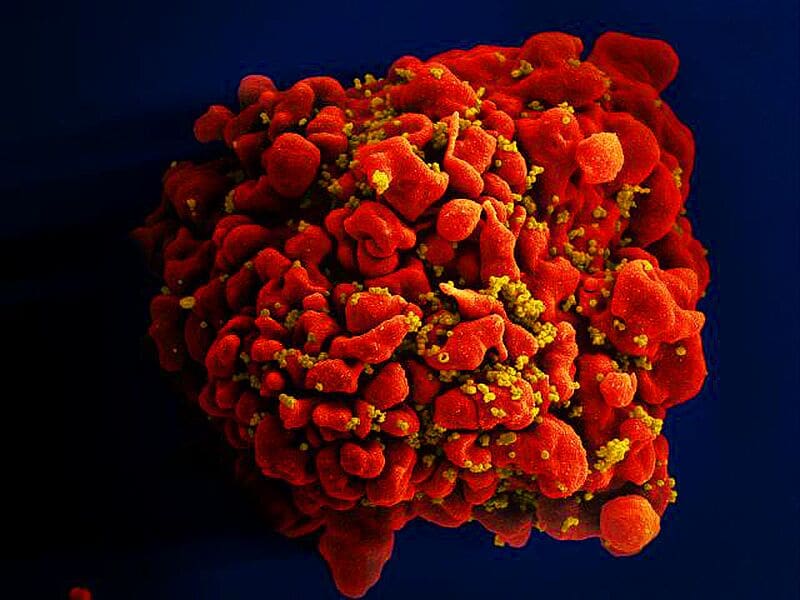
In preclinical tests, 007 showed a strong neutralizing effect. In a mouse model with humanized immune cells, the antibody significantly improved the previous V3 therapy: The virus had to develop several changes at the same time to escape treatment. This suggests that 007 complicates the development of resistance and makes combination therapies more effective.
The discovery is of great importance for the development of new immunotherapies and vaccines. It shows that the V3 glyca site is more vulnerable than previously thought and opens up new avenues to create broadly effective approaches. For therapeutic use, 007 has been exclusively licensed to the company Vir (in cooperation with the Gates Foundation) and is being further developed preclinically, supported by the Cologne-based start-up Togontech.
The study was funded by the Gates Foundation, the German Research Foundation (DFG), the German Center for Infection Research (DZIF) and the European Research Council (ERC).
Original Paper:
Editor: X-Press Journalistenbüro GbR
Gender Notice. The personal designations used in this text always refer equally to female, male and diverse persons. Double/triple naming and gendered designations are used for better readability. ected.
Most read
 Miraculous fitness probiotic: Roseburia inulinivorans massively improves muscle strength Researchers from the University of Granada, the University of Almería and the Leiden University Medi...
- The personal health check of the UMG laboratory: The detectives of blood The Personal Health Check of the UMG Laboratory (Interdisciplinary Laboratory of the University Medi...
- ASKED: “The new GOÄ is a far greater danger than some people realize” The new fee schedule for doctors (GOÄ) provides for significant cuts for laboratory medicine. DGKL b...