Fulbright Fellow Researches New Therapies for Chronic Wounds
At the Hannover Medical School (MHH), the US Fulbright scholarship holder Samuel Sung is developing innovative approaches to the treatment of chronic wounds together with the team of Prof. Dr. Nico Lachmann.
Chronic wounds often heal very slowly, cause pain and severely restrict mobility. Samuel Sung combines engineering technology with immunology and focuses on specialized immune cells, especially macrophages. These phagocytes control inflammatory processes, clear deposits and promote new tissue. Malfunctions cause chronic wounds.
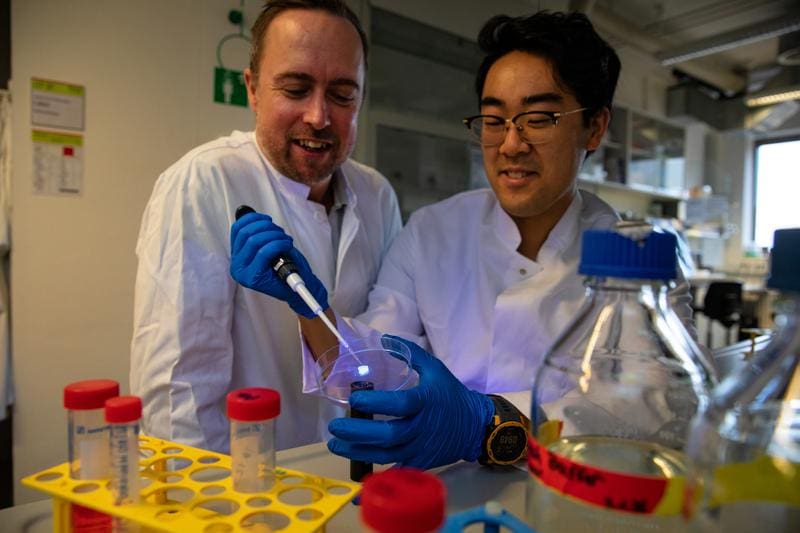
Professor Lachmann’s team at the Department of Pediatric Pneumology, Allergology and Neonatology produces macrophages from human induced pluripotent stem cells (iPS cells). These could serve as therapeutic substitutes in the future. However, it remains to be seen how such cells can be introduced into wounds in a targeted manner. Samuel Sung is testing artificial hydrogels as carrier material that are loaded with specialized macrophages. He investigates how these gels influence the behavior of the cells, modulate the immune response and efficiently promote skin regeneration.
The aim is to develop the next generation of wound healing therapies. Professor Lachmann highlights that the work strengthens the partnership with Professor Kara Spiller’s lab at Drexel University in Philadelphia, which is known for its expertise in biomaterials and immune engineering. Immune engineering combines engineering methods with immunological research for new therapies – not only in wounds, but also in organ regeneration and infection research.
Samuel Sung brings experience from his previous work with macrophages to Professor Spiller’s laboratory and now links it to human immune cells. The Fulbright Program promotes international cooperation and academic exchange between the USA and Germany. In Germany, it is supported by the German-American Fulbright Commission. Samuel Sung is the fifth Fulbright scholarship holder from the USA at the MHH; six MHH scientists have already gone to the USA.
The MHH has the highest proportion of foreign doctoral students among universities in Lower Saxony: In 2024, it was 37.6 percent (Lower Saxony State Office for Statistics). Many do their doctorates in structured programs at the Hannover Biomedical Research School (HBRS).
Editor: X-Press Journalistenbüro GbR
Gender Notice. The personal designations used in this text always refer equally to female, male and diverse persons. Double/triple naming and gendered designations are used for better readability. ected.
Most read
 Miraculous fitness probiotic: Roseburia inulinivorans massively improves muscle strength Researchers from the University of Granada, the University of Almería and the Leiden University Medi...
- The personal health check of the UMG laboratory: The detectives of blood The Personal Health Check of the UMG Laboratory (Interdisciplinary Laboratory of the University Medi...
- ASKED: “The new GOÄ is a far greater danger than some people realize” The new fee schedule for doctors (GOÄ) provides for significant cuts for laboratory medicine. DGKL b...