
CHIP mutations: New risk factor for heart patients uncovered
Researchers have identified CHIP mutations as a new risk factor for cardiovascular disease. These changes in hematopoietic stem cells occur with age and lead to mutated blood cells that produce excessive inflammatory substances. This increases the risk of vascular calcification, blood clots and serious heart problems such as atrial fibrillation, stroke or heart attack.
The German Heart Foundation is funding a study at the University Medical Center Freiburg and the Charité Berlin with around 70,000 euros to decipher the mechanisms. Older people are particularly affected; in the age group over 70 years, about one in ten carries such mutations. The proportion is higher in heart patients: one in three has CHIP, and in patients with atrial fibrillation it is almost a quarter.
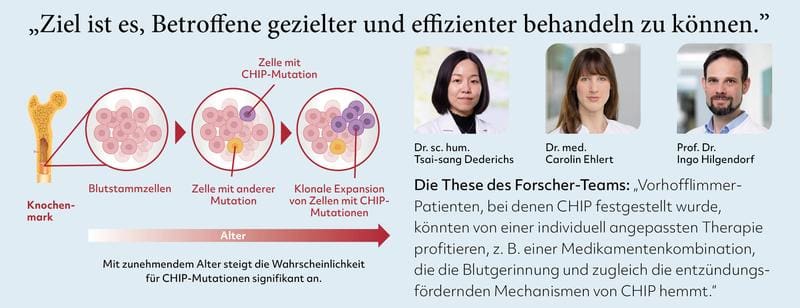
The mutations exacerbate existing diseases. For example, the risk of atrial fibrillation is increased by up to 45 percent in CHIP carriers, that for coronary heart disease is almost doubled and that for early heart attacks quadrupled. Stroke risks increase by 14 percent. The researchers analyze blood samples from 2400 patients with atrial fibrillation to clarify relationships independent of classic factors such as smoking or diabetes.
The aim is to develop personalised medicine that treats CHIP carriers in a more targeted manner in order to prevent events such as infarctions or strokes. A recent study published in the European Heart Journal highlights CHIP as an acquired genetic factor that influences heart disease severity and mortality. The Heart Foundation invests over six million euros annually in such projects.
Original Paper:
Eur Heart J. 2025 Sep 3:ehaf602. doi: 10.1093/eurheartj/ehaf602. Online ahead of print. PMID: 40900105
Editor: X-Press Journalistenbüro GbR
Gender Notice. The personal designations used in this text always refer equally to female, male and diverse persons. Double/triple naming and gendered designations are used for better readability. ected.
Most read
 Interview: KKH CEO Dr. Wolfgang Matz on billing fraud, AI and the future of statutory health insurance In an interview with MedLabPortal , Dr. Wolfgang Matz, Chairman of the Board of Directors of KKH Kau...
- First female dean in 549 years: Professor Sara Y. Brucker heads the Faculty of Medicine in Tübingen For the first time in its almost 550-year history, the Faculty of Medicine at the University of Tübi...
- Psychotherapy: National Association of Statutory Health Insurance Funds plans blanket fee reduction of ten percent The professional association unith e.V. warns of an imminent blanket reduction of fees for psychothe...