
Biomarker breakthrough: Protective proteins REST and NAD⁺ offer hope in Alzheimer’s disease
An international research team led by the University of Oslo has discovered a key mechanism that could explain why some older people remain protected from Alzheimer’s despite their advanced age. The focus is on the protein REST, which has a protective effect in the brain and is greatly reduced in Alzheimer’s patients. The study also shows that the administration of NAD⁺ precursors increases REST levels in mouse models, slows memory loss and improves waste removal in the brain. The results were published on February 19, 2026 in the journal BRAIN under the title “Loss of REST associated with Alzheimer’s disease pathology is ameliorated by NAD+”.
The five-year project, led by Associate Professor Evandro Fang-Stavem, investigated why REST levels naturally decline with age, but remain comparatively high in many healthy very old people. In Alzheimer’s patients, on the other hand, REST is significantly reduced. This deficiency contributes to the accumulation of waste products in the brain, reduces the energy supply to nerve cells and promotes memory loss.
Previous work by the team had already shown that the molecule NAD⁺ plays a key role in the aging process and has positive effects in animal models of Alzheimer’s disease. In the current study, the researchers tested whether NAD⁺ precursors can increase the expression of the protective protein REST. The results were promising: the treatment increased REST activity in the brain, improved the clearance of waste products, and slowed cognitive decline.
The authors see this as an important step forward. For the first time, NAD⁺ could be shown to induce the expression of REST. This deepens the understanding of the mechanisms of action of NAD⁺ and supports the scientific basis of ongoing clinical trials with NAD⁺-based approaches. At the same time, the perspective of new therapeutic and diagnostic strategies against Alzheimer’s is opening up.
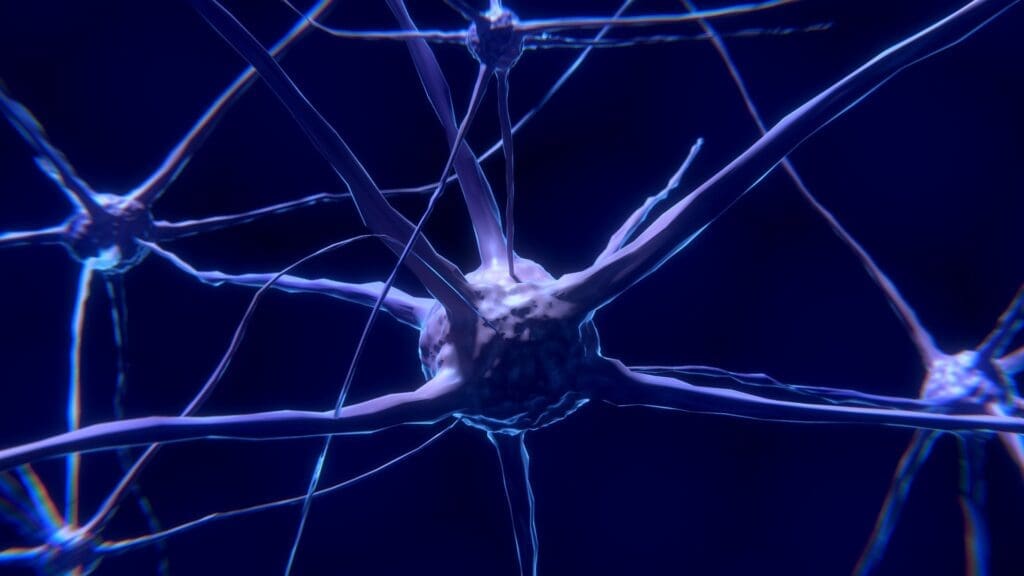
REST could serve as a biomarker in the future. Previous work, for example from King’s College London, had already suggested that REST levels could be used for early detection of the disease, possibly even via blood tests. Earlier diagnosis would significantly improve the chances of treatment.
The findings go beyond Alzheimer’s. Since REST protects nerve cells and maintains their function, the protein could also play a role in other neurodegenerative diseases. NAD⁺ precursors thus potentially offer a way to slow down the progression of various neurological diseases.
The study was carried out in close international cooperation. In addition to the University of Oslo, the participating institutions include Oslo University Hospital, NTNU Trondheim, Ji-Nan University in China and the University of Oxford. The first authors are Maria J. Lagartos-Donate, Beatriz Escobar-Doncel, Shi-qi Zhang and Alexander Anisimov. The project was funded by Civitan Norway’s Alzheimer’s Disease Research Foundation, the South-Eastern Norway Regional Health Authority and the Cure Alzheimer’s Fund from the USA, among others.
Original Paper:
Maria J Lagartos-Donate, Beatriz Escobar-Doncel, Shi-qi Zhang, Jun-ping Pan, Noemí Villaseca González, Alexander Anisimov, Nicola P Montaldo, Vidar Jensen, Lipeng Mao, Bailei Li, Nuria Banzon-Pereira, Liu Shi, Shu-qin Cao, Domenica Caponio, Pingjie Wang, Rajeevkumar Raveendran Nair, Oscar Junhong Luo, Guobing Chen, Alejo J Nevado-Holgado, Noel Buckley, Hilde Loge Nilsen, Evandro Fei Fang, Loss of REST associated with Alzheimer’s disease pathology is ameliorated by NAD+, Brain, 2026;, awaf261, https://doi.org/10.1093/brain/awaf261
Editor: X-Press Journalistenbüro GbR
Gender Notice. The personal designations used in this text always refer equally to female, male and diverse persons. Double/triple naming and gendered designations are used for better readability. ected.
Most read
 Miraculous fitness probiotic: Roseburia inulinivorans massively improves muscle strength Researchers from the University of Granada, the University of Almería and the Leiden University Medi...
- DGKL board member Jan Wolter calls for comprehensive health tax instead of pure sugar tax Jan Wolter, chairman of the German Society for Clinical Chemistry and Laboratory Medicine (DGKL), ha...
- ASKED: “The new GOÄ is a far greater danger than some people realize” The new fee schedule for doctors (GOÄ) provides for significant cuts for laboratory medicine. DGKL b...