
ASKED: 4 questions for Prof. Moritz Schnelle about the GOÄ amendment
The amendment to the GOÄ, if it is passed, will bring considerable cuts in the field of laboratory medicine. Why does that worry you?
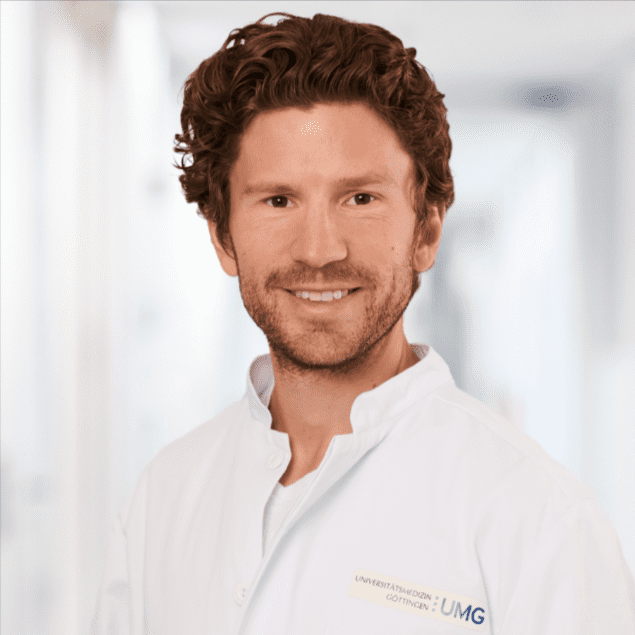
Prof. Schnelle: Laboratory medicine in Germany is a central component of patient care, both outpatient and inpatient. To illustrate this with a figure: laboratory values play a relevant role in about 70% of all medical decisions. In addition, our field is a pioneer in new methodological developments to make diagnostics even more targeted, efficient and personalized. Due to the planned, massive cuts for laboratory medicine in the area of GOÄ, there is a realistic danger that these important tasks will no longer be able to be fulfilled. Ultimately, this would be directly at the expense of the care of our patients.
You have conducted a study on this at the UMG – what are the key results?
Prof. Schnelle: Based on our key figures, the planned amendment to the GOÄ in its current form would lead to a reduction in private revenues of approx. 35% for the inpatient sector and even up to 45% for the outpatient sector. It will almost certainly be very similar at other, comparable laboratories in Germany. At the same time, private revenues account for a relevant share of total revenues, which then presents us with considerable challenges. I don’t think the explosive nature of such alarming figures needs to be explained any further.
To our knowledge, research and development at German university hospitals are not financed directly from GOÄ revenues. Why do the planned cuts still affect your research activities?
Prof. Schnelle: At regular intervals, there is a so-called departmental income statement for our department. It is looked at how revenues and expenses relate to each other, and whether the goals defined in advance with the UMG board have been met. Due to the planned cuts, it can be assumed that these targets can no longer be met. The consequence would be funding cuts, also of a personnel nature, which would of course also be reflected in significantly more limited research activities, regardless of any third-party funding that may be available. This is certainly not a problem specific to Göttingen, but applies analogously to comparable laboratories throughout Germany.
Contrary to popular belief, private liquidations, which also include billing via GOÄ, are not the responsibility of the billing chief physicians alone, but also of the respective clinic to a considerable extent. Can you give us a concrete example that is understandable for laymen?
Prof. Schnelle: It is completely correct that for some time now, private liquidations have generally no longer belonged to the chief physician, but to the clinic. More precisely, the clinic liquidates in the name of the chief physician, who must personally provide the service. In fact, it was different in the past, when the chief physician was allowed to liquidate directly himself and that made up a large part of the corresponding income. Nowadays, the chief physician is paid by the clinic. Depending on the respective clinic, this salary can include a personally negotiated share of the private proceeds. In Göttingen, there is also the possibility of distributing a share of the private proceeds within one’s own department to certain employees in the form of an incentive. This is a great way to appreciate.
Most read
 German Medical Association calls for ban on medical diagnostics in drugstores The 130th German Medical Congress 2026 calls on legislators to prevent medical diagnostics in drugst...
- Expert Tip for Preanalytics of Glucose Determination The pre-analysis of glucose determination is a science in itself, even for experienced doctors. MedL...
- New part-time Master’s degree program “M.Sc. Medical Laboratory” at the University of Leipzig In the winter semester 2026/2027, Leipzig University will introduce the new continuing education mas...