New PET tracer enables precise imaging of the sympathetic nervous system
Researchers at the University Hospital Würzburg have developed a new PET radiotracer that makes the norepinephrine transporter (NET) visible in high resolution. The substance [18F]fluproxadin enables an improved imaging of the sympathetic nervous system and could facilitate the diagnosis of cardiovascular diseases, neurodegenerative diseases and certain tumors in the future.
In an international first-in-human study, the Tracer proved to be safe and technically operational. This is shown by a study published in the journal “Clinical Nuclear Medicine”, in which the Clinic and Polyclinic for Nuclear Medicine of the University Hospital Würzburg as well as the Ludwig Maximilian University of Munich and partners from Japan were involved.
The sympathetic nervous system regulates unconscious bodily functions such as heart rate, blood pressure, and stress responses. Changes in its activity occur early in many diseases, even before structural damage becomes visible. However, previous tracers for the representation of this system had limitations in image quality and diagnostic significance.
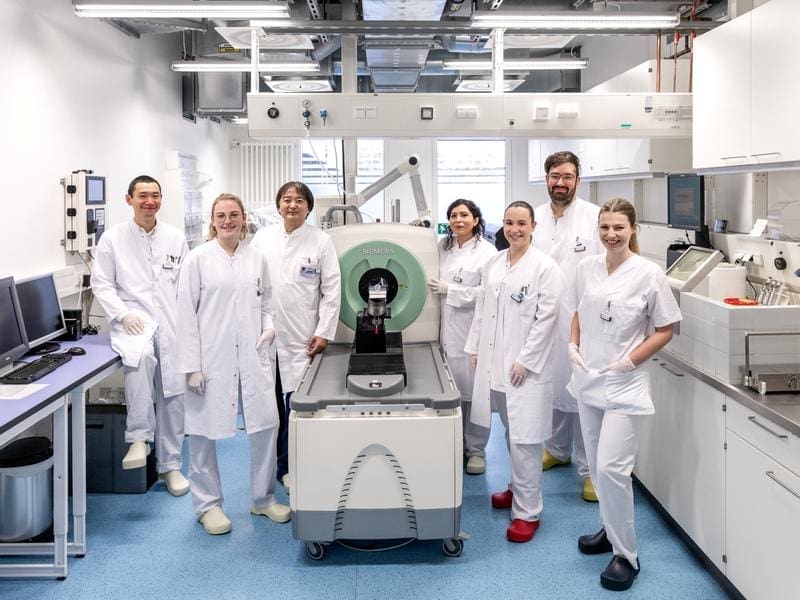
The new tracer [18F]Fluproxadin binds specifically to the norepinephrine transporter NET, which regulates the effect of the neurotransmitter norepinephrine. “With [18F]fluproxadine, we were able to visualize the activity of the sympathetic nervous system very precisely,” explained Prof. Dr. Takahiro Higuchi, head of preclinical imaging in Würzburg. The distribution in the body is easy to interpret, the radiation exposure is acceptable and no relevant side effects have occurred.
In the future, improved imaging could help to detect diseases such as heart failure, Parkinson’s disease, Alzheimer’s disease and tumors of the nervous system (e.g. neuroblastoma or pheochromocytoma) earlier and more accurately. In the next step, the tracer will be further investigated in patients with corresponding diseases and tested for its suitability for everyday clinical practice.
The German Center for Heart Failure Würzburg, the Julius-Maximilians-Universität Würzburg, the University Hospital Augsburg and Japanese institutions were also involved in the study. The project was partially funded by the German Research Foundation (DFG).
Original Paper:
Editor: X-Press Journalistenbüro GbR
Gender Notice. The personal designations used in this text always refer equally to female, male and diverse persons. Double/triple naming and gendered designations are used for better readability ected.
Most read
 German Medical Association calls for ban on medical diagnostics in drugstores The 130th German Medical Congress 2026 calls on legislators to prevent medical diagnostics in drugst...
- Expert Tip for Preanalytics of Glucose Determination The pre-analysis of glucose determination is a science in itself, even for experienced doctors. MedL...
- Preanalytics in glucose measurements: Centrifuged PST tubes are superior to NaF-KOx A study by Brigham and Women's Hospital and Harvard Medical School shows that centrifuged lithium he...