Heart attacks continue to decline in Germany
The number of heart attacks in Germany has continued to fall in recent years. According to a recent evaluation by the Scientific Institute of the AOK (WIdO) for the Health Atlas Germany, around 185,400 heart attack cases were documented in hospitals in 2024. This corresponds to a rate of 320 cases per 100,000 people aged 30 and over. In 2017, the numbers were still 215,600 cases or 380 per 100,000 people – a decrease of 14 percent.
Helmut Schröder, Managing Director of the WIdO, attributes the positive trend primarily to lifestyle changes such as the decline in smoking and improved medical care for risk factors. At the same time, however, the Health Atlas observes an increase in two central risk factors for heart attacks: The proportion of people with type 2 diabetes mellitus rose from 10.6 percent (2017) to 11.2 percent (2024). In the case of high blood pressure, the proportion increased from 28.8 percent to 29.9 percent.
Schröder emphasized that a healthy lifestyle with a balanced diet, sufficient exercise and no smoking can reduce the risk of heart attacks, type 2 diabetes and high blood pressure. The health atlas offers those responsible on the ground a reliable data basis for preventive measures up to the district level.
Significant differences by age, gender and region
The heart attack rate increases significantly with age, with men affected much more often than women in all age groups. In the 85-89 age group, the rate was 1,240 cases per 100,000 men versus 720 per 100,000 women.
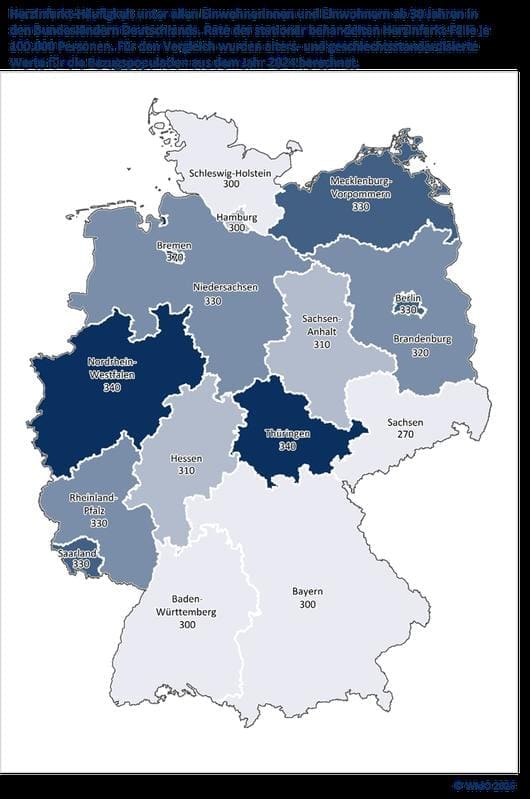
There are clear differences between the federal states: The highest rate was recorded in Thuringia with 370 cases per 100,000 people aged 30 and over, the lowest in Hamburg with 270. After age- and gender-standardised adjustment, Bremen was at the top with 370, Saxony the lowest with 270.
The Health Atlas Germany provides up-to-date data on a total of 26 diseases down to district level and is updated annually. The figures are based on routine data from over 27 million AOK policyholders and are extrapolated to the entire population.
Editor: X-Press Journalistenbüro GbR
Gender Notice. The personal designations used in this text always refer equally to female, male and diverse persons. Double/triple naming and gendered designations are used for better readability ected.
Most read
 Wal Timmy: Environment Minister Backhaus ignored rescue technology that has been in place since 1983 The stranded humpback whale "Timmy" suffered severely for days in Mecklenburg-Western Pomerania beca...
- Hantavirus: detection, symptoms, therapy What is hantavirus? Hantaviruses are a group of viruses that occur worldwide and are mainly transmit...
- Impending fuel shortage: “If the laboratory fails, medical care will come to a standstill in large parts” DGKL CEO Jan Wolter explains the dramatic consequences of a potential fuel shortage for laboratory m...