
New therapeutic approach against myelodysplastic neoplasms (MDS)
Researchers at the University Medical Center Dresden have found a promising new approach to the treatment of myelodysplastic neoplasms (MDS). In preclinical models, the anti-inflammatory agent tasquinimod (TASQ) improves both impaired blood formation and bone health – two central problems in this form of blood cancer.
The team led by Prof. Manja Wobus and Dr. Katja Sockel from the National Center for Tumor Diseases (NCT/UCC) Dresden was able to show that tasquinimod inhibits the inflammatory factor S100A9. This suppresses the activation of inflammatory signaling pathways in the mesenchymal stromal cells of the bone marrow. As a result, the support of blood formation improved, more healthy blood cells were created, and bone loss decreased at the same time.
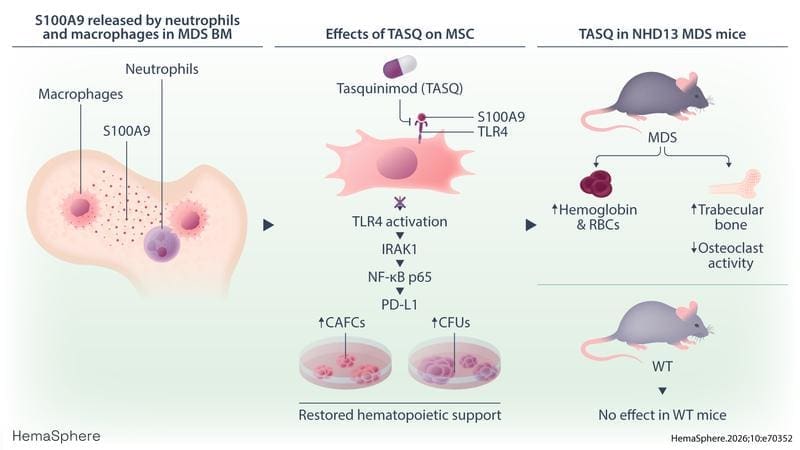
MDS is considered a precursor to leukemia and often leads to severe anemia and an increased risk of osteoporosis. The study, which has been published in the journal HemaSphere , provides a proof-of-concept that targeted inhibition of inflammatory processes can positively influence both aspects of the disease at the same time.
The results underline the importance of translational research in Dresden. The scientists are now planning further clinical development of the active ingredient.
Original paper:
Editor: X-Press Journalistenbüro GbR
Gender Notice. The personal designations used in this text always refer equally to female, male and diverse persons. Double/triple naming and gendered designations are used for better readability ected.
Most read
 Wal Timmy: Environment Minister Backhaus ignored rescue technology that has been in place since 1983 The stranded humpback whale "Timmy" suffered severely for days in Mecklenburg-Western Pomerania beca...
- Wal Timmy: Germany’s problem with euthanasia EDITORIAL. Letting Timmy suffer is more due to the German lack of experience and the bureaucratic hu...
- Impending fuel shortage: “If the laboratory fails, medical care will come to a standstill in large parts” DGKL CEO Jan Wolter explains the dramatic consequences of a potential fuel shortage for laboratory m...