Fraunhofer develops digital assistance system for better aftercare for women after heart attacks and strokes
Women have a higher risk of death after a stroke or heart attack than men. Fraunhofer researchers want to improve gender-specific aftercare with a tailor-made digital assistance system and thus prevent further heart diseases.
If a woman suffers a heart attack or stroke, her prognosis is worse than that of a man. Reasons for this include the underrepresentation of women in clinical trials, insufficient consideration of gender-specific risk factors, and the discontinuation of protective hormones after menopause. Efficient aftercare is therefore considered crucial.
A team at the Fraunhofer Institute for Manufacturing Engineering and Automation (IPA) in Mannheim is developing an interactive assistance system in the “GenderHeart” project. It is intended to improve gender-specific early detection after a cardiovascular event and thus increase the prognosis for affected women.
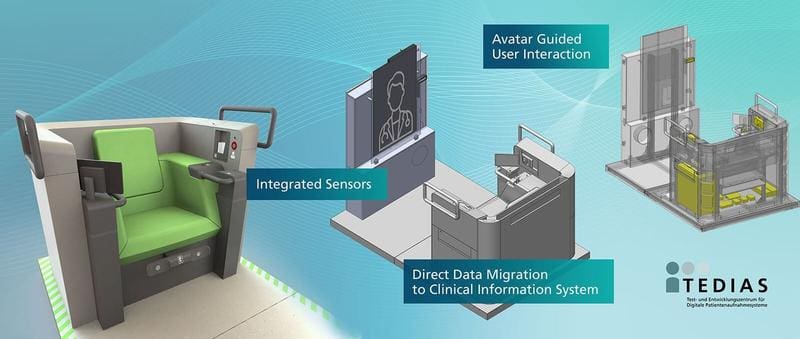
The core of the system is a digital anamnesis process that specifically targets cardiovascular diseases in women. The TEDIAS digital recording station developed by Fraunhofer IPA is used for this purpose. The patient sits in a chair with integrated biosensors while an avatar takes the medical history on a monitor and automatically records vital parameters such as blood pressure, respiratory rate and ECG. The aim is to record the medical history more quickly and in a structured manner, which should make the subsequent consultation with the doctor more targeted.
The assistance system is based on an AI-based algorithm that creates an individual risk assessment and therapy recommendation. Among other things, gender-specific differences in the course of the disease, the influence of hormone status and factors that influence the success of various therapies are taken into account.
In addition, the researchers are planning to integrate a speech analysis tool. An app is intended to enable patients to record their voice daily at home. Changes that may indicate heart problems are detected and included in the risk assessment during TEDIAS controls.
The GenderHeart project will start in spring 2026 and run for three years. In addition to Fraunhofer IPA, Zana Technologies GmbH and the University Hospital Mannheim are involved. In the long term, the specialized admission ward is to be used in emergency rooms and relieve everyday hospital life.
Women’s heart health has often been neglected and little researched, according to the project. The assistance system is intended to help systematically take gender-specific differences into account and enable affected women to make better treatment prognoses.
Editor: X-Press Journalistenbüro GbR
Gender Notice. The personal designations used in this text always refer equally to female, male and diverse persons. Double/triple naming and gendered designations are used for better readability. ected.
Most read
 Hantavirus: detection, symptoms, therapy What is hantavirus? Hantaviruses are a group of viruses that occur worldwide and are mainly transmit...
- Hantavirus: Facts instead of panic Reports of three deaths in connection with a hantavirus outbreak on the cruise ship "MV Hondius" in...
- Hantavirus: Experts at the University Medical Center Essen see low risk for the general population After several hantavirus infections and deaths occurred on the cruise ship "Hondius", a contact pers...