New hydrogel combines biological and electronic signals for medical implants
Researchers at the Technical University of Dresden and the Leibniz Institute for Polymer Research Dresden have succeeded in developing a bioinspired hydrogel that is soft, electrically conductive and biologically active at the same time. The material can bind messenger substances and release them in response to electrical impulses and measure biological parameters such as oxygen. It thus opens up new possibilities for implants and interfaces between biological and electronic systems, especially for the treatment of nerve damage.
The hydrogel mimics properties of the natural extracellular matrix and combines it with the conductive polymer PEDOT. It remains water-based and flexible while being able to transmit electrical signals. The conductivity can be specifically adjusted by the composition. Experiments showed that the material binds growth factors and releases them in a controlled manner through weak electrical impulses without impairing the biological activity of the substances.
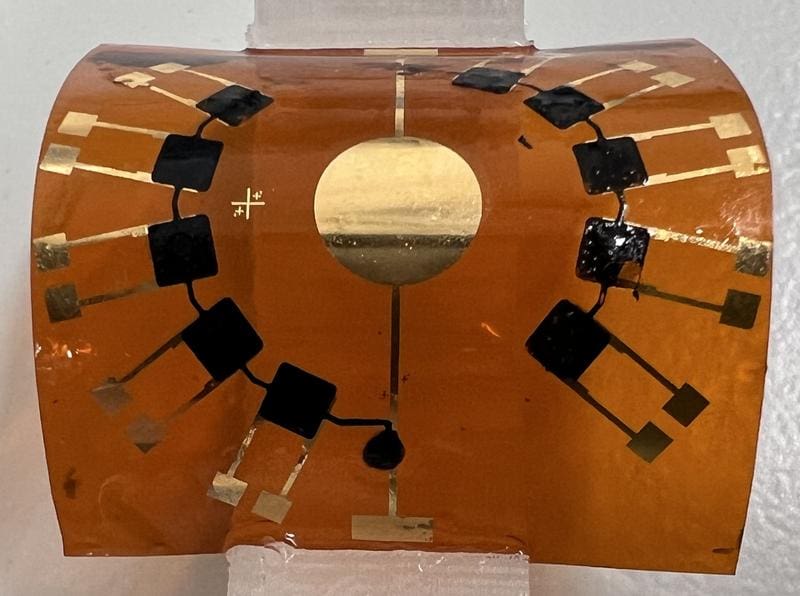
In cell culture experiments, the electrically controlled release of the growth factor VEGF led to the formation of tube-like structures – an early stage of blood vessel formation. The hydrogel can also serve as a sensor: When the oxygen content drops, it triggers an electrical signal, which in turn controls the release of growth factors and can thus stimulate the growth of nerve cells.
The development is considered the first approach that combines the soft mechanical properties of biological tissue with its natural communication via biomolecules and electrical impulses. The researchers see future applications in improved electrode coatings, bioelectronic components and brain-computer interfaces. Smart implants for the treatment of epilepsy or Parkinson’s disease, which combine measurement and stimulation with targeted drug delivery, are particularly promising.
The team is already working with neurosurgeons at the University Hospital Dresden in the COATARRAY project to further develop existing electrodes for deep brain stimulation with the new material. The next steps are to test long-term stability, biocompatibility and performance under clinical conditions.
The results were published in the journal “Advanced Materials”. In addition to the Chair of Electronic Tissue Technologies at the Else Kröner Fresenius Center for Digital Health and the Leibniz Institute for Polymer Research Dresden, scientists from the Center for Regenerative Therapies Dresden, the Dresden Integrated Center for Applied Physics and Photonic Materials and the Max Planck Institute of Colloids and Interfaces in Potsdam were also involved in the research. The work was funded by the European Research Council and the German Research Foundation.
Original Paper:
Editor: X-Press Journalistenbüro GbR
Gender Notice. The personal designations used in this text always refer equally to female, male and diverse persons. Double/triple naming and gendered designations are used for better readability. ected.
Most read
 Hantavirus: detection, symptoms, therapy What is hantavirus? Hantaviruses are a group of viruses that occur worldwide and are mainly transmit...
- Hantavirus: Facts instead of panic Reports of three deaths in connection with a hantavirus outbreak on the cruise ship "MV Hondius" in...
- Hantavirus: Experts at the University Medical Center Essen see low risk for the general population After several hantavirus infections and deaths occurred on the cruise ship "Hondius", a contact pers...