
ASKED: “The new GOÄ is a far greater danger than some people realize”
The new fee schedule for doctors (GOÄ) provides for significant cuts for laboratory medicine. DGKL board member Jan Wolter sees this as a danger that has so far received little attention – it is about the economic and geopolitical consequences for Germany as a business location.
MedlabPortal: In Germany, around 437,000 working doctors are registered, but only about 1200 of them are laboratory physicians. Why are they racking their brains over the new GOÄ?
Wolter: Simply because it is associated with considerable losses for laboratory medicine. We are talking about losses of up to a quarter in the inpatient sector and more than a third in the outpatient sector.
MedlabPortal: Just to put it in perspective: The GOÄ is the fees that a doctor bills privately for his services. So we are not talking about statutory health insurance (GKV)….
Wolter: That’s right. Therefore, the effects also vary greatly from region to region. Where there are more privately insured people, the consequences are significantly higher than where there are predominantly people with statutory health insurance.
MedlabPortal: But private sounds privileged, and millions of patients with statutory health insurance feel the same way: There are more services, shorter waiting times and, in hospitals, chief physician treatment. Even the food is better for private patients. How do laboratory physicians benefit from this system?
Wolter: First of all, we should note that private health insurance is not just a question of income. A patrol officer as well as a firefighter, for example, are also privately insured, since they are civil servants. It should be no secret that they are not swimming in money. But it is true that privately insured people sometimes enjoy significant advantages in the health care system. Medical services – whether in the laboratory or in other areas – are billed for privately insured persons according to the Fee Schedule for Doctors, GOÄ for short, and for those with statutory health insurance according to the Uniform Assessment Scale, EBM for short. The remuneration according to GOÄ is usually higher than according to EBM. As I said, this applies equally to all medical areas.
MedlabPortal: Whether with or without GOÄ, laboratory medicine is a thoroughly profitable field of medicine. There are fixed working hours, annual incomes in the six-figure range for employed, experienced specialists and millions or billions in profits for the owners or shareholders of the large laboratory chains. Isn’t the planned reduction in fee rates more of an envy debate within the medical profession?
Wolter: You have to look closely here and separate a few things from each other. One is the work situation of laboratory physicians (to which I also include income). The other is the earnings situation of the laboratory operators – and here, too, you have to differentiate between laboratory units in hospitals, which should also not be lumped together, and laboratories in the private practice sector, which are also structured very differently, up to large laboratory chains. But it is true, of course, that in debates all this is often mixed together. And it is also true that factual arguments do not always come first.
MedlabPortal: At this point, it is clear once again: Who exactly sets these fee rates?
Wolter: From a formal point of view, it is a federal ordinance. However, the Bundesrat must agree to this.
MedlabPortal: Sorry, but that’s more like that on paper. In reality, the Federal Ministry of Health listens to the statements and suggestions of the individual disciplines, doesn’t it?
Wolter: The BMG does not come up with the GOÄ itself, that’s right. The German Medical Association and the Association of Private Health Insurance Funds are working on a proposal that they are submitting to the BMG.
MedlabPortal: So the problem of laboratory medicine is rather the small number of specialists? No mass, hardly any political hearing….
Wolter: Let’s take a group of 100 people who want to build a house together and they run out of money. If 25 of them belong to one family, 20 to a second and 10 to a third and who then agree that the one single person should simply put more money in the pot, then this is a situation in which democracy doesn’t really work.
MedlabPortal: However, I am surprised by the public whining. A lobby association, for example, speaks of a threat to patient safety if the new fee schedule for laboratory physicians is lowered. With all due respect: I think that’s a rumor – in the end, no university clinic or hospital will stop laboratory tests. Why this panic?
Wolter: Of course, laboratory medical care does not collapse overnight if remuneration is reduced. That’s the problem. Then you would immediately recognize the error and probably correct it. However, the supply is gradually deteriorating. It’s like the famous frog sitting in a glass of water, where you slowly turn up the temperature.
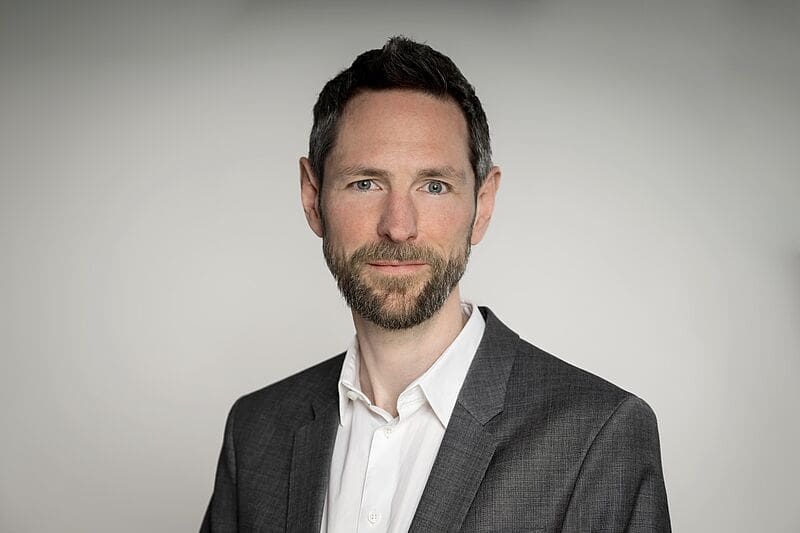
MedlabPortal: What is striking about the DGKL is the fact that they do not fall into the usual whining – they approach the GOÄ more scientifically and medically. I would like to have an example of what exactly constitutes a cut.
Wolter: The reduction in remuneration will make more laboratory services economically unprofitable. As a result, the laboratory in hospitals will have to be subsidized by other areas. This means that more attention is also paid to costs. Research activities in university hospitals also suffer as a result, the subject becomes less attractive, and sometimes a chair can perish as a result. After all, we are losing young talent and excellence. That is one point: research and young talent. In some cases, this is also seen. But I think the effect is underestimated.
The second point is one that, in my opinion, has not yet been paid attention to at all. The cost pressure will also be noticeable in the procurement policy of the laboratories. Price pressure will increase massively, which will be felt by manufacturers.
MedLabPortal: Even giants like VW now have to live with the fact that cars “Made in China” can keep up technologically, or are superior in some areas – but cost significantly less than German counterparts…
Wolter: What I am getting at is that we are talking about a key technology within a critical infrastructure. This is particularly dangerous when there is no fair price competition. Where products are subsidized by home countries and enter the market in order to displace European competitors, I see an enormous risk coming our way.
MedLabPortal: So we are not talking about the income of individuals, or the returns of laboratory chains, but about the GOÄ as a means of resilience?
Wolter: That’s how you could bring it down to a common denominator. We must, politicians must, think outside the box. If I try to squeeze the last bit out of a system, then there are consequences elsewhere. European laboratory manufacturers are investing billions – including in Germany – and are present in this country. If we destroy this industry, we will become dangerously dependent. I don’t want you to be in thrall to another country in a political crisis, because it can threaten to shut down our laboratory medicine. Five years ago, I would have been called crazy with this sentence. Today, people who do not recognize this danger must probably be described as short-sighted.
MedLabPortal: Of course, one could criticize the fact that it is not the task of the privately insured to protect German laboratory medicine as a critical infrastructure….
Wolter: From this point of view, we would have to talk about how our health system is financed in general. But you know that I am in favor of a reset.
MedLabPortal: Nevertheless, we have a free market economy. What are the arguments against high-quality laboratory lines from China or the USA?
Wolter: As I said, the competition must be fair on the one hand, i.e. without price subsidies. Secondly, we must also take security aspects into account in areas of critical infrastructure. Whether it’s weapon systems, routers or laboratory equipment.
MedLabPortal: However, this would mean that the GOÄ would no longer be a fee schedule, but an instrument for securing critical infrastructures in laboratory medicine. Why not use the special fund of the federal government instead? As is well known, this is misused anyway.
Wolter: As soon as there is a large, additional pot of money, everyone wants to get to it. I don’t think that’s a good idea. After all, this is not about one-off investments, but about having a resilient solution in the long term.
MedLabPortal: In the larger context, the proposal is disruptive because this view has not existed before. Do you see this as part of the total reset in the health care system that you are calling for?
Wolter: Politics must detach itself from the minutiae and keep an eye on the big picture. If the GOÄ comes as it is now planned, it risks above all that there will be less innovation and thus the care will not be as good as it could be. We risk that the costs of care will rise, that investments will be withdrawn from Germany, that jobs will be lost and tax revenues will fall. Above all, however, we risk Germany becoming blackmailable in medical care. In summary: The new GOÄ is a far greater danger than some people realize.
And if we look at how this proposal came about, we realize once again how necessary a total reset is.
MedLabPortal: Thank you very much for the interview.
The interview was conducted by Vlad Georgescu
Read Also:
DGKL board member Jan Wolter calls for a total reset of the German healthcare system – MedLabPortal
Editor: X-Press Journalistenbüro GbR
Gender Notice. The personal designations used in this text always refer equally to female, male and diverse persons. Double/triple naming and gendered designations are used for better readability. ected.
Most read
 Wal Timmy: Environment Minister Backhaus ignored rescue technology that has been in place since 1983 The stranded humpback whale "Timmy" suffered severely for days in Mecklenburg-Western Pomerania beca...
- Wal Timmy: Germany’s problem with euthanasia EDITORIAL. Letting Timmy suffer is more due to the German lack of experience and the bureaucratic hu...
- Impending fuel shortage: “If the laboratory fails, medical care will come to a standstill in large parts” DGKL CEO Jan Wolter explains the dramatic consequences of a potential fuel shortage for laboratory m...