
Sensation synthesis: Researchers overcome decades-old shortage of chemotherapy drug doxorubicin
An international research team has achieved a breakthrough in the biotechnological production of doxorubicin, a key chemotherapeutic agent. The scientists identified and eliminated molecular bottlenecks that had severely limited the natural production of the active ingredient for over 50 years.
Doxorubicin has been used to treat various cancers since the 1970s, including breast cancer, bladder cancer, lymphoma, and carcinoma. More than one million patients receive the drug every year. However, bacteria naturally produce the active ingredient very inefficiently, which is why the pharmaceutical industry is dependent on expensive, multi-stage semi-synthetic processes.
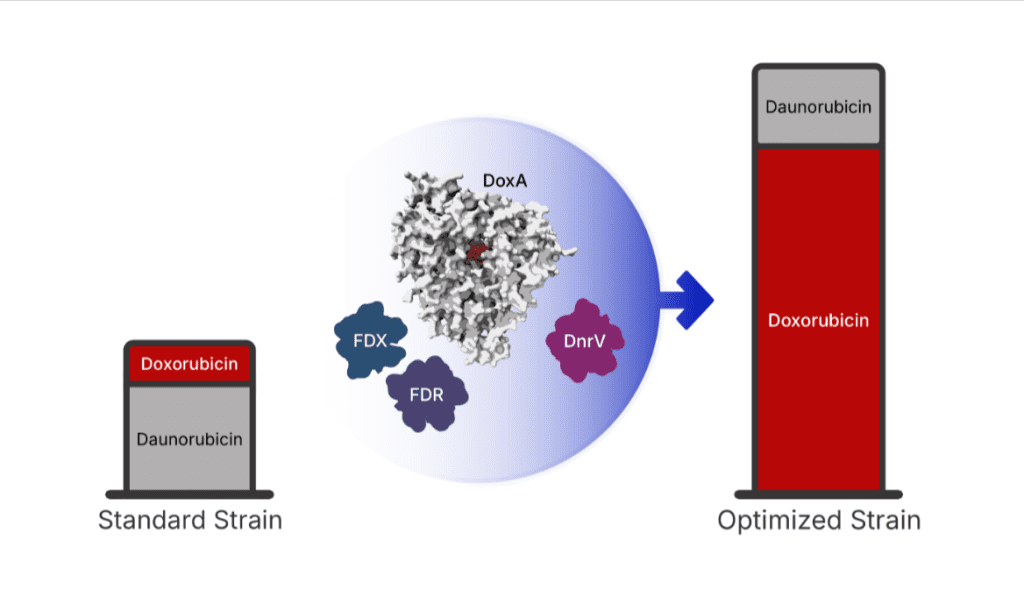
The team of six laboratories – the University of Turku (Finland), three US and two Dutch institutions in Leiden – identified three key limitations. First, there was a lack of suitable redox partners (Fdx4 and FdR3) that provide the necessary electron flow for the key-forming enzyme. Secondly, the protein DnrV binds doxorubicin like a sponge and thus prevents feedback inhibition of production. Third, X-ray crystal structure analysis showed that the molecule is unfavorably positioned in the enzyme, which slows down the reaction rate.
Through targeted engineering of a new bacterial strain, the researchers were able to increase the doxorubicin yield by 180 percent compared to current industrial standards.
To put it into practice, the spin-off company Meta-Cells Oy was founded at the University of Turku. It is intended to commercialize the technologies and enable sustainable, fully biosynthetic production of essential antibiotics and cytostatics. This promises a more environmentally friendly and reliable supply of vital medicines.
The study was published in “Nature Communications” (DOI: 10.1038/s41467-026-69194-6).
Original Paper:
Read Also:
Sensation: Total synthesis of disorazol Z1 successful – MedLabPortal
Editor: X-Press Journalistenbüro GbR
Gender Notice. The personal designations used in this text always refer equally to female, male and diverse persons. Double/triple naming and gendered designations are used for better readability. ected.
Most read
 Wal Timmy: Environment Minister Backhaus ignored rescue technology that has been in place since 1983 The stranded humpback whale "Timmy" suffered severely for days in Mecklenburg-Western Pomerania beca...
- Wal Timmy: Germany’s problem with euthanasia EDITORIAL. Letting Timmy suffer is more due to the German lack of experience and the bureaucratic hu...
- Impending fuel shortage: “If the laboratory fails, medical care will come to a standstill in large parts” DGKL CEO Jan Wolter explains the dramatic consequences of a potential fuel shortage for laboratory m...