
Essen research team deciphers how Puumala virus remodels cells
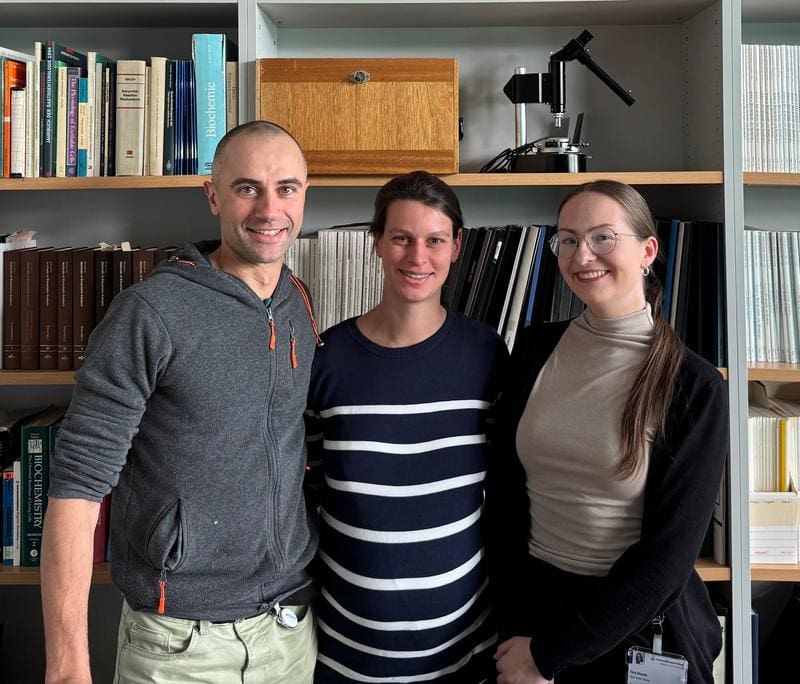
A team from the Faculty of Medicine of the University of Duisburg-Essen and the University Hospital Essen has investigated in detail how the Puumala virus, an orthohantavirus widespread in Europe, changes the internal architecture of infected human cells in order to replicate there. The study has been published in the Journal of General Virology.
Orthohantaviruses such as the Puumala virus cause flu-like symptoms, but can also lead to severe kidney damage and are considered a growing zoonotic threat. The Essen researchers used high-resolution, multi-colored RNA microscopy combined with immunofluorescence to visualize the localization of viral RNA and viral proteins as well as their interaction with cellular structures.
After infection, the number of RNA processing centers (P-bodies) increases significantly; these also shift to the cell edge. At the same time, the cytoskeleton reorganizes: actin filaments and microtubules are remodeled and occur more frequently around the cell nucleus. The authors suspect that the modified cytoskeleton uses the virus to exploit the cellular infrastructure for its replication. The enrichment and relocation of the P-bodies, on the other hand, could represent a defensive reaction of the host cell to degrade viral RNA.
The findings deepen the understanding of host-virus interaction in orthohantaviruses. In the long term, they could open up new targets for antiviral therapies.
Original paper:
Editor: X-Press Journalistenbüro GbR
Gender Notice. The personal designations used in this text always refer equally to female, male and diverse persons. Double/triple naming and gendered designations are used for better readability. ected.
Most read
 Wal Timmy: Environment Minister Backhaus ignored rescue technology that has been in place since 1983 The stranded humpback whale "Timmy" suffered severely for days in Mecklenburg-Western Pomerania beca...
- Wal Timmy: Germany’s problem with euthanasia EDITORIAL. Letting Timmy suffer is more due to the German lack of experience and the bureaucratic hu...
- Impending fuel shortage: “If the laboratory fails, medical care will come to a standstill in large parts” DGKL CEO Jan Wolter explains the dramatic consequences of a potential fuel shortage for laboratory m...