UMG: New device facilitates lymph node removal from cancer patients
Researchers at the University Medical Center Göttingen (UMG) have developed an electromechanical device that significantly simplifies and improves the isolation of lymph nodes from the surrounding fatty tissue of cancer patients. The invention was filed for a patent in the USA in December 2025 and is currently undergoing clinical testing at the Institute of Pathology.
In the treatment of colorectal cancer and other tumor diseases, the precise assessment of lymph node involvement is crucial for the prognosis and choice of therapy. If tumor cells spread to the lymph nodes, the long-term prognosis usually worsens and chemotherapy becomes necessary more frequently. For diagnosis, fatty tissue with the lymph nodes it contains is removed during the operation and pathologically processed.
Until now, the separation of the lymph nodes from the fatty tissue was done manually and labor-intensively. Many laboratories used temporary auxiliary structures, but these were often unreliable. The new device exerts controlled, constant pressure on the tissue, causing fat cells to burst while lymph nodes, smaller vessels, nerves, immune cells, and scarred or tumor-affected tissue remain largely intact. This reduces the sample volume and facilitates a complete microscopic examination – even of smaller lymph nodes.
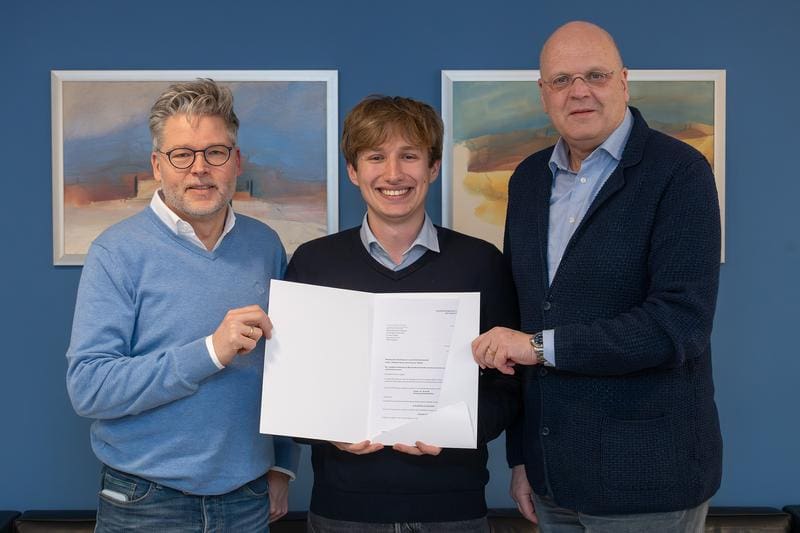
The device was developed by medical student Pedro Gebhardt Apalategui during an internship at the Institute of Pathology at the UMG. The gentle digestion enables much better and more reliable isolation of the lymph nodes, emphasized Institute Director Prof. Dr. Philipp Ströbel. The procedure improves pathological diagnostics and thus the therapy decision for patients.
In the future, the device will be used not only for colorectal cancer, but also for breast, ovarian and cervical cancer. The invention is part of UMG’s transfer strategy, which has established technology transfer as the fourth pillar alongside research, teaching and patient care. The aim is to quickly transfer scientific findings into clinical practice. The Technology Transfer Unit supports the entire process from patent applications and cooperations to possible licensing or company formation.
Editor: X-Press Journalistenbüro GbR
Gender Notice. The personal designations used in this text always refer equally to female, male and diverse persons. Double/triple naming and gendered designations are used for better readability. ected.
Most read
 German Medical Association calls for ban on medical diagnostics in drugstores The 130th German Medical Congress 2026 calls on legislators to prevent medical diagnostics in drugst...
- Expert Tip for Preanalytics of Glucose Determination The pre-analysis of glucose determination is a science in itself, even for experienced doctors. MedL...
- Preanalytics in glucose measurements: Centrifuged PST tubes are superior to NaF-KOx A study by Brigham and Women's Hospital and Harvard Medical School shows that centrifuged lithium he...