ASKED: Iran war. Quo Vadis laboratory medicine?
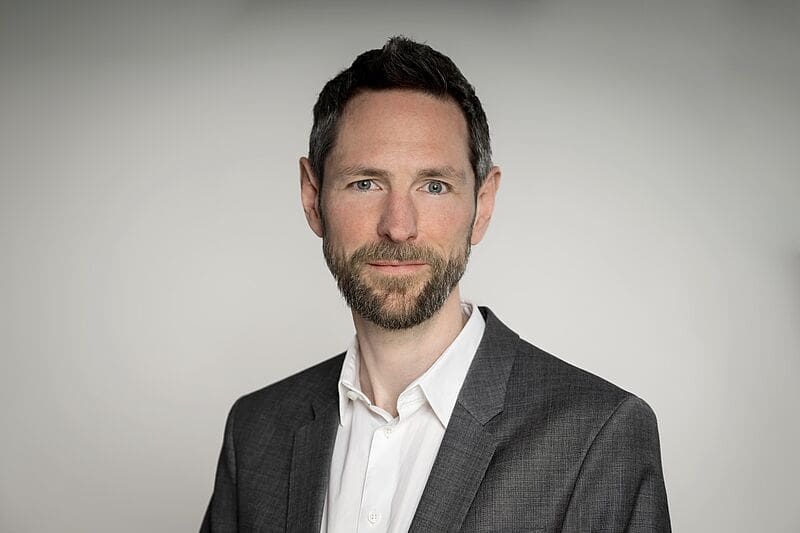
Der Angriff der USA und Israels auf den Iran hat mittlerweile spürbare Konsequenzen für Deutschland. Welche genau das sind, wie die Labormedizin betroffen ist, und warum iranische Ärzte in der Bundesrepublik weiterhin eine wichtige Stütze des Gesundheitssystems spielen, verriet DGKL-Vorstand Jan Wolter im MedLabPortal NACHGEFRAGT-Interview mit Vlad Georgescu.
MedLabPortal: Mr. Wolter, the worst-case scenario has occurred: The war of aggression by the USA and Israel against Iran has paralyzed the Middle East as a hub for global trade virtually overnight. What does laboratory medicine in Germany have to prepare for?
Wolter: What is happening in the Middle East right now is staggering. Colleagues from our foundation were at a trade fair in Dubai just over two weeks ago. The world’s crises are getting closer and closer. For laboratory medicine, this initially has the same consequences as for other areas. Energy is becoming more expensive, supply chains are faltering, and personal exchange is also becoming more difficult – keyword trade fairs. In addition, of course, the security situation is also changing here in Germany.
MedLabPortal: However, the supply chain for the German pharmaceutical and diagnostics industry is not really dependent on the Gulf States. Why these worries?
Wolter: The world already had numerous trouble spots before the attack on Iran. The security situation is now becoming even more tense and complex. Basically, I see two possible scenarios: the luck-in-disguise variant, in which the situation stabilizes in a few weeks and the fighting comes to an end, and the escalation variant, in which there is a conflagration. This is not only plunging the Middle East into disaster – with hardly foreseeable consequences for the global economy. The region is not only an important hub, but also a customer and financier for numerous projects and companies in the Western world. These financial flows could at least be weakened. In addition, if the US is militarily tied up on the ground and the security policy and military focus is directed to this region, this also has consequences for other existing or smouldering conflicts. In addition to Ukraine, I am thinking of Taiwan, but also Africa. In the process, old alliances can break up and new ones can emerge. In no case will it make the world safer. I will ignore humanitarian aspects of all this for the time being.
But even if the fighting ends in a few weeks, the world will not be a more stable one. When a regime is overthrown, there is a danger of a power vacuum that will not necessarily be filled by us well-disposed democrats – to put it very, very carefully. In addition, if the battle is lost militarily on the ground, it can be carried to other countries. And Germany, if it sides with the United States and Israel, can become a target.
MedLabPortal: While we’re on the subject of hybrid threat scenarios – are you afraid of acts of sabotage on laboratory medicine facilities in Germany? After all, they would cause the health system to shake up relatively.
Wolter: The intensity and breadth of the military counterstrikes suggest that Iran is ready for anything. So terrorist attacks or acts of sabotage would not surprise me.
MedLabPortal: But it is the case that the Iranian secret service has been operating very actively and successfully in Germany for decades. Doesn’t the current geopolitical threat situation inevitably lead to the blanket suspicion of those people of Iranian origin who live and work in Germany but have nothing to do with the system in Tehran?
Wolter: I can only warn against that! Reliable surveys show that Iranians living in Germany have a high number of academics, doctors and engineers. They fled the dictatorship in Iran, often secular or moderately religious, and politically often critical of the regime. In any case, I don’t care whether the doctor treating me comes from Germany or Iran.
MedLabPortal: Depending on the statistics, we have around 3000 Iranian doctors practicing in Germany. How do you intend to find out here whether and who of them is a member of the Quds Force of the Islamic Revolutionary Guards? As we know, Iran’s foreign military intelligence service is responsible for assassinations, espionage and sabotage.
Wolter: We must not now organize a witch hunt and put Iranians under general suspicion. I still see the threat posed by Russian acts of sabotage as higher. And I wouldn’t put all Russians in Germany under general suspicion. In any case, however, Germany must better adapt to the tense security situation. As I said in an interview a few weeks ago, we need to become more resilient. And we urgently need to strengthen our cyber defenses. At this point , I would also like to remind you of the Cybercent.
And perhaps even on the subject of independence: neither wind nor sun can be blocked on the Strait of Hormuz. It is already a joke that the CDU celebrates itself for having saved the gas heating system and now gas prices are going through the roof because the USA and Israel have attacked Iran. One wonders what still has to happen until even the last one understands that fossil fuels are a bad idea for Germany, especially from a security policy and economic point of view.
MedLabPortal: Does every laboratory manager have to maintain a red telephone or a direct hot line to the Office for the Protection of the Constitution?
Wolter: I wouldn’t go that far. However, the Office for the Protection of the Constitution would be well advised to at least regularly instruct and train the large laboratories and laboratory chains on how they can better protect themselves and thus the diagnostic basis of medical care in Germany.
MedLabPortal: Speaking of the Office for the Protection of the Constitution – do you even trust it to penetrate Iranian structures in Germany?
Wolter: The Office for the Protection of the Constitution does not exist in Germany. There is the Federal Office for the Protection of the Constitution and then there are the State Offices for the Protection of the Constitution. And there, the structures, tasks and priorities are very different. Without wanting to lean too far out of the window, I would assume that not everyone is optimally positioned.
MedLabPortal: From your point of view, from the point of view of a German executive board, was Chancellor Friedrich Merz’s unconditional approval strategically wise?
Wolter: The attack was a clear breach of international law. I don’t have to say more about it.
MedLabPortal: Germany has done good business with Iran for decades and has long been considered a potential mediator. In view of these old connections, how can laboratory medicine become humanitarian after the end of the war?
Wolter: I don’t think we can make plans for an “after” yet. It remains to be seen what will happen in the coming weeks and months and what new power structures will be established. In any case, I believe it is important, especially in the case of Iran, to distinguish between the regime and the population. You should never burn all bridges to a country.
MedLabPortal: After the assassination of Iran’s supreme religious leader, Ayatollah Khamenei, his son Mojtaba Khamenei is the successor. Despite today’s completely confusing situation, do you see a chance for the return of diplomacy and international law?
Wolter: We always have to see this opportunity.
MedLabPortal: And how would you make that palatable to US President Donald Trump ?
Wolter: Fortunately, that’s not my job.
MedLabPortal: Thank you very much for the interview.
The interview was conducted by Vlad Georgescu.
Editor: X-Press Journalistenbüro GbR
Gender Notice. The personal designations used in this text always refer equally to female, male and diverse persons. Double/triple naming and gendered designations are used for better readability. ected.
Most read
 German Medical Association calls for ban on medical diagnostics in drugstores The 130th German Medical Congress 2026 calls on legislators to prevent medical diagnostics in drugst...
- Expert Tip for Preanalytics of Glucose Determination The pre-analysis of glucose determination is a science in itself, even for experienced doctors. MedL...
- New part-time Master’s degree program “M.Sc. Medical Laboratory” at the University of Leipzig In the winter semester 2026/2027, Leipzig University will introduce the new continuing education mas...