
Hokkaido researchers discover health-promoting lipids in colored Japanese rice varieties
Rice feeds more than half of the world’s population, but its lipid composition – although it only accounts for about two percent of the grain – has not yet been sufficiently researched. A team from Hokkaido University has now examined 56 Japanese japonica rice varieties in a comprehensive analysis and identified 196 different lipid molecules. The results were published in January 2026 in the journal Food Research International.
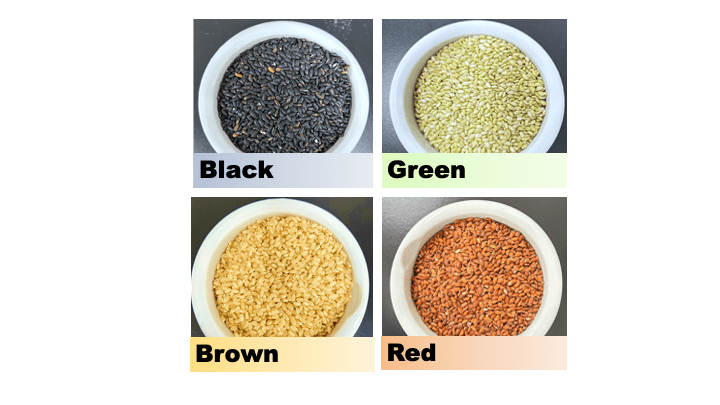
Japonica rice, which is consumed primarily in Japan, is characterized by short to medium-length grains that become soft, tender, and slightly sticky when cooked, accounting for about 15 percent of global rice consumption. In addition to conventional white rice, the researchers also analyzed brown, red, green and black varieties. Using modern analytical techniques such as liquid chromatography and mass spectrometry, they were able to characterize the lipid profiles in detail.
Particularly coloured varieties – especially black and green japonica rice – showed a significantly higher health-promoting composition. They contain special lipids such as FAHMFAs (fatty acid esters of hydroxy medium-chain fatty acids) and LNAPEs (N-acyl-lysophosphatidylethanolamines), which were first detected in rice. These compounds have been linked to anti-inflammatory effects and improved metabolism.
In simulated digestion experiments in the laboratory, black and green rice showed slower starch digestion than white rice. As a result, the starch is converted into glucose more slowly and released into the blood, resulting in a more moderate increase in blood sugar levels. Such varieties could therefore be suitable for the development of foods that promote heart health, stabilize blood sugar, and reduce the risk of type 2 diabetes as well as other diet-related diseases.
According to the researchers, the lipids contribute significantly to the nutritional quality, taste and overall quality of the rice. Among other things, they support the integrity of cell membranes, serve energy storage and are involved in signaling processes. The study is part of the long-standing work of the group led by first author Associate Professor Siddabasave Gowda, which has already identified novel bioactive lipids in Japanese edible fish, herbal teas and seaweed.
The findings are intended to help consumers specifically select pigmented rice varieties with health benefits. At the same time, they could advance the development of functional rice products that specifically target the prevention and management of diabetes and other lifestyle diseases.
Original Paper:
Nath, L. R. et al. Lipidomic profiling of 56 japonica rice cultivars and identification of novel fatty acid esters of hydroxy fatty acids. Food Research International (2026). DOI: 10.1016/j.foodres.2025.117895
Editor: X-Press Journalistenbüro GbR
Gender Notice. The personal designations used in this text always refer equally to female, male and diverse persons. Double/triple naming and gendered designations are used for better readability. ected.
Most read
 Hantavirus: detection, symptoms, therapy What is hantavirus? Hantaviruses are a group of viruses that occur worldwide and are mainly transmit...
- Hantavirus: Facts instead of panic Reports of three deaths in connection with a hantavirus outbreak on the cruise ship "MV Hondius" in...
- German Medical Association calls for ban on medical diagnostics in drugstores The 130th German Medical Congress 2026 calls on legislators to prevent medical diagnostics in drugst...