Keto diet may boost the benefits of exercise in people with high blood sugar
In order to be healthy, the conventional wisdom advises us to exercise and avoid fatty foods. Sport helps us lose weight and build muscle. It strengthens our heart and improves the absorption and use of oxygen for energy production – one of the most important indicators of health and longevity.
However, people with high blood sugar often don’t benefit from these benefits of exercise, especially the ability to use oxygen efficiently. They are at higher risk for heart and kidney disease, but high blood sugar can prevent their muscles from absorbing oxygen more effectively in response to exercise.
For them, the answer may be to eat more, not less fat, according to a new study.
The study by sports physician Sarah Lessard, published Feb. 25 in Nature Communications , found that a high-fat, ketogenic diet lowered high blood sugar levels (hyperglycemia) in mice and their bodies responded better to exercise.
“After a week of the ketogenic diet, their blood sugar was completely normal, as if they didn’t have diabetes at all,” said Lessard, an associate professor at the Fralin Biomedical Research Institute at the VTC Center for Exercise Medicine Research. “Over time, the diet led to a remodeling of the mice’s muscles, making them more oxidative and more responsive to aerobic exercise.”
The ketogenic diet is named for its ability to trigger ketosis, a metabolic state in which the body burns fat instead of sugar as an energy source. The diet is controversial because it involves the consumption of high-fat, very low-carbohydrate foods, which is contrary to the low-fat diet that has always been recommended by health activists.
However, the keto diet has been linked to benefits for people with certain diseases, including epilepsy and Parkinson’s disease. In the 1920s, before the discovery of insulin, it was a way to treat diabetes due to its blood sugar-lowering effect.
In previous research , Lessard found that people with high blood sugar had lower physical performance. She wondered if diet could improve the response to exercise and lead to higher physical performance.
The mice were fed a high-fat, low-carbohydrate diet and exercised on balance bikes. The mice developed more slow-twitch muscle fibers, which provide better endurance.
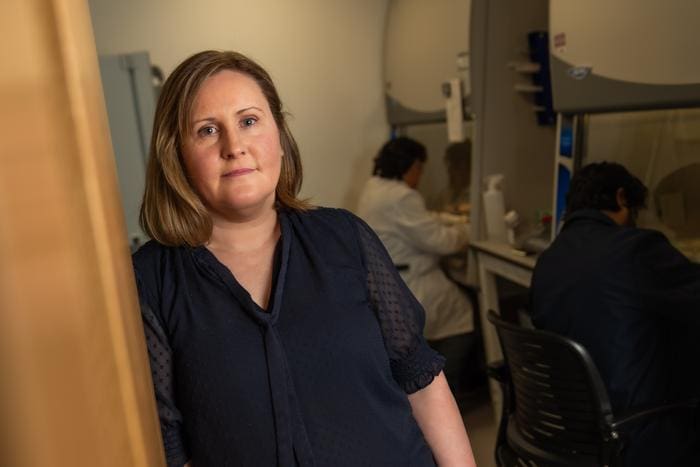
Credits:
Virginia Tech
“Their bodies used oxygen more efficiently, which is a sign of higher aerobic capacity,” Lessard said.
Lessard said exercise has a positive effect on virtually every tissue in our body, even adipose tissue, but she and others note that the greatest health improvements cannot be achieved through diet or exercise alone.
“What we’re really finding from this study and our other studies is that diet and exercise don’t just work in isolation,” said Lessard, who also holds a position in the Department of Human Nutrition, Nutrition and Exercise in Virginia Tech’s College of Agriculture and Life Sciences. “There are many combined effects, so we can get the most benefit from exercise if we eat healthy at the same time.”
Next, Lessard wants to continue her research in humans to see if they get the same benefits from the keto diet as mice.
She also notes that the keto diet is difficult to stick to. A less restrictive diet, such as the Mediterranean diet, could be easier for many people to stick to and still be effective. This diet can also keep blood sugar levels low, including carbohydrates from unprocessed fruits, vegetables, and whole grains, rather than banning carbohydrates entirely.
Original Paper:
Editor: X-Press Journalistenbüro GbR
Gender Notice. The personal designations used in this text always refer equally to female, male and diverse persons. Double/triple naming and gendered designations are used for better readability. ected.
Most read
 Hantavirus: detection, symptoms, therapy What is hantavirus? Hantaviruses are a group of viruses that occur worldwide and are mainly transmit...
- Hantavirus: Facts instead of panic Reports of three deaths in connection with a hantavirus outbreak on the cruise ship "MV Hondius" in...
- German Medical Association calls for ban on medical diagnostics in drugstores The 130th German Medical Congress 2026 calls on legislators to prevent medical diagnostics in drugst...