Lower Saxony funds new therapy project against incurable biliary tract disease PSC
The state of Lower Saxony and the Volkswagen Foundation are supporting the “StopPSC” research project of the Hannover Medical School (MHH) and the Helmholtz Centre for Infection Research (HZI) with two million euros. The project is funded as part of the “zukunft.niedersachsen” programme, which promotes new diagnostic and therapeutic procedures for rare diseases.
Primary sclerosing cholangitis (PSC) is a chronic inflammatory disease of the bile ducts that affects about one in 10,000 people in Germany. It usually occurs between the ages of 30 and 50 and often leads to excruciating itching, fatigue, weight loss and, in the process, liver failure. Many patients need a liver transplant. There is currently no cure; treatment is limited to symptom relief, often with broad-acting antibiotics that can promote resistance.
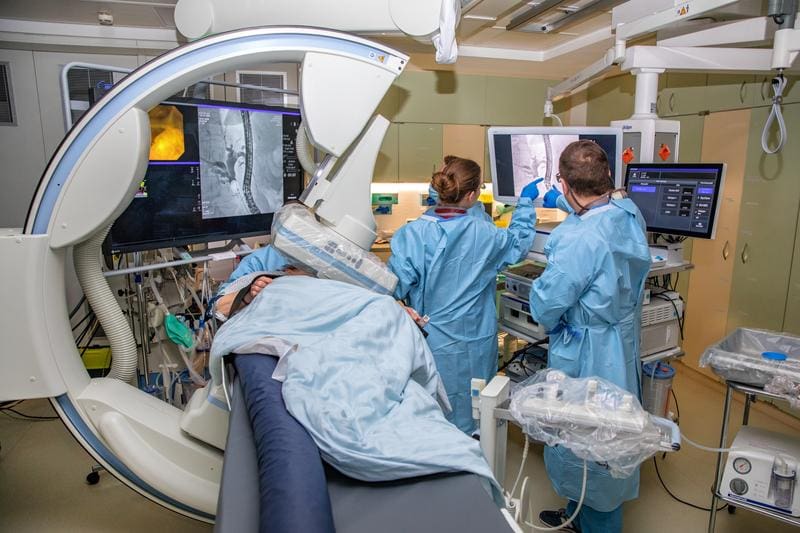
The interdisciplinary team led by Prof. Dr. Benjamin Heidrich (Department of Gastroenterology, Hepatology, Infectiology and Endocrinology at MHH) is developing a novel therapeutic approach in the project “Sialidase targeting pathoblocker therapy for primary sclerosing cholangitis” (StopPSC). The starting point is the finding that certain bacterial species produce disease-promoting enzymes – so-called sialidases – in the bile duct microbiome. These enzymes damage the protective mucus layer of bile duct cells, which allows bile acids to attack the cells and trigger inflammation.
The aim is to develop targeted pathhoblockers – active ingredients that selectively inhibit these sialdases without disturbing the entire microbiome. The starting substances are optimized flu drugs (neuraminidase inhibitors), whose efficacy and selectivity are first computer-aided and then tested in the laboratory. Further steps include the investigation of the distribution and penetration of the active ingredients into the bile ducts. In the long term, the aim is to create a patentable candidate that can be transferred to clinical development by pharmaceutical companies.
The project builds on preliminary work in the Cluster of Excellence RESIST and the German Center for Infection Research (DZIF). The DZIF is also making a financial contribution. The funding is part of the “zukunft.niedersachsen” programme, which specifically supports projects on rare diseases (fewer than five affected per 10,000 inhabitants).
Prof. Heidrich emphasized that the team wants to develop tailor-made therapies to noticeably improve the prognosis of PSC patients.
Editor: X-Press Journalistenbüro GbR
Gender Notice. The personal designations used in this text always refer equally to female, male and diverse persons. Double/triple naming and gendered designations are used for better readability. ected.
Most read
 Hantavirus: detection, symptoms, therapy What is hantavirus? Hantaviruses are a group of viruses that occur worldwide and are mainly transmit...
- Impending fuel shortage: “If the laboratory fails, medical care will come to a standstill in large parts” DGKL CEO Jan Wolter explains the dramatic consequences of a potential fuel shortage for laboratory m...
- Hantavirus: Facts instead of panic Reports of three deaths in connection with a hantavirus outbreak on the cruise ship "MV Hondius" in...