The only nationwide certificate for intensive care medicine will be visible in the Federal Hospital Atlas in the future
The German Society of Anaesthesiology and Intensive Care Medicine (DGAI) has comprehensively revised its “Intensive Care Medicine” certificate and expanded it on a modular basis. The seal of quality, which has been in existence since 2014, is the only nationwide certificate for intensive care medicine in Germany and will be visible in the Federal Hospital Atlas in the future.
The Institute for Quality Assurance and Transparency in Health Care (IQTIG) has positively assessed the certificate as well as the separately certifiable module “Weaning” – for structured weaning from ventilation – and included them in its overview of meaningful certificates and seals. This creates the prerequisites for the presentation of certified intensive care units in the Federal Hospitals’ Atlas.
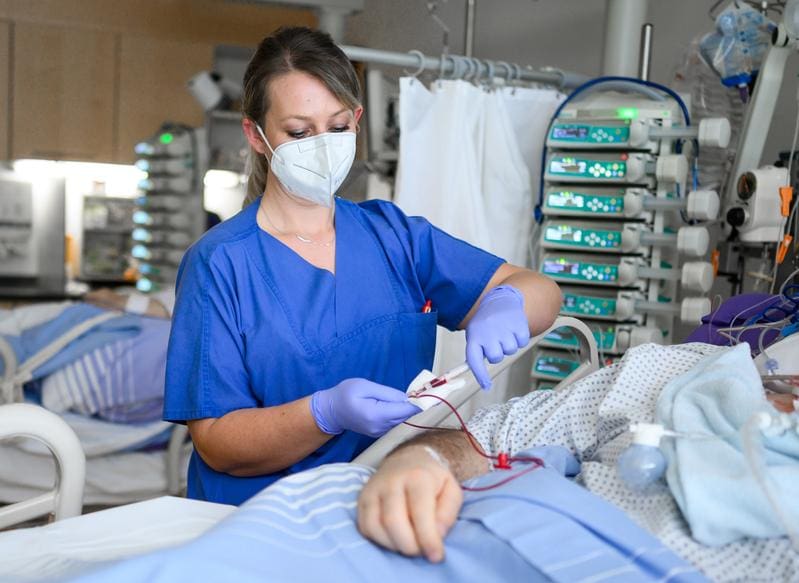
The modular certificate (AIZert) supports intensive care units in the systematic further development and visualization of their quality of care. It encompasses central structural, personnel and organizational requirements of intensive care. Currently, more than 40 clinics from standard and specialist care are certified. Hospitals report sustainable improvements in processes, team structures and interprofessional cooperation.
Prof. Dr. Gernot Marx, President of the DGAI and intensive care physician, emphasized the importance of comprehensible and trustworthy quality – for professionals as well as for patients. The recognition by the IQTIG underlines the practical relevance and resilience of the standards.
As part of the update, new optional modules have been introduced. The module “Infectiology” addresses the growing challenge of severe infections and sepsis through structured processes in diagnostics, therapy and interdisciplinary cooperation. The “Further Education and Training” module promotes the qualification of medical staff through clear further training concepts, innovative teaching formats such as simulation training and digital offers – particularly relevant against the background of a shortage of skilled workers and fluctuation.
Prof. Dr. Thorsten Brenner, Head of the Intensive Care Medicine Section of the DGAI, emphasized that high quality in intensive care medicine requires clear structures, verifiable standards and investment in expertise and personnel. Prof. Dr. Johannes Bickenbach and Prof. Dr. Onnen Moerer, who were in charge of the update, emphasized the close connection of the new modules to everyday care and their contribution to measurable quality development.
The DGAI invites intensive care units to use the certificate as an instrument of structured quality development and thus strengthen intensive care in Germany in the long term.
Editor: X-Press Journalistenbüro GbR
Gender Notice. The personal designations used in this text always refer equally to female, male and diverse persons. Double/triple naming and gendered designations are used for better readability. ected.
Most read
 Hantavirus: detection, symptoms, therapy What is hantavirus? Hantaviruses are a group of viruses that occur worldwide and are mainly transmit...
- Impending fuel shortage: “If the laboratory fails, medical care will come to a standstill in large parts” DGKL CEO Jan Wolter explains the dramatic consequences of a potential fuel shortage for laboratory m...
- Hantavirus: Facts instead of panic Reports of three deaths in connection with a hantavirus outbreak on the cruise ship "MV Hondius" in...