
New drug combinations show efficacy against resistant malaria
Researchers at the Bernhard Nocht Institute for Tropical Medicine (BNITM) have tested two new triple combinations against malaria tropica in a clinical phase II study funded by the German Center for Infection Research (DZIF). The combinations artesunate/pyronaridine-atovaquone/proguanil (APAP) and artesunate-fosmidomycin-clindamycin (AFC) were found to be safe, well tolerated and effective. The results were published in the journal Lancet Microbe.
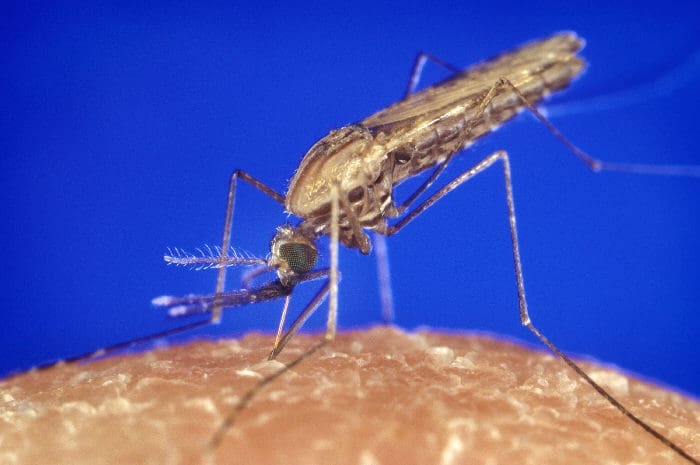
The pathogen Plasmodium falciparum is becoming increasingly resistant to the previous artemisinin-based combination therapies (ACTs), which are considered the standard worldwide. Artemisinin works quickly, but in regions of Southeast Asia and increasingly also Africa, its effectiveness decreases. One reason is the different rates of degradation of the two active ingredients in a combination of two: As soon as the artemisinin component is broken down, the partner active ingredient remains alone – this promotes the development of resistance.
The BNITM researchers therefore tested triple combinations with a better coordinated duration of action and different points of attack. The randomized, controlled, open-label study in Lambaréné (Gabon) and Kumasi (Ghana) enrolled 100 patients with uncomplicated malaria falciparum. 40 people each received APAP or AFC, 20 the standard combination artesunate/pyronaridine (AP) as a control. The observation period was 42 days.
After 28 days, all patients on APAP and AP and 97 percent on AFC were parasitologically and clinically cured. By day 42, cure rates decreased slightly in all groups due to new infections or recurrences – a comparable pattern. The new combinations did not show any relevant safety or compatibility problems.
The triple combinations simultaneously attack several vital processes of the parasite: energy production, DNA synthesis and protein synthesis. The combination with antibiotics (fosmidomycin/clindamycin) could be advantageous in endemic areas where malaria is often clinically indistinguishable from bacterial infections and laboratory diagnostics are lacking.
The results make APAP and AFC promising candidates for further Phase III studies. The aim is to slow down the development of resistance and improve the treatment of malaria in Africa in the long term.
Original Paper:
Editor: X-Press Journalistenbüro GbR
Gender Notice. The personal designations used in this text always refer equally to female, male and diverse persons. Double/triple naming and gendered designations are used for better readability. ected.
Most read
 Wal Timmy: Environment Minister Backhaus ignored rescue technology that has been in place since 1983 The stranded humpback whale "Timmy" suffered severely for days in Mecklenburg-Western Pomerania beca...
- Wal Timmy: Germany’s problem with euthanasia EDITORIAL. Letting Timmy suffer is more due to the German lack of experience and the bureaucratic hu...
- Impending fuel shortage: “If the laboratory fails, medical care will come to a standstill in large parts” DGKL CEO Jan Wolter explains the dramatic consequences of a potential fuel shortage for laboratory m...