HTW Dresden develops biocompatible, compostable materials for point-of-care diagnostics
The Dresden University of Applied Sciences (HTW Dresden) is researching sustainable materials for rapid medical tests in the “BioMat” project: Together with partners, a bio-based, compostable base material for point-of-care tests (POCT) is being developed. A novel test for the detection of hepatitis D serves as an application example. The project is intended to replace petroleum-based single-use plastic in diagnostics and reduce the enormous amount of waste – reinforced by corona tests.
The Corona pandemic has caused millions of tons of additional plastic waste from masks, protective clothing, vaccination accessories and rapid tests. Diagnostic products are usually made of petroleum-based plastics and are incinerated after a single use. The interdisciplinary BioMat project is divided into two areas: the development of a bio-based base material including processing and the creation of a rapid test for hepatitis D infections.
Hepatitis D causes chronic liver inflammation, which can lead to cirrhosis and liver cancer. Point-of-care tests that also work without a laboratory could quickly identify infected people – especially in regions with limited medical infrastructure.
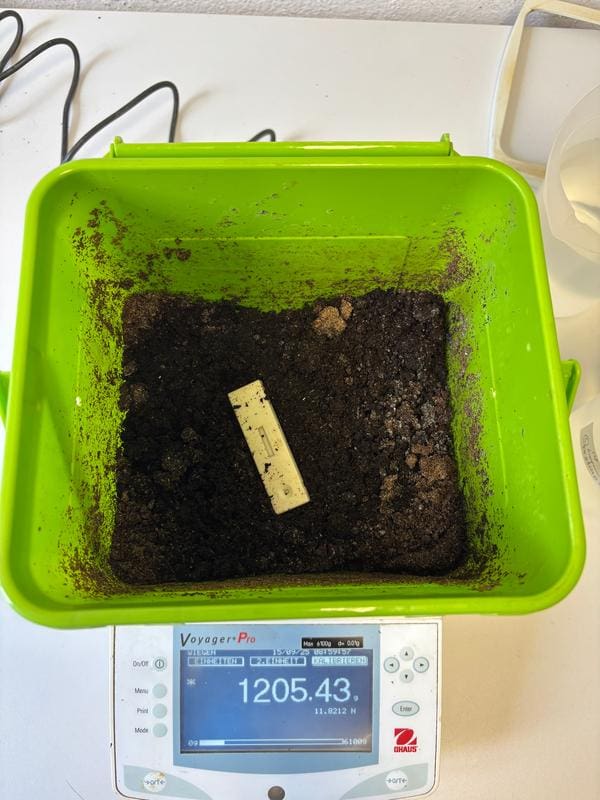
Polybutylene succinate (PBS) was selected as the base material. PBS can be produced from vegetable starch, is stable, storable and is almost completely degraded within 90 days in industrial composting at 60 °C and high humidity. Degradation also takes place in landfills or in nature, albeit more slowly.
The components are produced using the injection moulding process. Together with Fraunhofer IWU and the companies Bergi-Plast and Otto Injection Molding, the process was optimized for PBS so that the required microstructure accuracy is achieved. Investigations are currently being carried out into how electrical functional structures can be applied to the material – important for later applications such as mobile performance diagnostics in sports.
The microstructures (a few micrometers) are applied using the thick-film technique, a process similar to screen printing. This allows electrical circuits to be produced cost-effectively. For full biocompatibility, the team tests sustainable pastes and checks their suitability for high-precision structures.
The biological reagents for hepatitis D detection are being developed by Roboscreen and Fraunhofer IZI. Both contribute expertise in antigen production, test development, production and approval procedures.
Regulatory hurdles must be overcome before compostable materials can be used in diagnostics. Currently, medical waste – especially blood-containing waste – must be thermally disposed of; Recycling by melting down is prohibited. The project aims to pave the way for low-cost, mass-produced, globally applicable rapid tests made of biodegradable plastics – not only for hepatitis D, but for other diagnostic applications.
In addition to HTW Dresden, the following are involved in the BioMat project (duration June 2024 to May 2027):
- Bergi-Plast GmbH, Bad Gottleuba-Berggießhübel
- Otto Injection Molding GmbH & Co. KG, Niederwiesa
- Roboscreen GmbH, Leipzig
- Fraunhofer Institute for Machine Tools and Forming Technology IWU, Chemnitz
- Fraunhofer Institute for Cell Therapy and Immunology IZI, Leipzig
The project is financed with tax funds from the Free State of Saxony.
Editor: X-Press Journalistenbüro GbR
Gender Notice. The personal designations used in this text always refer equally to female, male and diverse persons. Double/triple naming and gendered designations are used for better readability. ected.
Most read
 Wal Timmy: Germany’s problem with euthanasia EDITORIAL. Letting Timmy suffer is more due to the German lack of experience and the bureaucratic hu...
- Blood values in the blue whale (Balaenoptera musculus) Humpback whale Timmy is still keeping Germany in suspense - but what about laboratory values in whal...
- Rabbit fever infects people in Germany: symptoms, detection and blood count In Lower Saxony and Bremen, three people have already fallen ill with rabbit fever (tularemia) this...