
Immunotherapy could stop neuron loss in Parkinson’s disease
Researchers at the Institut de Neurociències of the Universitat Autònoma de Barcelona (INc-UAB) have shown in a study that reactive microglia – the main immune cells of the brain – express more Fc-gamma receptors in Parkinson’s patients. These receptors mistakenly recognize functioning dopaminergic neurons as damaged and trigger their phagocytic elimination. The results point to a new immunotherapeutic strategy that could slow down the loss of neurons that are still intact. The study appeared in npj Parkinson’s Disease.
Parkinson’s disease is characterized by the progressive loss of dopaminergic neurons in the substantia nigra. This process is accompanied by inflammatory reactions of the microglia, the exact mechanisms of which were unclear.
The team analyzed brain tissue from Parkinson’s patients as well as animal and cell models of the disease. It found that reactive microglia have a significantly higher proportion and increased density of Fc gamma receptors. These receptors are usually used to recognize and eliminate damaged cells or harmful components. In Parkinson’s disease, however, there seems to be a malfunction: dopaminergic neurons that are still functional are mistakenly marked as defective and phagocytosed.
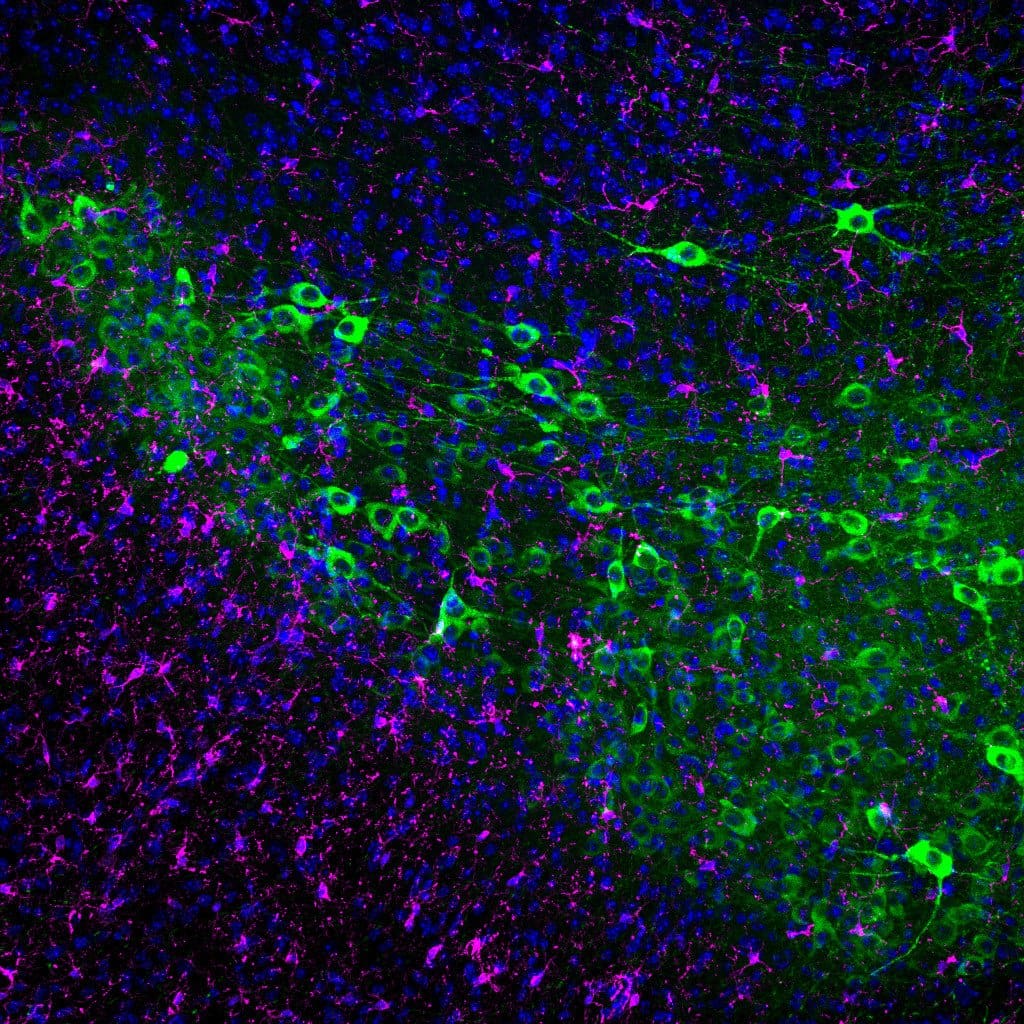
The activation of the Fc-gamma receptors triggers a change in the shape of the microglia via the cytoskeletal protein Cdc42. This allows them to enclose and “eat” the target neuron. In models, blocking the Fc gamma receptors by immunotherapy or pharmacological inhibition of Cdc42 significantly reduced the elimination of dopaminergic neurons – even under severe neuroinflammation.
The results suggest that targeted regulation of microgliar phagocytosis via Fc-gamma receptors or Cdc42 could slow down disease progression and preserve the function of remaining dopaminergic neurons for longer. This opens up a new approach to immunomodulating therapies for Parkinson’s disease.
Original Paper:
Editor: X-Press Journalistenbüro GbR
Gender Notice. The personal designations used in this text always refer equally to female, male and diverse persons. Double/triple naming and gendered designations are used for better readability. ected.
Most read
 Wal Timmy: Environment Minister Backhaus ignored rescue technology that has been in place since 1983 The stranded humpback whale "Timmy" suffered severely for days in Mecklenburg-Western Pomerania beca...
- Wal Timmy: Germany’s problem with euthanasia EDITORIAL. Letting Timmy suffer is more due to the German lack of experience and the bureaucratic hu...
- Impending fuel shortage: “If the laboratory fails, medical care will come to a standstill in large parts” DGKL CEO Jan Wolter explains the dramatic consequences of a potential fuel shortage for laboratory m...