UKHD receives approval for its own CAR-T cell product against CLL
Heidelberg University Hospital is the first academic institution in Germany to receive a hospital exemption from the Paul-Ehrlich-Institut for the production and use of the CAR-T cell product Heidagen-lecleucel. The patient’s own immune cell preparation is directed against chronic lymphocytic leukemia when other treatments fail. The first patients are to be treated from 2026.
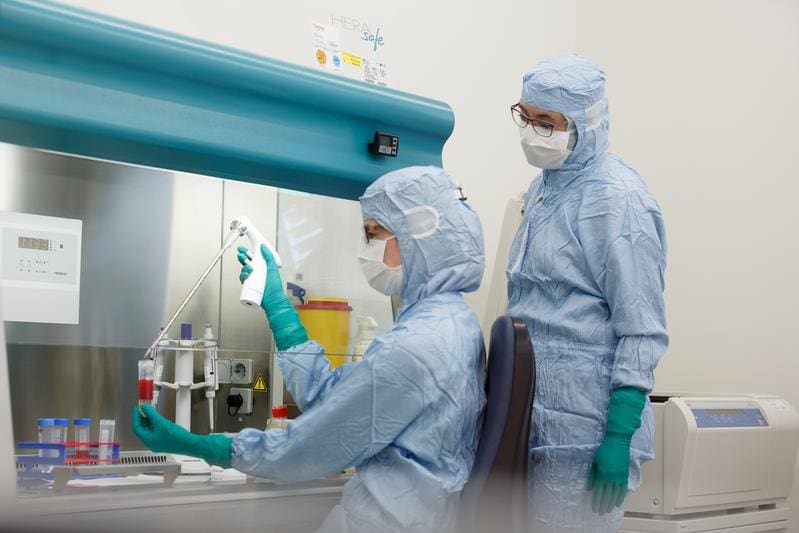
The approval allows for in-house treatment as well as dispensing to other clinics, as efficacy and safety have been proven. The team led by Anita Schmitt and Michael Schmitt proved GMP-compliant manufacturing and tested the product in a study with 40 patients of various diseases, where it proved to be effective and had few side effects. As a result, health insurance companies cover the costs as standard; Until now, they had to be applied for individually.
The experts expect 10 to 20 CLL patients per year. For this small group, industrial development is not worthwhile, but in the case of relapses and resistance to therapy, the product offers an alternative. CLL is the most common leukemia in older adults; commercial CAR-T cells already exist for other leukemias and lymphomas.
Currently, Heidelberg is unique in Germany for CLL-specific CAR-T therapy. The product, based on modified T lymphocytes that attack CD19 on cancer cells, is characterized by good tolerability. It was developed in cooperation with US partners.
The approval strengthens academic cell therapy and promotes cost-effectiveness. The Federal Ministry of Health is planning further support for gene and cell therapies. Heidelberg has been operating a center for this since 2023; a national strategy of 2024, in which UKHD experts participated, is intended to bring research results into care more quickly.
This step underlines the importance of university innovation for rare indications and could contribute to the wider availability of advanced therapies.
Further information:
https://www.klinikum.uni-heidelberg.de/kliniken-institute/kliniken/zentrum-fuer-innere-medizin-krehl-klinik/innere-medizin-v-haematologie-onkologie-und-rheumatologie
https://www.klinikum.uni-heidelberg.de/kliniken-institute/kliniken/zentrum-fuer-innere-medizin-krehl-klinik/innere-medizin-v-haematologie-onkologie-und-rheumatologie/forschung/forschungsbereich-zell-und-immuntherapie/ag-zellulaere-immuntherapiegmp-labor-prof-schmitt
Editor: X-Press Journalistenbüro GbR
Gender Notice. The personal designations used in this text always refer equally to female, male and diverse persons. Double/triple naming and gendered designations are used for better readability. ected.
Most read
 Hantavirus: detection, symptoms, therapy What is hantavirus? Hantaviruses are a group of viruses that occur worldwide and are mainly transmit...
- Impending fuel shortage: “If the laboratory fails, medical care will come to a standstill in large parts” DGKL CEO Jan Wolter explains the dramatic consequences of a potential fuel shortage for laboratory m...
- Hantavirus: Facts instead of panic Reports of three deaths in connection with a hantavirus outbreak on the cruise ship "MV Hondius" in...